Fill Out the Online Form
Begin your Journey of Knowledge and Faith
seal logo
Personal Information
1/2
Select Your Program of Interest
2/2
In 300 words or less, describe your Christian faith, including your conversion and current Christian walk, and ministry experience (if applicable)
300/words
In 300 words or less, describe reasons for your desire to study with the Alexandrian Institute and how this deepen your faith or equip you for Christian ministry
300/words
Upload your Letter of Intent
Uploading...
fileuploaded.jpg
Upload failed. Max size for files is 10 MB.
Upload your CV or Resume
Uploading...
fileuploaded.jpg
Upload failed. Max size for files is 10 MB.
Upload your list of references
Uploading...
fileuploaded.jpg
Upload failed. Max size for files is 10 MB.
Upload your list of references
Uploading...
fileuploaded.jpg
Upload failed. Max size for files is 10 MB.
Upload your list of references
Uploading...
fileuploaded.jpg
Upload failed. Max size for files is 10 MB.
Upload your list of references
Uploading...
fileuploaded.jpg
Upload failed. Max size for files is 10 MB.
Upload your list of references
Uploading...
fileuploaded.jpg
Upload failed. Max size for files is 10 MB.
Thank You for Taking
the First Step
Your interest has been received. We’re excited to walk with you on this journey of learning and spiritual growth. Our team will be in touch soon with the next steps.
Oops! Something went wrong while submitting the form.
Essays

Reading. Thinking. Confessing. Part 2.

Reading. Thinking. Confessing. Part 2.

About the Author

Gregory Parker, Jr. is Assistant Director of Postgraduate Research and Associate Dean of the Alexandrian Institute.

Reading. Thinking. Confessing. Part 2.

This is the second essay, in a three part series titled: “Reading, Thinking, Confessing”.

Reading. Thinking. Confessing. Part 2.

Thinking

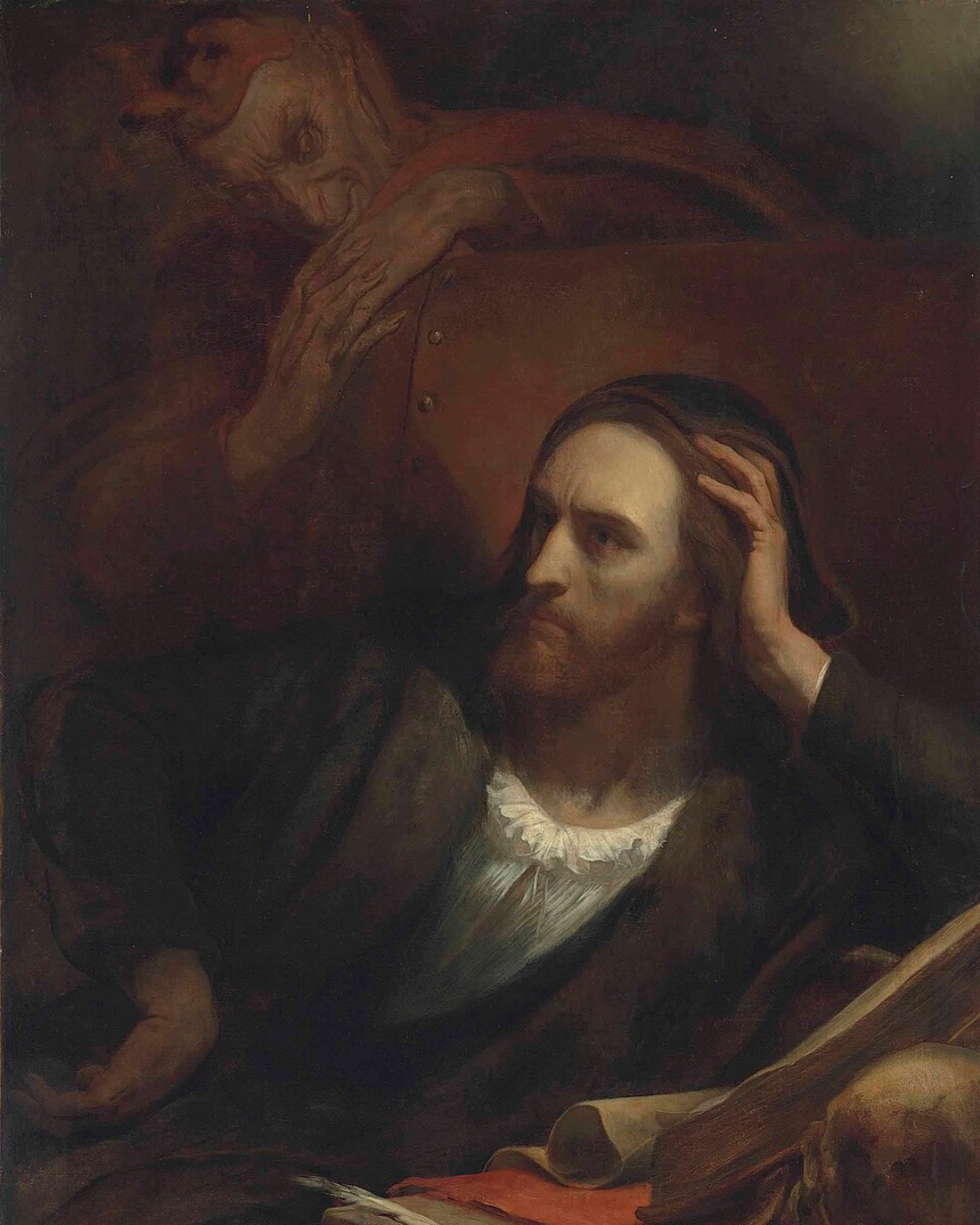
Following the prologue, the tale of Faust begins with Heinrich Faust in his office seated restlessly in his armchair at the end of a long day of study. He opines:

“I’ve studied, alas, philosophy, / Law and medicine, recto and verso, / And how I regret it, theology also, / Oh God, how hard I’ve slaved away, / With what result? Poor foolish old man, / I’m no whit wiser than when I began! / I’ve got a Master of Arts degree, / On top of that a Ph.D., / For ten long years, around and about, / Upstairs, downstairs, in and out, / I’ve led my students by the nose. / With what result? That nobody knows, / Or ever shall know, the tiniest crumb! / Which is why I feel completely undone.”1

We are meant to feel and see an academic at the end of his wits. At the end of his toil, in the study, straining in the classroom, and writing of his pen he has little to show for it. He has lost all joy in his study and even curses thinking.2 All of his reading has not nourished his soul, nor facilitated his knowledge and worship of God. As he later states, “I feel it now, how pointless my long grind / To make mine all the treasures of man’s mind.”3

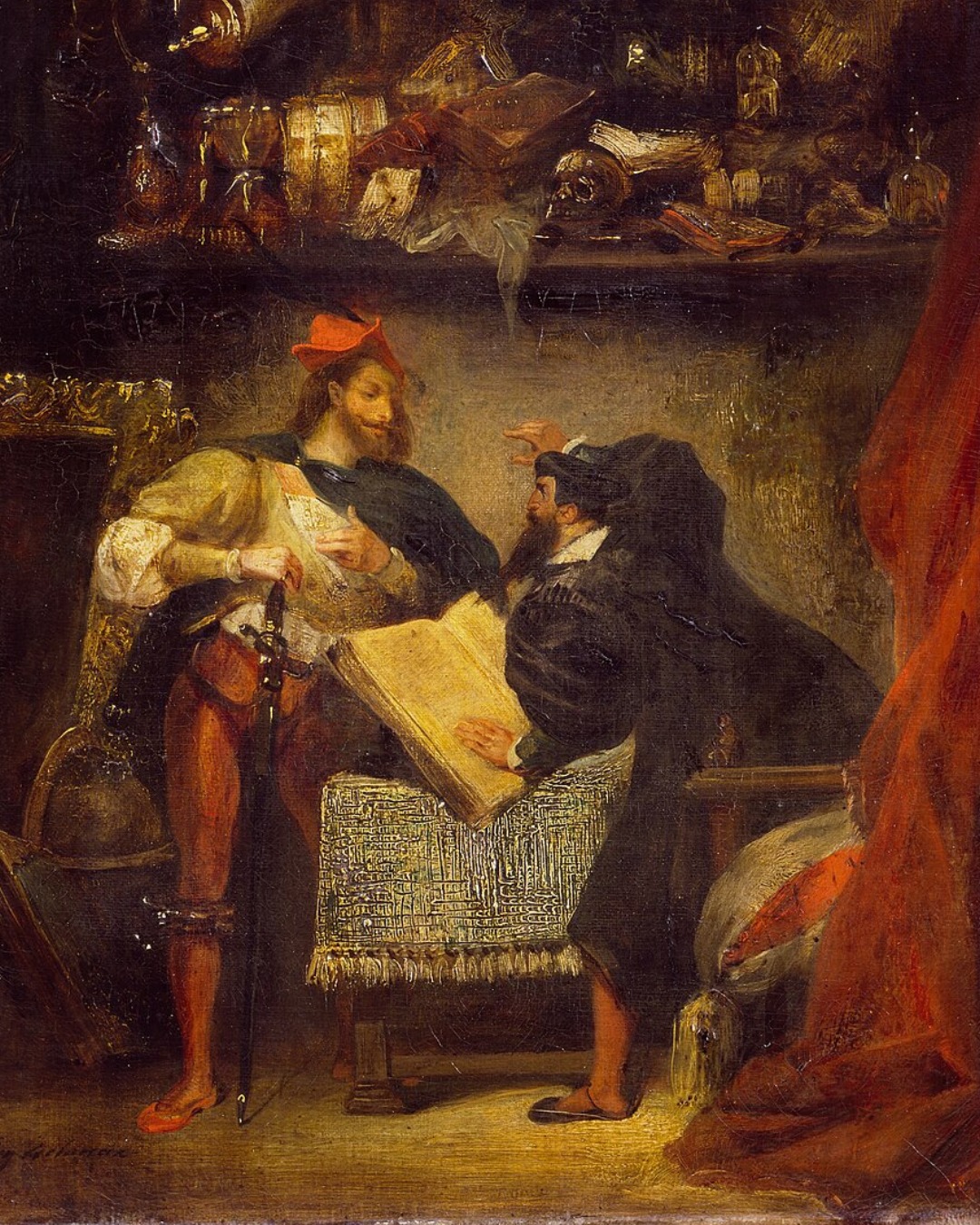
Mephistopheles then enters the scene as a dog before revealing himself as the Devil. He later returns to Faust and cajoles him into signing away his soul on a scrap of paper in blood.4  He admits to the Devil that he is done with thinking: “Thinking’s done with for me, I’m through / Learning I’ve loathed since long ago.”5 And indeed, thinking is precisely what Mephistopheles wants to prevent Faust from doing. As he puts it to Faust:

Sir, come on, quit all that thinking, / Into the world, the pair of us! / The man who lives in his head only’s / Like a donkey in the rough / Led round and round by the bad fairies / While green grass grows a stone’s throw off.6

This is not altogether foreign to our own time.  Living not thinking is what is valued and living is what we see Faust do in the remainder of the book. In Part I, After Faust’s blood oath with the devil we never return again to Faust’s study.

Alongside Mephistopheles he galavants through earth (Part I) and the classical world (Part II). In Part I, the living of Faust ends quite badly. Faust, with the ‘help’ of Mephistopheles, falls in love with a young maiden, Margarete and subsequently is involved in the death of all those close to her.7 Her mother— by way of a sleeping potion8, her brother— by way of a duel9, their illegitimate child— at the hands of Margarete.10 The death of the child results in Margarete’s imprisonment and execution. Faust and Mephistopheles attempt to free Margarete from the dungeon, but she ultimately refuses to leave. And the book ends with the competing voices of the heavens and Mephistopheles over her soul.

Out of this terror, Part II unexpectedly opens not on earth or hell, but amid the classical world.  After his myriad of misdeeds in Part I, Faust’s misdeeds in Part II continue on a grander scale. With the aid of Mephistopheles’ magic he helps the Emperor to crush an opponent with David’s Mighty Men.11 As a result he is given a piece of land along the coast. From here, he sets out on the very Dutch enterprise (Goethe was German, but admired the Dutch), of reclaiming more land from the sea through large scale engineering.12 Once more, in this task of land-reclamation he calls upon Mephistopheles’ magic and there is no shortage of lives lost.13 By the slip of his tongue Faust has Philemon, Baucis, and their visitor burned alive because he desires their estate.14 There is a reason that restless and indomitable striving has often been associated with the adjective ‘Faustian.’

Shockingly at the end of Part II, after all his striving, and after his death, Faust too is saved. This rightly ought to surprise the reader. Did Faust not, with his own blood, make a pact with the devil? Does this not certainly condemn him to the abyss? I thought the Prelude asserted that Faust would traverse through this world and heaven “down to hell”?15 Readers may look in several places for a clue as to what has happened.16

Theologically, we might be reminded of the words of Karl Barth, “Dogmatics does not presuppose that it is our final destiny to believe as Christians, but rather that our destiny not to do so is not final, and therefore that we shall not be disobedient to the heavenly voice (Acts 26:19).”17 In other words, the final author of Faust’s life was not Faust himself, but God in Jesus Christ. This strained Christian reading may also be easier settled by admitting that Faust’s worldview is not Christian at all, but that of the Enlightenment. As George Santayana in his work Three Philosophical Poets: Lucretius, Dante, and Goethe makes clear, that Goethe’s “philosophy of life was indicated [in the final scene]; namely, that he who strives strays, yet in that straying finds his salvation.”18 Above all, Faust is one who strives and therefore he finds salvation within Goethe’s work. Faust’s god even calls him his “good servant.”19 As he states at the start of Part II: “Firing me with a purpose I’ll never forswear:/To strive after highest existence always, forever.”20

Faust’ striving is to be juxtaposed against the activity of thinking. I hope I am not misunderstood here. I do not intend to be understood as suggesting that the theologian/Christian should not be social, have friends, celebrate the accomplishments of others, enjoy their family, work hard, etc. Calvin certainly thought that the Christian should be active in the world before the face of God, exalting God. In all of Faust’s activity in the world he abandons this theological element. His greatest end is the self and the overcoming of his own limitations at the expense of others.

Following on from the practice of reading, the task of ‘thinking’ is what preoccupies us in this essay. Thinking is the slow work that follows reading: the activity by which what we have read is remembered, ordered, tested, and allowed to address us before God. The renewal of the mind of which Scripture speaks is inseparable from the reordering of our loves; thinking is a part of sanctification. To think theologically is to be recalled again and again to God’s self-disclosure, in the company of the saints.21 Barth in conversation with Anselm defines thinking as reading more deeply. He appeals to the Latin root of understanding (intelligere). In Latin, to read is legere while to think, or contemplate is most literally ‘to read inwardly’ (intus legere).22 Thinking is reflective, meditative reading—especially reflection on what is confessed by Christians. If attentive reading opens the world to us, thinking is the work of honest reflection before God, about God, and all things in relation to God. In this manner of speaking, we do not flee from thinking like Faust in league with Mephistopheles, but in faith take up seeking understanding.23 Thinking then is not primarily for ourselves, but for God and for others.

On Thinking

Broadly, “thinking” is an inescapable element of being conscious. One can be lost in their thoughts, day-dream or passively engage with anything that is set before them or in their hands. We are those creatures, who along with angels, think; a gift and capacity given to us by the Lord.  Thinking is both a personal activity, as Wittgenstein asserted, “No can think a thought for me in the way no one can don my hat for me.”24 But also, thinking can be carried out in community. Everyone is aware of the concept of “group-thought.” In the same way, Marilynne Robinson in her book The Death of Adam acknowledges that as modern people we often participate in a “collective fiction” which although thin and fraudulent, in fact often dated and thoughtless, acts as the “gatekeeper” of our dearest interests.25 Just as we can be thoughtless as an individual we can be thoughtless as a group.26

Preceding Wittgenstein’s discussion on reading in the Philosophical Investigations is a section on thinking and understanding.27  One scholar astutely observes that despite this, Wittgenstein “is simply not in the business of providing an answer to the question ‘What is thinking?’.”28  What is more important to Wittgenstein is what counts as thinking.29 As I have described it so far, thinking is a broad activity that accompanies consciousness. But I want to move us toward a more narrow definition, that permits us to think about the activity of thinking as it relates to theological reasoning, stepping further into faith seeking understanding.

Once more, I’d like to point to Webster’s article “Reading Theology.”  Thinking, no less than reading, is never solitary. “We do not begin de novo.” Thinking is a craft learned among others. It is a participation in an existing field of spiritual and intellectual practices. “In short,” Webster posits, “thinking is embedded in tradition.”30 To think theologically, then, is not merely to process ideas, but to share in a community’s ongoing work of discerning the truth of God and his works. Thinking not only begins with others, but ought to continue amid others (and here I do not have in mind primarily the company of books). As Charles Taylor asserts, our impression of what is truly important often depends on our conversations with others.31

We might also recall the intimate etymological connection between thinking and thanking made by Martin Heidegger.32

“When we listen to the word thanc in its basic meaning, we hear at once the essence of the two words : thinking and memory, thinking and thanks, which readily suggest themselves in the verb "to think."33

Gratitude is, therefore, proper or intrinsic to thinking. The inverse is also true, churlishness is improper to thinking. Heidegger burrowing down into his own thought, asserts:

“The supreme thanks, then, would be thinking? And the profoundest thanklessness, thoughtlessness? Real thanks, then, never consists in that we ourselves come bearing gifts, and merely repay gift with gift. Pure thanks is rather that we simply think—think what is really and solely given, what is there to be thought.”34

Building from Heidegger, we may also return to Anselm. Envisioning thinking, as the task of faith seeking understanding shapes the posture of thinking. Humility must govern thinking. As Barth states, reflecting on Anselm’s Prosologion, “Humbly, as much as I can” (Humilitier quantum potest), the theologian will “seek the reason how it is” (quaerere rationem quomodo sit).35 In other words, believing and confessing God ‘as he is’ opens up the task of thinking—faith seeking understanding—as one governed by attempting “to understand the truth as the truth.”36 Similarly, in line with this, for Bavinck, thinking is not mere analysis but a movement toward the inner depth of things; a penetration into their essence in order to perceive them as they truly are before God.37  The practice of thinking then ought to bring us to reflection upon and closer to the truth in gratitude.

Augustine and Thinking

Just as I did in the previous essay on reading, I’ll again make an appeal to Augustine for how we might think about thinking. Augustine links learning and thinking in Confessions:

“...we find that the process of learning is simply this: by thinking we, as it were, gather together ideas which the memory contains in a dispersed and disordered way, and by concentrating our attention we arrange them in order as if ready to hand, stored in the very memory where previously they lay hidden, scattered, and neglected. Now they easily come forward under the direction of the mind familiar with them.”38

It is significant that Augustine links the process of learning and thinking. The entirety of his description of learning is an elaboration on the process of thinking.  The gathering and ordering of ideas, the concentration of attention within the mind, the recollection of (we might say those things read, but not limited to!) those things learned. 39

In “faith seeking understanding” the hope is to develop a habitus of believing reflection, i.e. thinking.40 Throughout his work on the Trinity, Augustine routinely tells readers they are on the task of faith seeking understanding. That the mystery of who God is, as Triune, will only avail itself to them in the posture of a humble, loving faith. To close his book he returns to this concept. This ought to encourage us in the task of theological thinking.

What does it mean when Psalm 105:3 tells us to seek his face always?41 Will we never find him? No, he will help us find him (Isa. 55:6). We will find the Lord, but we must keep seeking because he is simultaneously knowable and incomprehensible. Faith seeking understanding is a perpetual seeking not because God is never found, but because God’s life is abundant. The purpose of seeking his face always is that the constant seeking by God’s grace transforms you.42 There is simultaneous progress in holiness and in delighting in God. Faith seeking understanding is a perpetual seeking not because God is never found, but because God’s life is abundant (Isa. 7:9; Psa. 14:2). 

In his work, on The Trinity, Augustine tours readers through the things God has made—namely the image of God—and we learn of God, the one who made man (Rom. 1:20; Wis. 13:5). Augustine is adamant that the image of God is perfected only in beholding God face-to-face. In the beatific vision, the image reaches its likeness, and we are conformed to the risen Christ as we “see him just as he is.”43 Of course, this brings us to an important juncture of Augustine’s thought for eventually (in the eschaton) faith is transfigured into sight.44 Thinking then becomes the restful, joyous contemplation of the God who is now beheld. The mind still remembers, understands, and loves, but now without obscurity, without struggle, and without lack, for its seeking has become perfect enjoyment. Put differently, thinking likewise is transfigured in the eschaton through the removal of imperfections.

The Benefits and Vulnerabilities inherent to Thinking

After several paragraphs on “thinking” I am reminded of the all too repeated phrase of my friends, quoting a sweet elderly woman at the church we came to faith in, “the thinking!” Her disapproving statement was aimed at poor thinking, or thoughtlessness. Thinking is a gift that can be disregarded or used poorly. It is a gift because it allows us to descend, as Bavinck says, into “the heart of being,” gathering the honey of divine truth rather than merely spinning our own webs.45 In thinking, the intellect is stretched, the will is reformed, and the affections are re-oriented; it is one of the ways, by the grace and work of God, that God matures us into persons who can discern and delight in His works (Rom. 12:2; Eph. 4:22-24; Col. 3:2, 10).46

Yet precisely because thinking touches the depths of the soul, it is vulnerable to distortion. It can serve vanity as easily as wisdom; it can become like Faust’s restless self-assertion. The temptation is not only to think wrongly, but to avoid the labor of thinking at all—to live the unexamined life that never asks what kind of person one is becoming before God. For this reason, the virtue characteristic of theological thinking is humility or modesty. Thinking is necessary for us. And we think under the discipline of revelation receiving our own limitations as grace rather than constraint in the “work of knowledge.”47

In line with Heidegger, we must also confess that inherent to thinking is thanking, or gratitude. This is why Barth can say, based on his reading of Anselm, that theological understanding is not the production of new ideas but the thoughtful reconsideration of what has already been spoken. To intelligere in theology is to think further and more deeply about what has been handed down, an intensified form of attentively engaging what is already there.48 Accordingly, one takes up the posture of gratitude as they think God’s thoughts after him, much like the communion of saints has before.49

And because thinking does not end in itself, it presses outward toward speech. The mind that has read and thought before God, that has imbibed God’s thoughts, is drawn, finally, to confess; to give voice to the truth in praise, witness, and doxology. To this movement from thinking to confessing, the final essay will turn.


  1. 1. Johann Wolfgang von Goethe, Faust, trans. Martin Greenburg (New Haven: Yale University Press, 2014), Part I, Scene 1, L: 364-368.
  2. 2. Goethe, Faust, Part I, Scene 4, L: 1613:

    “First I curse man’s mind for thinking…”
  3. 3. Goethe, Faust, Part I, Scene 4, L: 1840-1846:

    “I feel it now, how pointless my long grind
    To make mine all the treasures of man’s mind;
    When I sit back and interrogate my soul,
    No new powers answer my call;
    I’m not a hair’s breadth more in height,
    A step nearer to the infinite.”
  4. 4. Goethe, Faust, Part I, Scene 4, L: 1761-1791. If Faust signs is actually somewhat opaque in Part I, but is unmistakably clear in Part II (see Part II, Act 5, Scene 7, L 11971-11974).
  5. 5. Goethe, Faust, Part I, Scene 4, L: 1775-1776
  6. 6. Goethe, Faust, Part I, Scene 4, L: 1859-1863; Even the manager of the play (the meta-narrative behind Faust, which is self-aware that it is a stage-play) does not want you to be thinking as a crowd member, despising those who come to the theatre and think about other things. See Goethe, Faust, Part I, Prelude on Stage, L: 114-117:

    “But worst by far are the ones who come to us
    Straight from reading the latest newspapers.
    The crowd arrives here distracted, distrait,
    Thinking of this and that, not of a play.”
    Ironically, only the clown seems to admire thinking in the Prelude: “To refresh everyone, make them think a bit too” (See Goethe, Faust, Part I, Prelude on Stage, L: 176).
  7. 7. W. Daniel Wilson, “Introduction” in Johann Wolfgang von Goethe, Faust, trans. Martin Greenburg (New Haven: Yale University Press, 2014), ix-xviii, xii.
  8. 8. Mother — Goethe, Faust, Part I, Scene 25, L: 4733-4735:

    “She slept so long she will never wake,
    She slept so we might have our pleasure—
    The happy hours we spent together!”
    See also the scene in which Goethe gives Margarete the sleeping potion to give to her mother (Goethe, Faust, Part I, Scene 17, L: 3581-3584).
  9. 9. Goethe, Faust, Part I, Scene 19, L: 3795:

    “Mephisto: [To Faust] Stick him!
    Valentine: [Falling] Oh!”
  10. 10. Goethe, Faust, Part I, Scene 25, L: 4668-4672:

    “I murdered my mother,
    Drowned my infant
    Weren’t both of us given it—you too its parent—
    Equally? It’s you, I can hardly believe it.”
  11. 11. Goethe, Faust, Part II, Act IV, Scene 1-3.
  12. 12. Goethe, Faust, Part II, Act 5, Scene 1, L: 11441-11445:

    “Grudingly, the sea fell back.
    Led by skillful masters, hardy
    Workmen came, they diked and dammed,
    Drove back waters once unruly:
    Rulers where the sea had reigned.”
  13. 13. Goethe, Faust, Part II, Act 5, Scene 1, L: 11478-11479.
  14. 14. Goethe, Faust, Part II, Act 5, Scene 4, L: 11595-11598, 11662-11679.
  15. 15. Goethe, Faust, Part I, Prelude on Stage, L: 246-248.
  16. 16. Readers need to look at the prologue to Part I to make sense of this. Here Mephistopheles and God have entered into a dialogue reminiscent of the opening chapter of Job. With Job in mind, readers may be alert to God’s sovereign hand over this interaction between man and the devil (Goethe, Faust, Part I, Prologue, L: 301-364). The second place, readers may look is at the end of Part I, wherein looking upon his poor Margarete, Faust mirrors the language of Job, “I wish I had never been born” (Job 3:1; 10:19). This we may say reads as a confession from Faust of his misery (Goethe, Faust, Part I, Scene 25, L: 4760). This is also preceded by Scene 23, which is filled with statements of contrition from Faust. However, ultimately Goethe is not putting forth a christian vision. Faust’s own articulation of his faith, or lack thereof on Holy Saturday is revelational against the backdrop of Mark 9:24, wherein the Father prays, “Lord, I believe; help my unbelief.” Here Faust simply states, “I hear the message all right, but what I lack is faith” (see J. Pelikan, Faust the Theologian, 1). That message from the Chorus of Angels being: “Christ is risen.” Nearing the end of Part II, angels sweep in and claim Faust’s soul from the jaws of hell (cf. Goethe, Faust, Part II, Act 5, Scene 7, L: 12037-12041, L: 12194-12196).
  17. 17. Karl Barth, Church Dogmatics: Volume I: The Doctrine of the Word of God, trans. G.W. Bromiley, eds. G.W. Bromiley and T.F. Torrance (Peabody: Hendrickson Publishers, 2004), I/1, 18. I do not take this to be a statement by Barth of universalism, rather one that is resolutely pointing toward God’s action in election (Rom. 5:8).
  18. 18. George Santayana, Three Philosophical Poets: Lucretius, Dante, and Goethe (Cambridge: Harvard University Press, 1910), 141; see also Goethe, Faust, Prologue, L: 324. Goethe puts these words on the Lord’s lips in the prologue, “While still man strives, still he must err.” Cf. Goethe, Faust, Part II, Scene 7, L: 12329-12302.
  19. 19. Goethe, Faust, Part I, Prologue, L: 306
  20. 20. Goethe, Faust, Part II Act I, Scene 1: L: 4850-4851.
  21. 21. See John Webster, “What Makes Theology Theological?,” Journal of Analytic Theology 3, no. 1 (2015) 3.1: 17–28; John Webster, “Biblical Reasoning” in The Domain of the Word: Scripture and Theological Reason (London: T&T Clark, 2012), 115-133, 124. It is a contingent gift.
  22. 22. K. Barth, Anselm: Fides Quarens Intellectum: Anselm’s Proof of the Existence of God in the Context of His Theological Scheme (Eugene: Pickwick, 1960), 27-28.
  23. 23. Anselm “Prosologion,” in Anselm of Canterbury: The Major Works (Oxford: Oxford University Press, 2008), 82-104.
  24. 24. Ludwig Wittgenstein, Culture and Value, trans. Peter Winch (Chicago: University of Chicago Press, 1980), 2e.
  25. 25. Marilynne Robinson, The Death of Adam: Essays on Modern Thought (Boston: Houghton Mifflin Company, 1998), 77.
  26. 26. S. Sontag, Against Interpretation and Other Essays (New York: Picador, 2001), 250-251: “For the modern post-religious man the religious museum like the world of the modern spectator of art, is without walls; he can pick and choose as he likes, and be committed to nothing except his own reverent spectatorship.”
  27. 27. Ludwig Wittgenstein, Philosophical Investigations, trans. G. E. M. Anscombe, P. M. S. Hacker, and Joachim Schulte, 4th edn (Oxford: Wiley-Blackwell, 2009), §138-155.
  28. 28. Phil Hutchinson, “Thinking and Understanding,” in Wittgenstein: Key Concepts, eds. Kelly Dean Jolley (New York: Routledge, 2010), 92-108, 99. See also, 106: “We might, therefore, summarize Wittgenstein on ‘thinking’ and ‘understanding’ as follows: he is interested in neither providing inviolable metaphysical grounds for attributions of ‘thinking’ or ‘understanding’ (realism) nor in undermining our day-to-day practical ability of employing the words ‘thinking’ and ‘understanding’ (scepticism). Both scepticism and realism (and idealism) begin with the assumption that leads Wittgenstein’s interlocutor to ask her question regarding the grocer in PI §1. That is, they begin by assuming that what is there, our practices, our form of life, is not enough… He seeks to remind you of what you already know: that your practices of ascribing ‘thinking’ and ‘understanding’ are satisfactory (and where you might err, you do so not for want of a theory of mental processes) and that the yearning for something beyond practices can never be more satisfying than the observable practices in which they are embedded.”
  29. 29. See also Anthony Gottlieb, Ludwig Wittgenstein: Philosophy in the Age of Airplanes (New Haven: Yale University Press, 2025), 109: “The book (Philosophical Investigations) contains 784 questions, according to one analysis, of which nearly 90 percent are left unanswered, and most of the rest receive an answer that is presented as wrong.”
  30. 30. John Webster, ‘Reading Theology’, Toronto Journal of Theology 13, no. 1 (1997), 53–63, 54; See also Jack R. Baker and Jeffrey Bilbro, Wendell Berry and Higher Education: Cultivating Virtues of Place (Lexington: University Press of Kentucky, 2017), 103: “Because all thought, language, and memory are inevitably dependent on place and community, if we care about educating minds, we must also tend to the traditions that form these minds.”
  31. 31. Charles Taylor, “The Person” in The Category of the Person, eds. Carrithers Michael, et al (Cambridge: Cambridge University Press, 1985), 257-282, 275. “Thus our grasp on our emotions, on what is deep and what is superficial, what is fundamental commitment, and what is passing fancy, what is profound love and what is mere dalliance, can depend crucially on our conversations with others.”
  32. 32. Martin Heidegger and J. Glenn Gray, What Is Called Thinking? (New York: Harper & Row, 1972), 138-146; see also J.R. Baker and J. Bilbro, Wendell Berry and Higher Education: Cultivating Virtues of Place, 116 wherein they point to the expansion of this thought by Roger Lundin who writes:

    “Through our participation in communities of language, we receive our very ability to comprehend anything at all. In this most fundamental sense, ‘Denken ist Danken,’ ‘thinking is thanking,’ for without the gift of language—and without the traditions of practice, interpretation, and belief that are embedded in language—the isolated self would be at a loss as to how to comprehend, let alone respond to, its world.”
  33. 33. M. Heidegger and J.G. Gray, What Is Called Thinking?, 144.
  34. 34. M. Heidegger and J.G. Gray, What Is Called Thinking?, 143.
  35. 35. K. Barth, Anselm: Fides Quarens Intellectum, 27-28.
  36. 36. K. Barth, Anselm: Fides Quarens Intellectum, 40; cf. Anselm “Prosologion,” c.1-2, c.14 (84-88, 95-96).
  37. 37. H. Bavinck, “Reading, Thinking, Speaking,” 15. “But in this all we have to consider, to deliberate, to think. Thinking is to penetrate the heart and the soul, in the kernel and essence of all things, to assimilate them, to become like them.”
  38. 38. Augustine, Confessions, Book X, xii, 12.
  39. 39. Augustine, The Trinity, Book IX, c.8, 14: “...then as the limit of perceiving is in bodies, so the limit of thinking is in memory.”
  40. 40. Herman Bavinck, Reformed Dogmatics Vol. 1: Prolegomena (Grand Rapids: Baker Academic, 2003), 616.
  41. 41. Augustine, Trinity, Book XV, c.2, 2-3.
  42. 42. Hannah Arendt, “Thinking and Moral Considerations” Social Research 51, no.1/2 (1984):7-37. Philosopher Hannah Arendt (1906-1975) also offers us an argument in favor of moral transformation and thinking in her lecture “Thinking and Moral Considerations.” Arendt considers how the activity of thinking and knowing may act as a barrier to evil as a virtue and world-building activity (8, 12). She contests that if thinking has anything to do with telling right from wrong then we ought to demand its exercise (13). Arendt draws on Socrates’ illustrations of himself as a gadfly, midwife, and electric ray to display how virtues and vices are indeed teachable (22, 24). As such, thinking can be both destructive and constructive. Socrates’ degenerate pupils then display something of the destructive nature of doctrine-less thought, knowing how to think, but not being led to the truth. This is ultimately, the opposite of Socrates hopes and aims for them (25). This kind of thinking is “a danger inherent in the thinking activity itself” but ultimately it is a form of “unthinking” (26). This destructive unthinking is widely practiced. For Arendt, “unthinking” is distinct from “non-thinking.” Non-thinking is the unexamined life in which one never makes up their minds. Like wandering around the food court at the mall but never making a decision. Or in the words of Paul “tossed back and forth by the waves” (Eph. 4:14). This of course intertwines with Arendt’s understanding of the banality of evil. She puts it like this, “The sad truth of the matter is that most evil is done by people who never made up their minds to be either good or bad” (28). Thinking as a spectator sport. So how can we be led toward thinking? Here Arendt leans on Plato. Thinking, as Plato defined it, is the “soundless dialogue… between me and myself” (33). For constructive, rather than destructive thinking, according to Arendt, one must ensure that these two—me and myself—who carry on the process of thinking are “in good shape” and in “harmony” (33). The unexamined life (the unthinking of Socrates pupils) then thrives in a cacophony of the screeching self and therefore is capable of, in Arendt’s words, “infinite evil” (35-36). Alternatively, “thinking”—which most days may produce marginal goods for society—is most needed precisely during the birthpangs of evil, alongside the related faculty of judging particulars (36-37). In this respect, judging realizes thinking. The abstract thoughts of the invisible becoming the particulars of the visible in the activity of judging (37).
  43. 43. Augustine, Trinity, Book XIV, c.19, 25.
  44. 44. Augustine, Trinity, Book XIV, c.3, 5.
  45. 45. H. Bavinck, “Reading, Thinking, Speaking,” 15:

    “Thinking that is not to be as the spiders and the ants, but to do as the bees, which suckle honey out of the blossoming flowers. And so we get rich, fill our heart, brain, soul; we enrich ourselves with the treasures of God’s thoughts, we grow spiritually, we become full-grown men, free, independent, self-reasoning, self-acting; we become rich by the riches of God.”
  46. 46. J. Webster, “Biblical Reasoning,” 128: “What the incarnation tells us is not that reason needs to be embedded in the material but that, in the person and work of the son, reason is redeemed and its proper finality restored.”
  47. 47. J. Webster, “Biblical Reasoning,” 129-130.
  48. 48. K. Barth, Anselm: Fides Quarens Intellectum, 27-28.
  49. 49. Herman Bavinck, Reformed Dogmatics, Vol. I, 44.

Public domain artwork used in this essay:
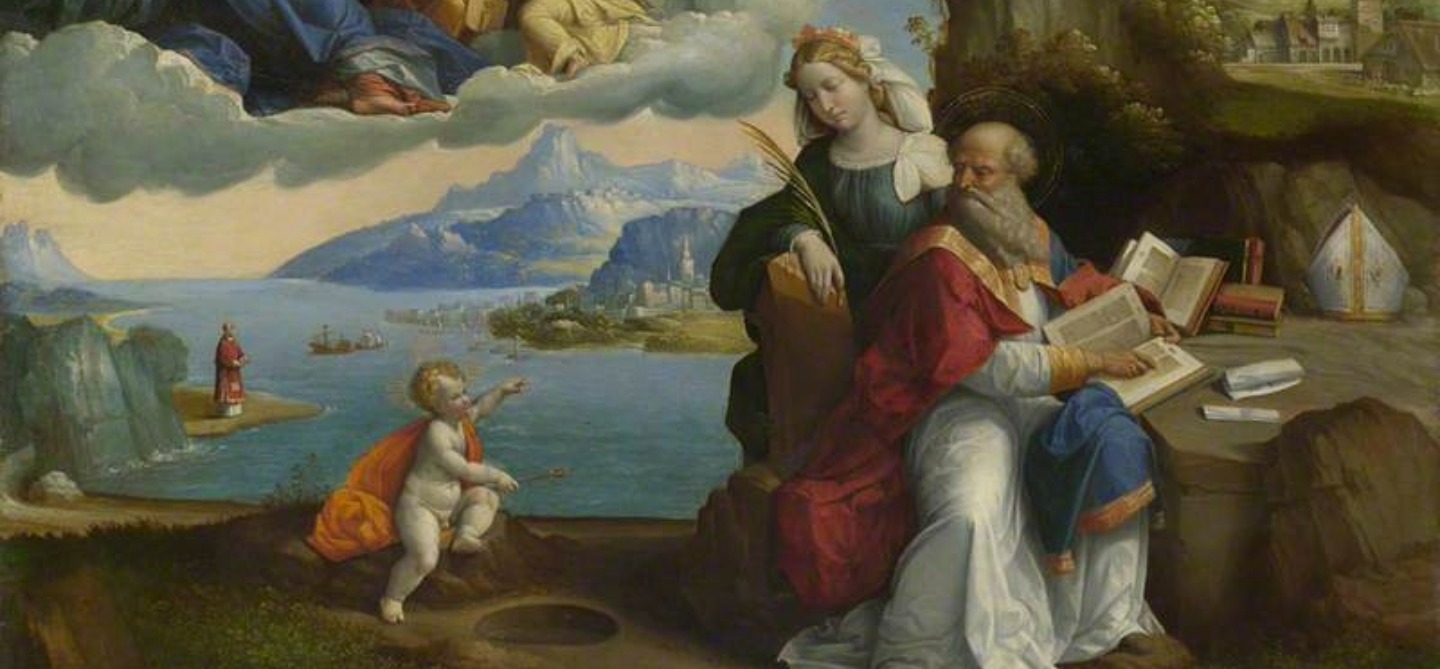
  1. Hero banner: Garofalo, Vision of Saint Augustine, c. 1520–30, oil on poplar panel, National Gallery, London.
  2. Body image 1: Eugène Delacroix, Faust and Mephistopheles, 1827–28, oil on canvas, Wallace Collection, London.
  3. Body image 2: Ary Scheffer, Faust and Mephistopheles, 1848, oil on canvas.
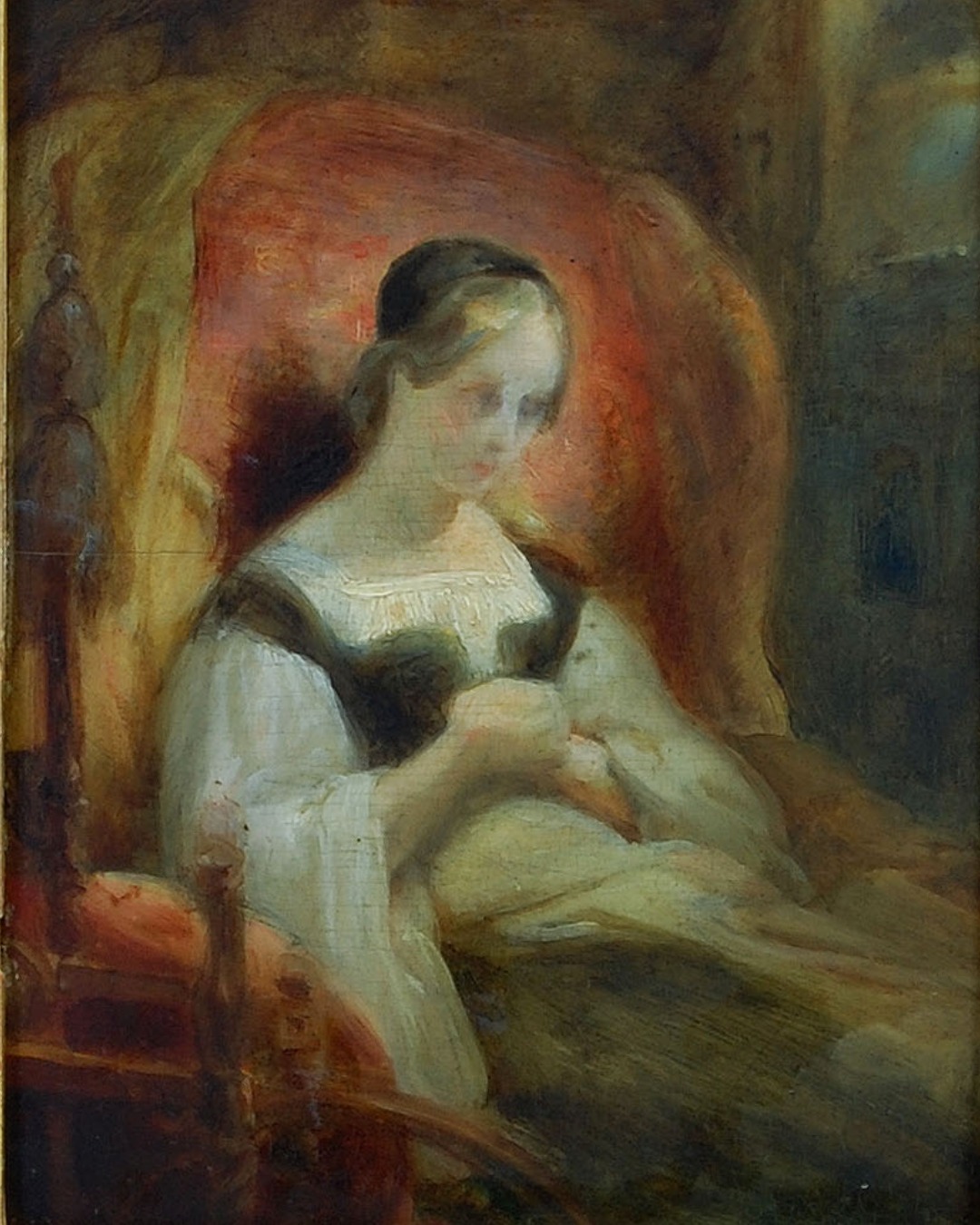
  4. Body image 3: Ary Scheffer, Marguerite at the Spinning Wheel, oil on canvas, Dordrechts Museum.
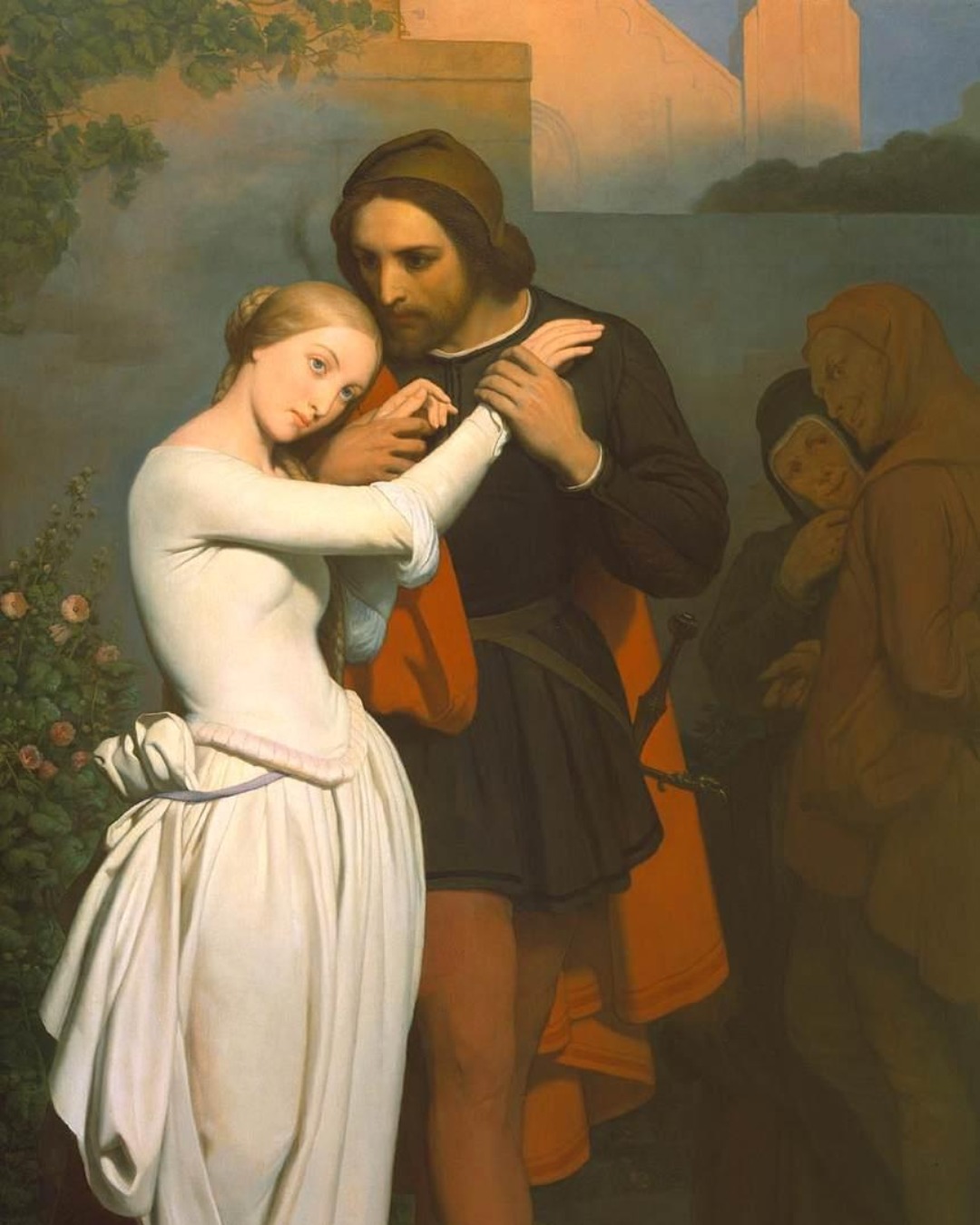
  5. Body image 4: Ary Scheffer, Faust and Marguerite in the Garden, 1846, oil on canvas.
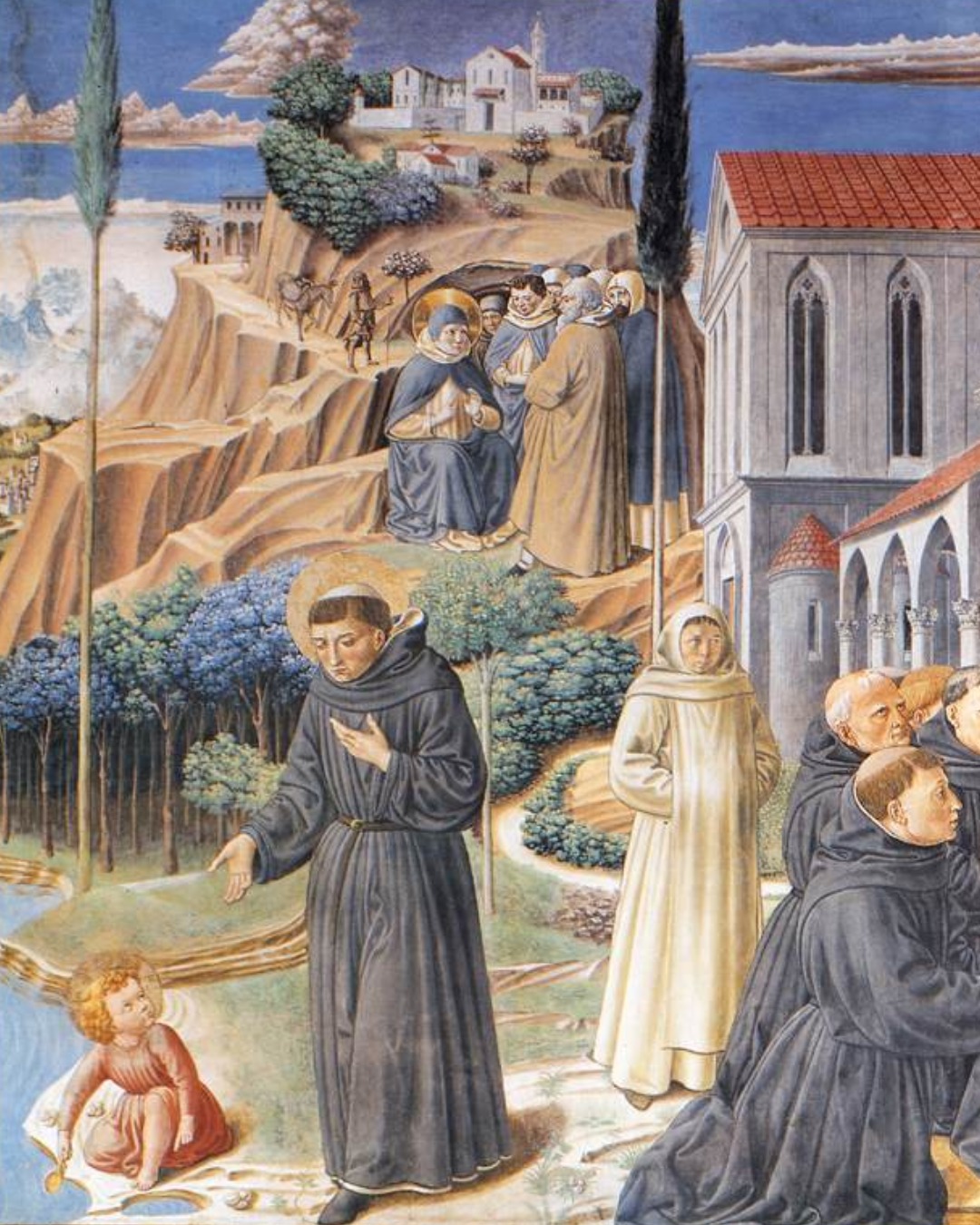
  6. Body image 5: Benozzo Gozzoli, The Parable of the Holy Trinity, 1464–65, fresco, Apsidal Chapel, Sant’Agostino, San Gimignano.
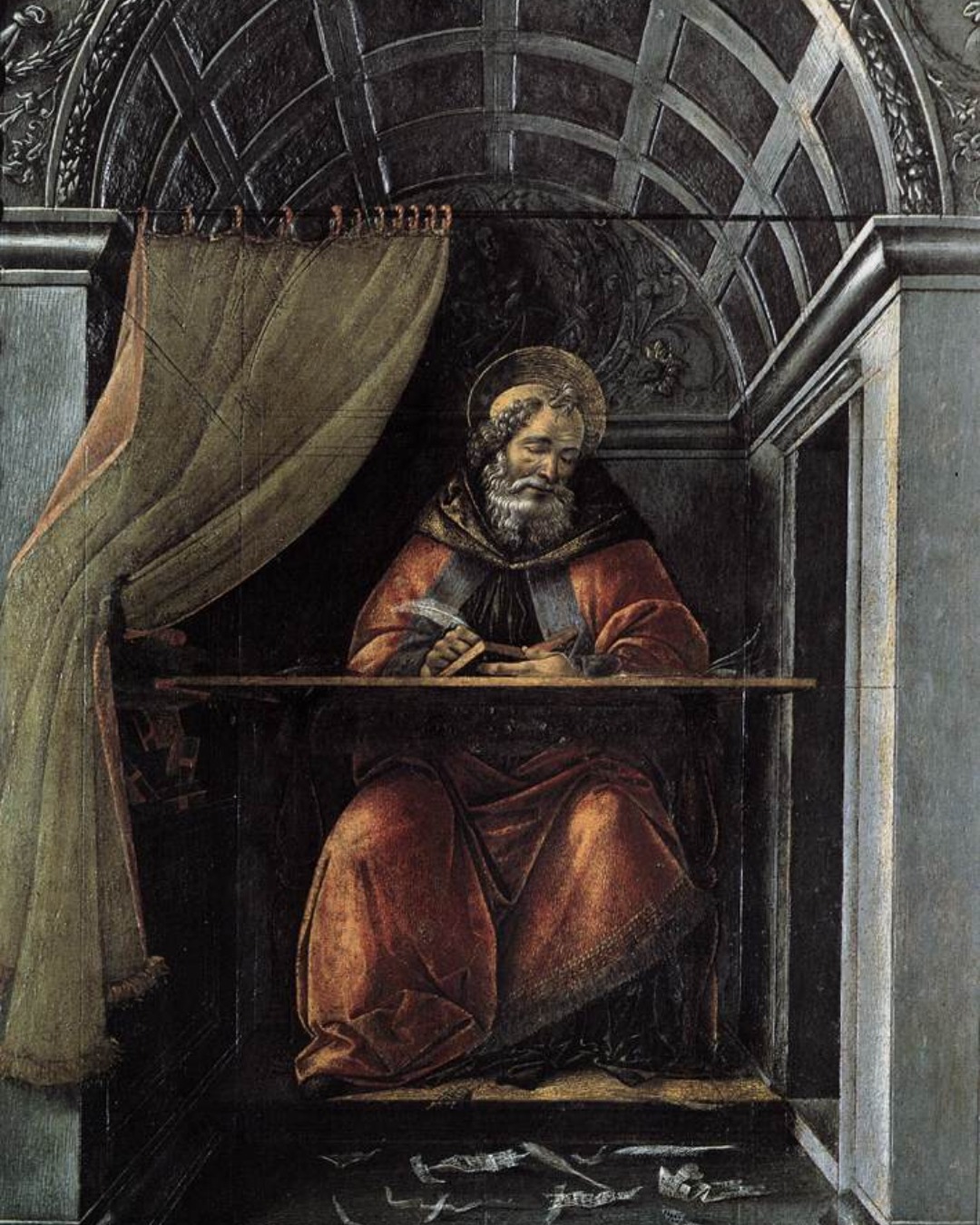
  7. Body image 6: Sandro Botticelli, Saint Augustine in His Study, c. 1490–94, tempera on panel, Uffizi Gallery, Florence.

Resources
Article
Reading. Thinking. Confessing. Part 2.
Close-up of a hand typing on a laptop keyboard in dim lighting.