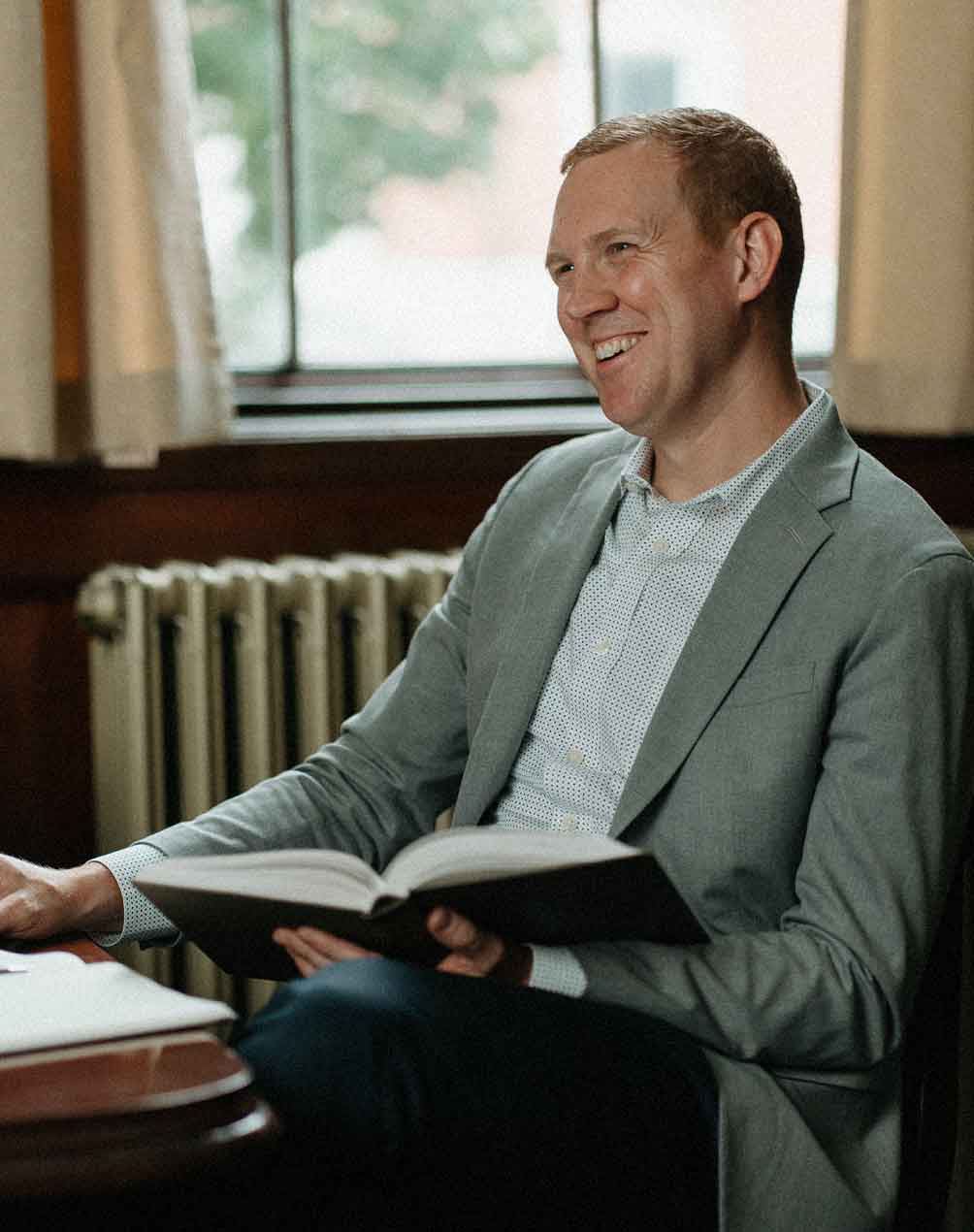
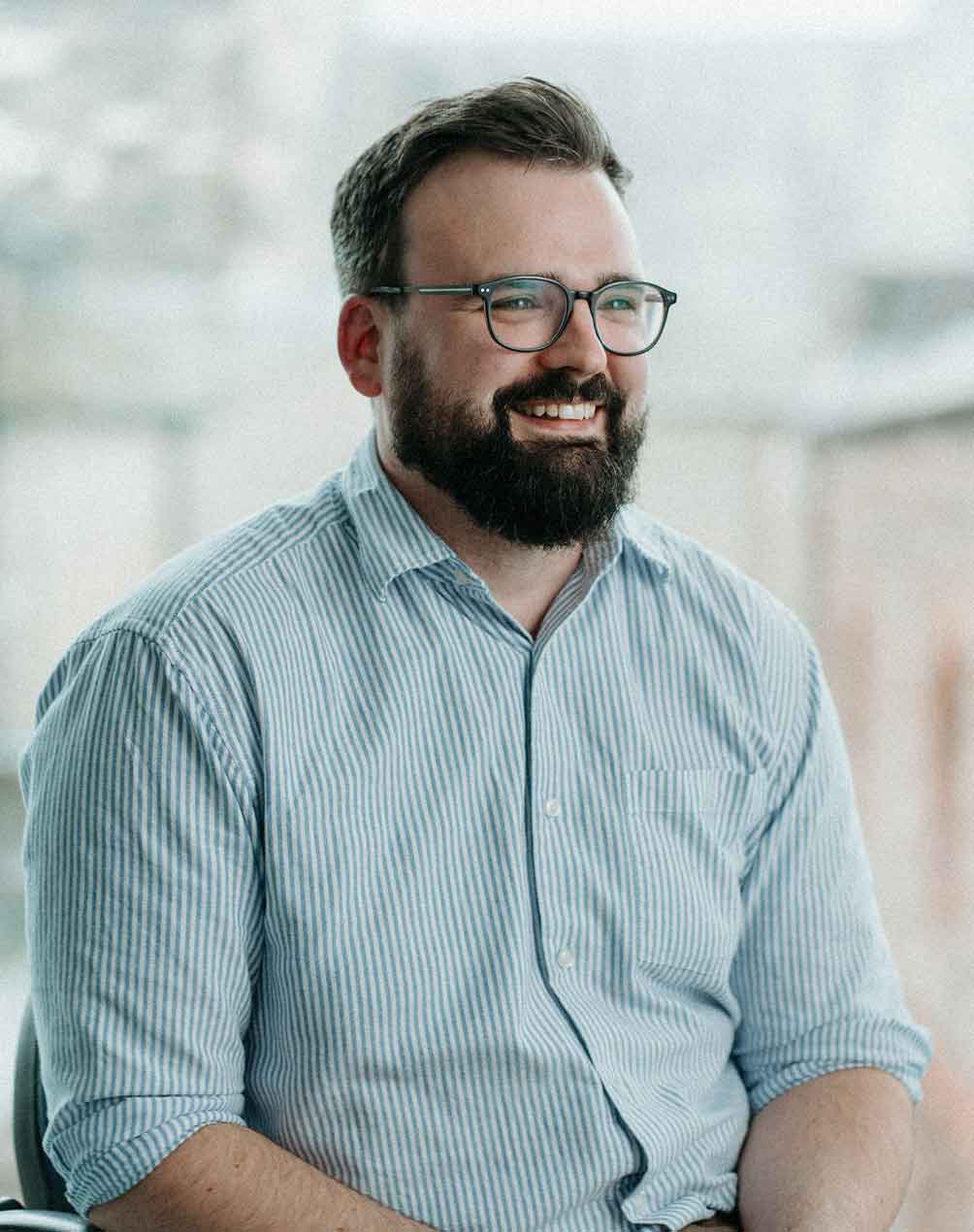
Dr. Dennis Greeson

The calling of theological education has never been more urgent, or more challenging.
In an age when many institutions struggle to keep the faith without compromise or lose sight of its living power to transform every culture, we in the Alexandrian Institute hold fast to an ancient conviction: that the Church desperately needs leaders who can think deeply, engage culture wisely, and minister faithfully.
This is why we exist, to train those who will train others. We believe that world-class theological education can be both rooted in timeless truth and globally accessible, both academically rigorous and personally transformative. We reject the false choice between scholarly excellence and pastoral formation, between ancient wisdom and contemporary relevance.
Our faculty embody this vision. They are scholar-pastors who have drunk deeply from the wells of Scripture and the Great Tradition, yet remain passionately committed to the flourishing of Christ's Church in our generation. They combine research excellence with mentoring hearts, bringing the treasures of biblical and theological scholarship to bear on the urgent questions facing the Church and the world.
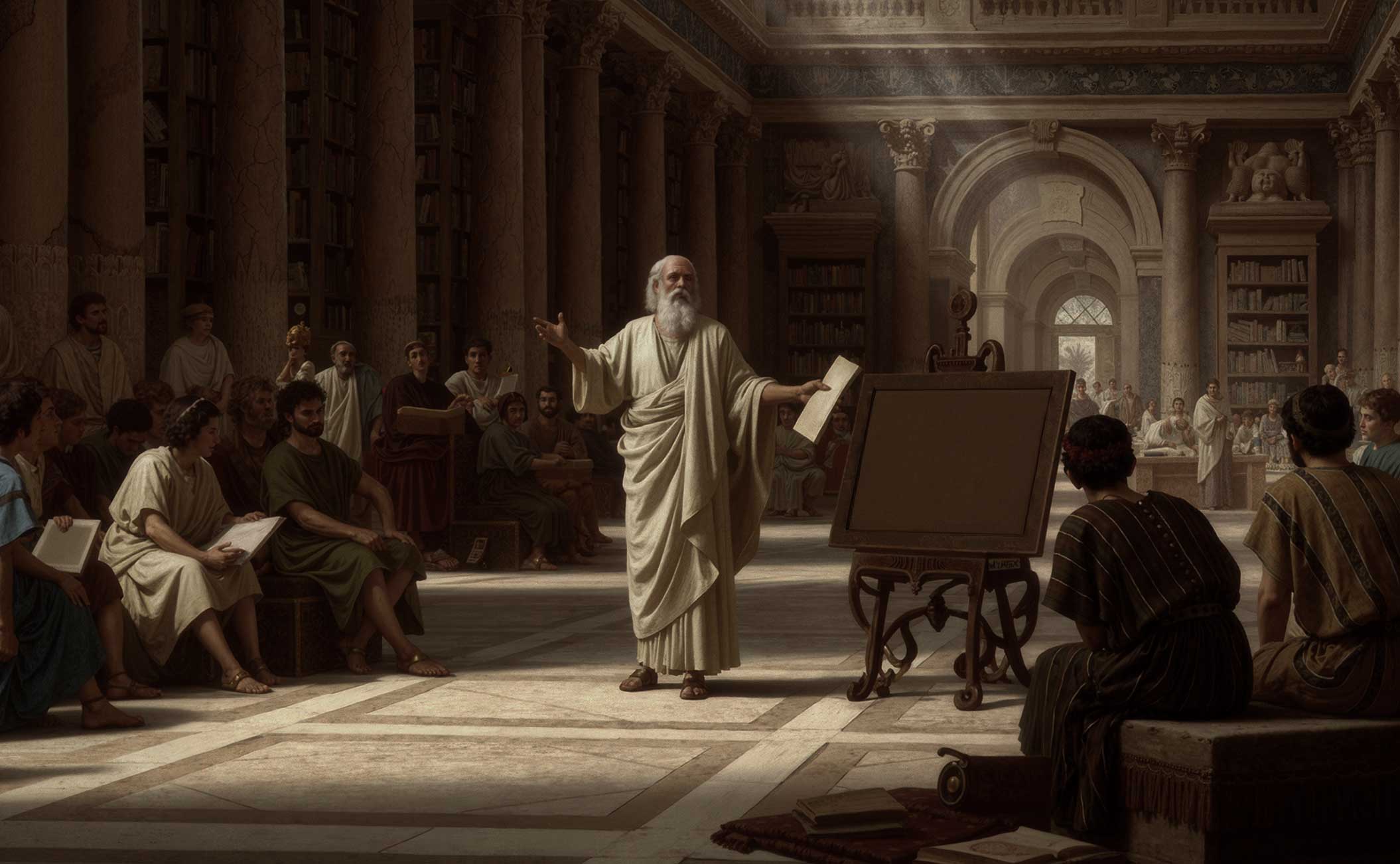
We are building something enduring here, a community of learning where the faith once delivered to the saints is faithfully transmitted to a new generation of leaders. Where ancient Alexandria's legacy of theologically rigorous interpretation of Scripture meets the global accessibility that our digital age affords. Where Truth, Tradition, and Excellence converge to shape tomorrow's pastors, scholars, and cultural engagers.
This is our calling. This is our joy. And we invite you to join us in this great work of theological education for the life of the world.
Dr. Dennis Greeson
Dean, The Alexandrian Institute
Scholar-Mentors Committed to Truth
Our faculty embody the Alexandrian Institute's unique blend of rigorous scholarship and pastoral formation. As published authors and experienced educators from leading institutions like Cambridge and Aberdeen, they bring both academic expertise and a deep commitment to the Church. They teach with the conviction that theology's ultimate purpose is not just intellectual growth, but the transformation of hearts and minds to build up the Body of Christ. From research fellows at Cambridge and Aberdeen to teaching fellows at leading institutions, our faculty combine active scholarship with proven teaching excellence.

- MTS, Harvard University (History of Christianity)
- MA, Vanderbilt University (History)
- PhD candidate, University of Cambridge (History)
Jonathan Baddley is Teaching Fellow in Christian Dogmatics. Additionally, he serves as a senior director of The London Lyceum, a senior editor at Hanover Press, and editor of the essay collection Advice to Christian Historians (2026). He lives in western Michigan with his wife and sons.
I write on puritanism, the sacraments, and affective theology in Reformation and post-Reformation Europe. I teach in The Alexandrian Institute because it allows me to draw on church history and historical theology to instruct, edify, and encourage students in their theological formation. TAI’s commitment to rigorous research, confessional integrity, and innovative learning gives me the opportunity to mentor students as they cultivate both a life of the mind and a life of faith.
- Advice to Christian Historians (Hanover Press, 2026). Editor and Contributor.
- "Worthy Reception of the Lord's Supper in Elizabethan and Early Stuart England: Interpreting Paul in the Puritan Practical Divinity" in Pauline Exegesis in the Early Modern Period (Tübingen: Mohr Siebeck Verlag, 2025).
- “Whatever Happened to Postmillennialism?”, The Gospel Coalition (The Carson Center, September 2025).
- “The puritan ‘practical divinity’”, Oxford Research Encyclopedia of Religion, ed. John Barton (New York: Oxford University Press, 2025).
- “Puritanism, the Lord’s Supper, and Spiritual Kinship in Elizabethan and early Stuart England,” Church History (Cambridge University Press: November 2024).
- “Contextualizing ‘Renewal’: An Examination of Matthew Barrett’s Historical Methodology”, in The Reformation as Renewal Symposium, The Hanover Review 3, no. 1 (2024): 95-105.
- “We Forget that Ozymandias Is Dead,” Modern Reformation (July 22, 2022).
- BTh, MTh, Queen’s University Belfast
Philip Boyd is a Teaching Fellow in Christian Dogmatics, as well as serving as an ordained minister in the Presbyterian Church in Ireland. He currently ministers in an inner-city congregation in East Belfast that is undergoing revitalisation. Since 2020, he has also been a recognised teacher at Union Theological College, where he serves on the Management Committee and on the denomination’s Council for Training in Ministry.
"I value the Alexandrian Institute’s commitment to a rigorous programme of study that engages the breadth of the Reformed tradition while remaining deeply relevant to contemporary ministry. My research and teaching interests include the spiritual formation of covenant children, Presbyterian polity, and the person and work of the Holy Spirit. I am particularly concerned to explore how theological study informs and shapes pastoral practice, with a view to equipping students for faithful and effective ministry in contemporary contexts."
- BA, University of Tennessee, Knoxville
- MDiv, ThM, Southern Baptist Theological Seminary
- PhD, University of Aberdeen
Shawn serves as a Teaching Fellow in Christian Dogmatics. Additionally, he is a Research Fellow at the Kirby Laing Centre for Public Theology in Cambridge, England. He and his family reside in North Carolina, US, where he works in higher education and helps pastor a small local church.
"My reason for teaching with TAI is the joy of participating in theological development that is actively and creatively serving the church throughout the world. My areas of research include the history and theological reception of analytic philosophy, the relationship between epistemology and biblical interpretation, and questions of theological method."
- Reformed Epistemology and the Structure of Knowledge (Lexington, 2025)
- B.S. Electrical Engineering, Southern Methodist University
- M.Div., Beeson Divinity School, Samford University
- PhD candidate in Systematic Theology, University of Edinburgh
David Meinberg serves as Teaching Fellow in Christian Dogmatics. Additionally, he is an Adjunct Lecturer for Core Texts and Biblical Foundations at Samford University. He has previously served as a Tutor at the University of Edinburgh in the School of Divinity and the Edinburgh Futures Institute. He is a member of Faith Presbyterian Church (PCA) and lives in Birmingham, Alabama.
I teach at TAI because I am passionate about helping students understand how theology, including the complex bits, matters for all of life, head and heart. I particularly enjoy helping students learn how to research and write about theology with clarity. My research interests include Herman Bavinck and neo-Calvinism, public and political theology, the doctrine of God, and cultural apologetics.
BA and BD, Queen's University Belfast
Richard Patton is a Teaching Fellow in Christian Dogmatics. He is also an ordained minister in the Presbyterian Church in Ireland. He is currently serving as Preaching Assistant at Knock Presbyterian Church in Belfast. Richard is married to Lynsey with three children.
"I am very interested in the work of the Holy Spirit upon Christ and his Church as understood by John Owen in his seventeenth century context. My Masters thesis was on John Calvin’s Christology compared to that of John Chrysostom from the book of Hebrews. I teach in the Alexandrian Institute because I am passionate that both ordained and lay members of congregations are fully equipped with theological knowledge and passion to fulfil the calling God has placed upon them."
- BS, Bible, Cairn University
- MDiv, Gordon-Conwell Theological Seminary
- ThM, Gordon-Conwell Theological Seminary (Historical Theology)
- PhD, University of Edinburgh (Systematic Theology)
Gregory Parker, Jr. is Teaching Fellow in Theological Ethics. He lives in Cumming, Georgia, with his family and attends the Vine Community Church (PCA). Previously, he taught at Cairn University and Faith Mission Bible College, and is active in translation and editorial projects on Herman and Jan Bavinck. He is a member of the Evangelical Theological Society, the Bavinck Society, and on the Advisory Board of the Scottish Council on Human Bioethics, the Neo-Calvinist Publication Society, and the Chinese Critical Edition of Reformed Dogmatics.
"I teach with The Alexandria Institute because I believe theological education should form disciples who think, love, and serve faithfully. My research centers on reformed theology (Augustine-Calvin-Bavinck), theological anthropology, and 19th-20th century theology. I have a particular interest in the history and theology of the Bavinck family and how reformed theology addresses ethical issues relevant to our own time."
- "Faith and Salvation" in T&T Clark Handbook of Neo-Calvinism. eds. Cory Brock and Gray Sutanto (Bloomsbury, 2024)
- “Bavinckian Rhapsody: Theological Method in Bavinck’s Doctrine of Divine Simplicity” Journal of Classical Theology 3 (2024): 37-55.
- “Is There Room in the Inn?: Visiting Adoption in Herman Bavinck’s ordo salutis” Perichoresis: The Theological Journal of Emmanuel University 22, no.1 (March 2024): 4-20. w/ Cameron Clausing
- “A Translation of Ernst Troeltsch’s Prädestination I-II, III’” Journal for the History of Modern Theology/Zeitschrift für Neuere Theologiegeschichte 30, no.2 (2023): p. 290-311. w/ Erin Zoutendam.
- Co-editor, Herman Bavinck, Guidebook for Instruction in the Christian Religion (Hendrickson Publishers, 2022
- Editor, Herman Bavinck, What is Christianity? (Hendrickson Publishers, 2022)
- “Herman Bavinck’s ‘The Leading Ideas of Calvin’s Institutes’” The Confessional Presbyterian 17 (2022): 53-62.
- “Remaining Human: The philosophy of Charles Taylor aimed at the ethics of generating trans-and-posthuman persons” in The Ethics of Generating Posthumans: Philosophical and Theological Reflections on Bringing New Persons into Existence. eds. Calum Mackellar and Trevor Stammers (Bloomsbury, 2022).
- “Encyclopedia Bavinck: The Case of the History of the Theological Encyclopedia of Herman Bavinck” Journal of Biblical and Theological Studies 6, no. 2 (2021): 293-310.
- Herman Bavinck, The Sacrifice of Praise (Hendrickson Publisher, 2019) w/ Cameron Clausing
- “Reformation or Revolution? Herman Bavinck and Henri de Lubac on Nature and Grace" Perichoresis: The Theological Journal of Emmanuel University 15, no.3 (2017): p. 81-95.
- BD, Queen’s University Belfast
- MSt, University of Oxford (Theology and Religion)
- DPhil, University of Oxford (Theology and Religion)
Nathan is a Teaching Fellow in Christian Dogmatics. He lives in the North East of England and is a Research Associate at The Christian Institute in Newcastle upon Tyne – a registered charity for “the furtherance and promotion of the Christian religion in the United Kingdom and elsewhere” with more than 60,000 supporters. He has held visiting research fellowships at the Institut d’histoire de la Réformation, Université de Genève, and at the H. Henry Meeter Center for Calvin Studies at Calvin University. My research interests include Reformed theology, modern philosophy, social and political theory, and secularisation. I teach on the M.A. in Theology programme and has been involved with teaching on the Christology, Ethics, and Doctrine of Scripture modules. Dissertations I have supervised have explored John Calvin’s understanding of the tri-partite division of the law, and developed a theological response to expressive individualism. I am especially interested in supervising projects on the doctrine of God, natural law, and contemporary social policy issues.
- “‘A Sort of Catholic Marxist’: Charles Taylor, the British New Left, and a Communion of Saints,” Politics, Religion, and Ideology 26.1 (2025): 43–62.
- Review of The Eclipse of Christianity: And Why It Matters by Rupert Shortt. Themelios 50.2 (2025).

Our Vision for Theological Education
The Alexandrian Institute represents a bold vision for theological education in our time. We believe world-class theological training must be both rooted in timeless truth and globally accessible, combining rigorous scholarship with transformative formation. Our manifesto outlines how we're building an enduring legacy of theological education that serves the Church, engages culture, and prepares leaders for faithful ministry in an increasingly complex world.
Scholarly Depth. Pastoral Heart.
FROM the PEW to PhD
We exist to train those who will train others, offering accessible and academically rigorous pathways for students at every level. Join a learning community devoted to theological retrieval, academic excellence, and faithful witness.