Fill Out the Online Form
Begin your Journey of Knowledge and Faith
seal logo
Personal Information
1/2
Select Your Program of Interest
2/2
In 300 words or less, describe your Christian faith, including your conversion and current Christian walk, and ministry experience (if applicable)
300/words
In 300 words or less, describe reasons for your desire to study with the Alexandrian Institute and how this deepen your faith or equip you for Christian ministry
300/words
Upload your Letter of Intent
Uploading...
fileuploaded.jpg
Upload failed. Max size for files is 10 MB.
Upload your CV or Resume
Uploading...
fileuploaded.jpg
Upload failed. Max size for files is 10 MB.
Upload your list of references
Uploading...
fileuploaded.jpg
Upload failed. Max size for files is 10 MB.
Upload your list of references
Uploading...
fileuploaded.jpg
Upload failed. Max size for files is 10 MB.
Upload your list of references
Uploading...
fileuploaded.jpg
Upload failed. Max size for files is 10 MB.
Upload a sample of your academic writing
Uploading...
fileuploaded.jpg
Upload failed. Max size for files is 10 MB.
Upload your list of references
Uploading...
fileuploaded.jpg
Upload failed. Max size for files is 10 MB.
Upload your list of references
Uploading...
fileuploaded.jpg
Upload failed. Max size for files is 10 MB.
Thank You for Taking
the First Step
Your interest has been received. We’re excited to walk with you on this journey of learning and spiritual growth. Our team will be in touch soon with the next steps.
Oops! Something went wrong while submitting the form.
Road to Nicaea

The Heresy of Arius

“Once When He Was Not”: The Heresy of Arius

About the Author

Associate Professor of Systematic Theology at Covenant Theological Seminary and a Research Fellow at the Alexandrian Institute.

The Heresy of Arius

The road to Nicaea begins with controversy. Before the church could confess what she believed about Jesus Christ, she was forced to reckon with a direct challenge to the heart of that confession. In the early fourth century, a presbyter in Alexandria named Arius put forward an account of the Son of God that would ignite a theological crisis spanning generations. To walk the road of Nicaea is to first understand what was being denied.

The Heresy of Arius
The Heresy of Arius

Shortly after the Great Persecution ended and Constantine legalized Christianity throughout the Roman Empire, a controversy arose in the eastern city of Alexandria that would shape the course of subsequent Christian theology. The presbyter Arius came into conflict with his bishop Alexander over the nature of the Word of God, the Logos. In what sense could Jesus be considered God? In what sense was the Son one with God the Father, and how, in turn, does he save? Over the last forty years, scholarship on Arius has shifted from viewing him as a stand-alone heresiarch who founded a movement to seeing him as the catalyst for a theological conflagration that spread far beyond the boundaries of his own thought.1 Lewis Ayres summarizes this shift well by describing “Arius as a catalyst for a controversy.”2 Arius’s error spurred forth-century theologians to articulate the essential unity of the Father and Son securing both the Christian view of the divine and human salvation.

Arius centrally taught a fundamental difference between the Father and the Son. Only the Father is unoriginated. The Son exists before all things and is the instrument through whom the Father created the cosmos. Nevertheless, the Son has a beginning: he was made from nothing by the Father, just as the whole cosmos was. In a letter to Eusebius of Nicomedia (c. 321–323), Arius explains his position:

‍

“Before he was begotten, or created, or defined, or established, he did not exist. For he was not unbegotten. But we are persecuted because we have said the Son has a beginning but God has no beginning. We are persecuted because of that and for saying he came from non-being. But we said this since he is not a portion of God nor of anything in existence.”3

‍

In one sense, the Son can be described as eternal and unchanging, but not by nature; rather, he is so by the Father’s will. Fundamentally, the Son is to be distinguished from the Father not only temporally but also with respect to origin, nature, authority, and transcendence over the cosmos. This is captured in the Thalia, a poetic statement of Arius’s theology: “There was when the Son was not” and “once when he was not.”4

Arius draws on a line of reasoning widespread in the ancient world: the singular origin of reality and the cosmos it created are fundamentally incompatible. Proper engagement between the cosmos and Theos therefore requires intermediaries. As Hanson summarizes, “The first point to notice is that Arianism in its characteristic form always assumed that revelation and redemption on the part of God necessitated a reduction or lowering so that they had to be undertaken by a being who, though divine, was less than fully divine.”5 God, in and of himself, is distant from the world and ultimately stands in a competitive relationship to it, such that he cannot be known within creation without ceasing to be God. Arius, therefore, posits the Logos as an intermediary who can bridge this gap, placing him on the creaturely side of an infinite divide. To support this position exegetically, Arius and later allies cite texts such as “the Father is greater than I” (John 14:28) and the statement in Proverbs 8:22 that Wisdom is the first of God’s works. The precise motives behind Arius’s concerns remain debated among scholars. Whether he sought to uphold a particular aspect of Origen’s theology or to make Christianity more palatable to the philosophical preferences of the imperial elite, Arius advanced a bold new synthesis that challenged the very heart of Christian theology and piety.

Arius’s position was taken up and condemned at the Council of Nicaea in 325, where the council fathers adopted the language of homoousios—same in substance—to express the unity of substance or essence between the Father and the Son. Yet this was not the end of the dispute but the beginning of a much broader controversy, as older positions were revised and new hybrid positions were debated for two more generations.6 Although the historical Arius and his writings receded into the background of later fourth-century debates, the position he pioneered continued to bear his name. Arianism is therefore not confined to the specific teachings of the condemned Alexandrian presbyter; it came to designate a recognizable doctrinal error that has been applied to thinkers and theological systems across the ages.7 The dogmatic task of heresiology, the study of theological error, is to investigate the concrete teachings of erring individuals and groups, but it moves beyond description to critique those teachings in light of the whole counsel of God and the gospel. Named heresies do not primarily identify the precise beliefs of one individual; rather, they extrapolate from a known distortion of Christian teaching to show how it compromises the gospel and to warn against error.  

The Arian heresy, that the Son is a creature of God, is not just about the integrity of the Son, although that is central. The very nature of God and his relationship to the world he created is fundamentally reshaped. God is not, in himself, Father of the Son, nor does God possess his wisdom eternally. By rejecting the co-eternality and glory of the Son, Arius renders God as Father and wise only contingently. In attempting to secure the unique unbegottenness of the Father, Arius renders him changeable. Also, Arius’s view of the divine renders God utterly inaccessible to humanity as one beyond all realms of creational reality.  Therefore, when Athanasius critiques Arius, he is not concerned only with Christology but with the understanding of God and creation.  Divine transcendence and immanence are not mutually exclusive, but precisely because of God’s infinite plenitude, divine transcendence over and immanence to creation cohere rather than conflict. As Khaled Anatolios remarks, regarding Athanasius’s On the Incarnation, “In being most intimately involved in the world, God does not cease to be wholly other, as the Word is other than creation. Conversely, divine otherness does not entail distance from creation, as the Word is powerfully and intimately present to creation.”8  Therefore, for Athanasius, what is true of the general God-world relation also holds in the incarnation, as the Word can take on humanity without ceasing to be beyond creation and wholly one with the Father. God needs no created Mediator to engage his world.  

Nor can a mere created Mediator save. The Son must be God and the Son of God since only one who is truly God can either reveal God or restore creatures to God. Human life and salvation rest on their only Creator and Lord, and none other. Only God has the prerogative to save, the power to save, and is worthy of the worship and praise due the Savior.  As Pro-Nicene orthodoxy would attest in response to various iterations of the Arian error, only the one who is homoousios with the Father can truly be worshiped along with the Father. Only the one who is homoousios with the Father can truly reveal the Father. Only the one who is homoousios with the Father can bring us back to the Father. Only if Jesus Christ is one in essence with God the Father and the Holy Spirit eternally can who he is and what he accomplished suffice for human salvation. On these truths the integrity of the gospel depends: God the Father sent his eternal Son into the created cosmos to become a man to save sinners and through the Divine Spirit return them to the relationship with their Creator and Lord.  

‍


  1. 1. Rebecca Lyman, “Arius and Arianism: The Origins of the Alexandrian Controversy,” in The Cambridge Companion to the Council of Nicaea, ed. Young Richard Kim (Cambridge: Cambridge University Press, 2021), 43–62; R. P. C. Hanson, The Search for the Christian Doctrine of God: The Arian Controversy, 318–381 (Grand Rapids, MI: Baker Academic, 2007), 3–128; Rowan Williams, Arius: Heresy and Tradition, rev. ed. (Grand Rapids, MI: Eerdmans, 2002).
  2. 2. Lewis Ayres, Nicaea and Its Legacy: An Approach to Fourth-Century Trinitarian Theology (Oxford: Oxford University Press, 2004), 12n3.
  3. 3. Arius, “Letter of Arius to Eusebius of Nicomedia,” trans. Glen L. Thompson, https://www.fourthcentury.com/urkunde-1/. For the original texts and modern translations of the primary sources of the Arian controversy, see https://www.fourthcentury.com/documents-of-the-early-arian-controversy/.
  4. 4. Arius, Thalia, lines 80, 82, https://www.fourthcentury.com/arius-thalia-intro/.
  5. 5. Hanson, The Search for the Christian Doctrine of God, 100.
  6. 6. For the unfolding of the controversy after Arius, see Hanson, The Search for the Christian Doctrine of God; Stephen R. Holmes, The Quest for the Trinity: The Doctrine of God in Scripture, History and Modernity (Downers Grove, IL: IVP Academic, 2012); Ayres, Nicaea and Its Legacy.
  7. 7. Maurice Wiles, Archetypal Heresy: Arianism through the Centuries (Oxford: Oxford University Press, 1996).
  8. 8. Khaled Anatolios, Athanasius: The Coherence of His Thought (London: Routledge, 2005), 46.

Public domain artwork used in this essay:
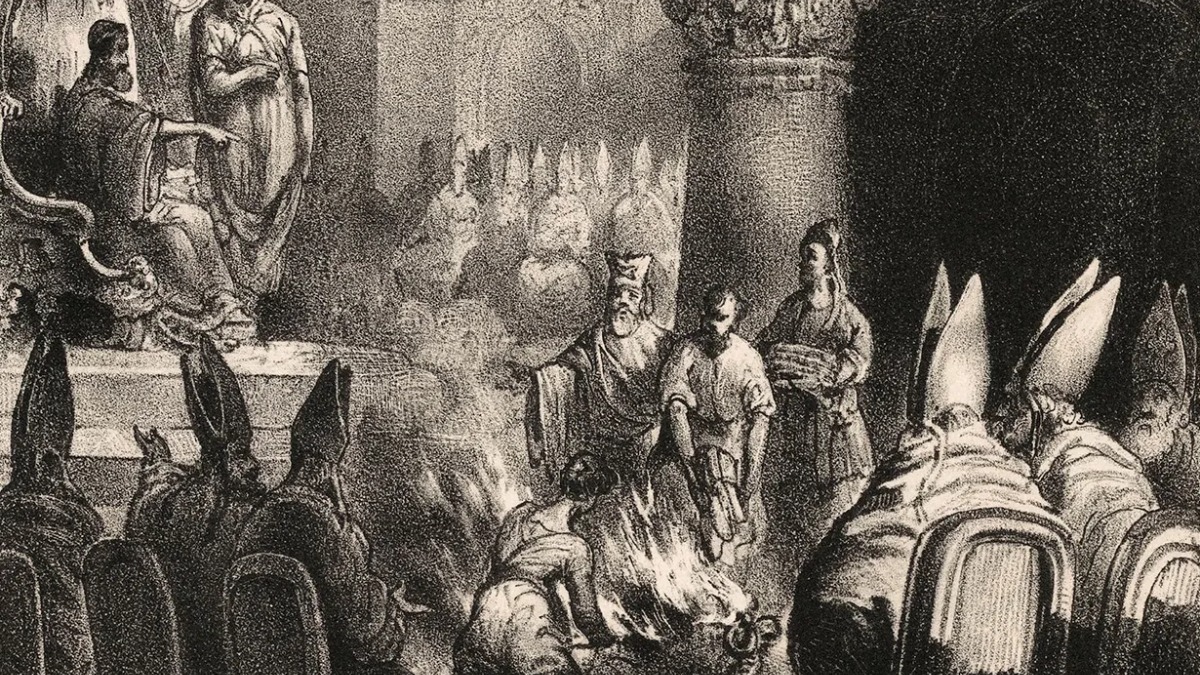
  1. Hero banner: Carel Christiaan Antony Last, Book Burning at the Council of Nicaea, 1835, lithograph, Rijksmuseum, Amsterdam.
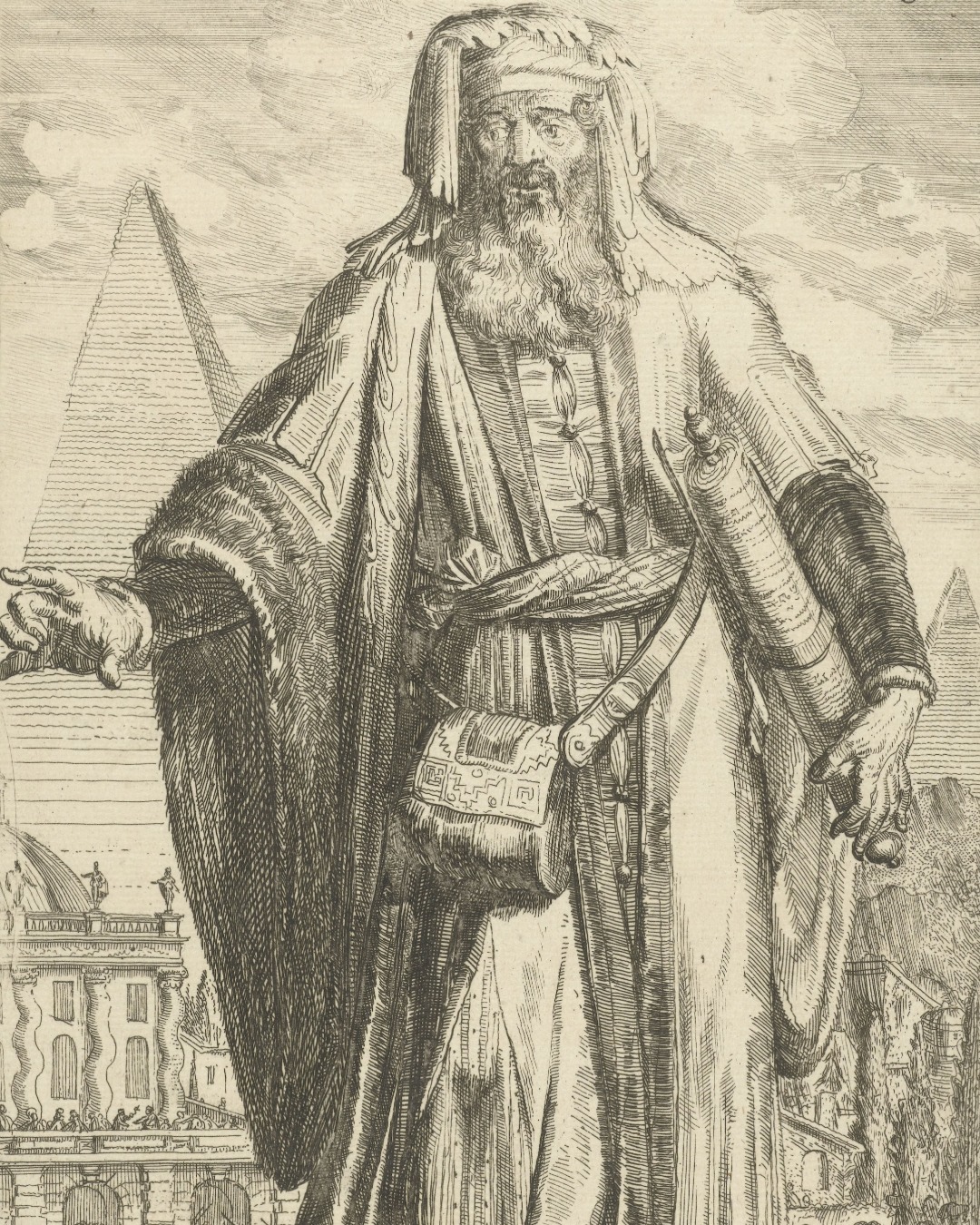
  2. Body image 1: Romeyn de Hooghe, Portrait of Arius of Alexandria, 1701, etching and engraving, from Gottfried Arnold, Historie der kerken en ketteren, Rijksmuseum, Amsterdam.
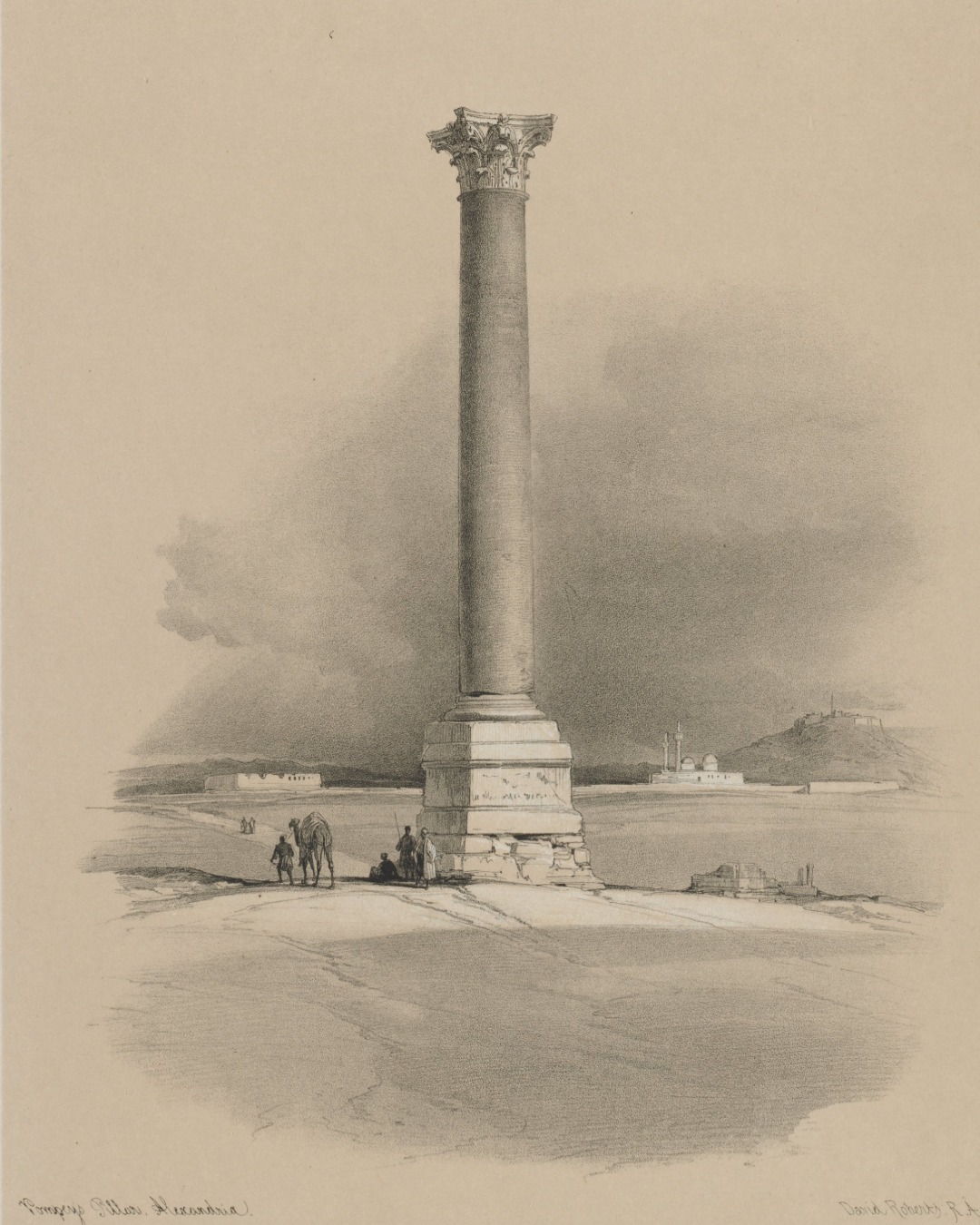
  3. Body image 2: Louis Haghe after David Roberts, Pompey’s Pillar, Alexandria, from Egypt and Nubia, vol. 1, 1846, color lithograph, Cleveland Museum of Art.
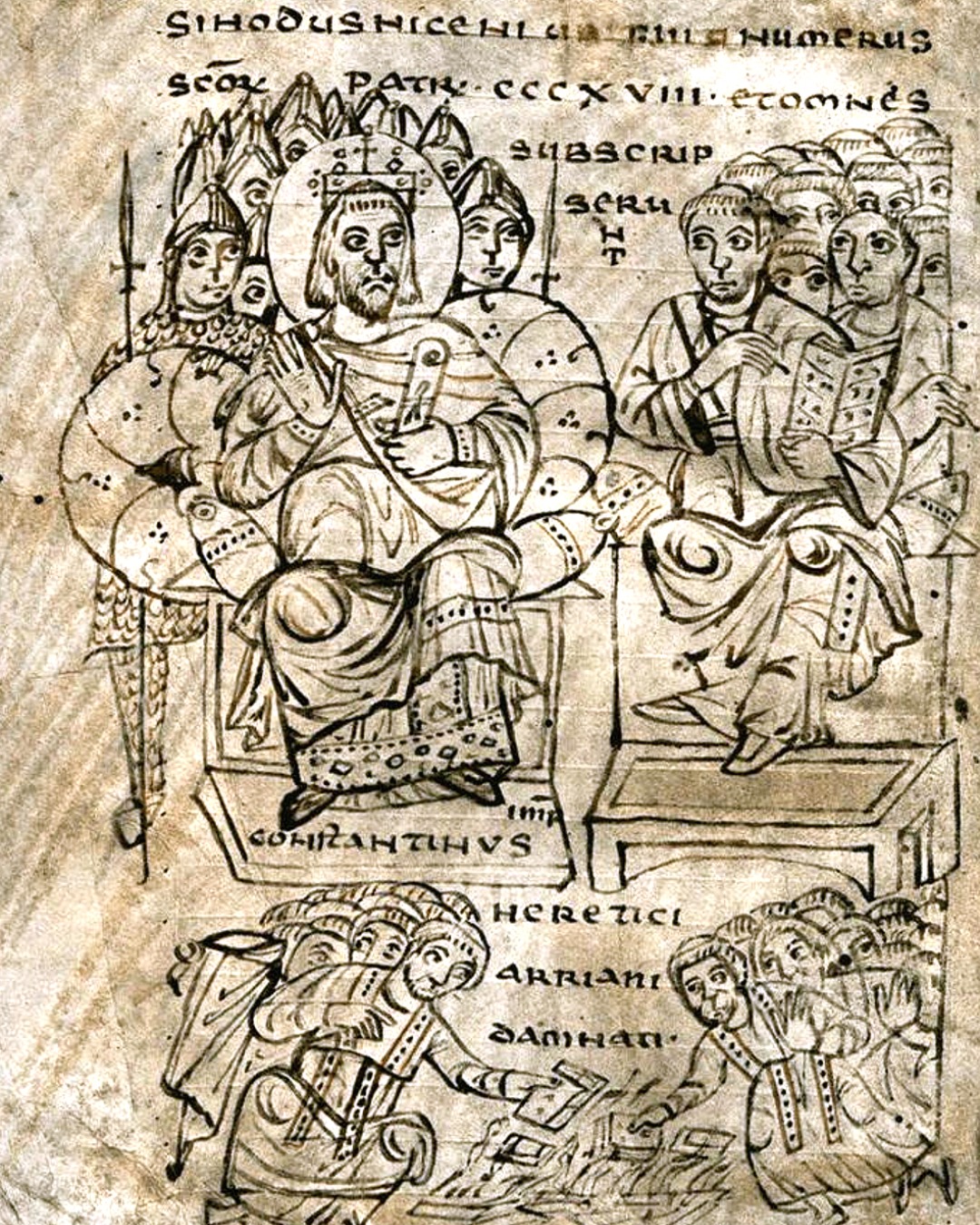
  4. Body image 3: Constantine and the Council of Nicaea, with the Burning of Arian Books, c. 825, drawing on vellum, MS CLXV, Biblioteca Capitolare, Vercelli.
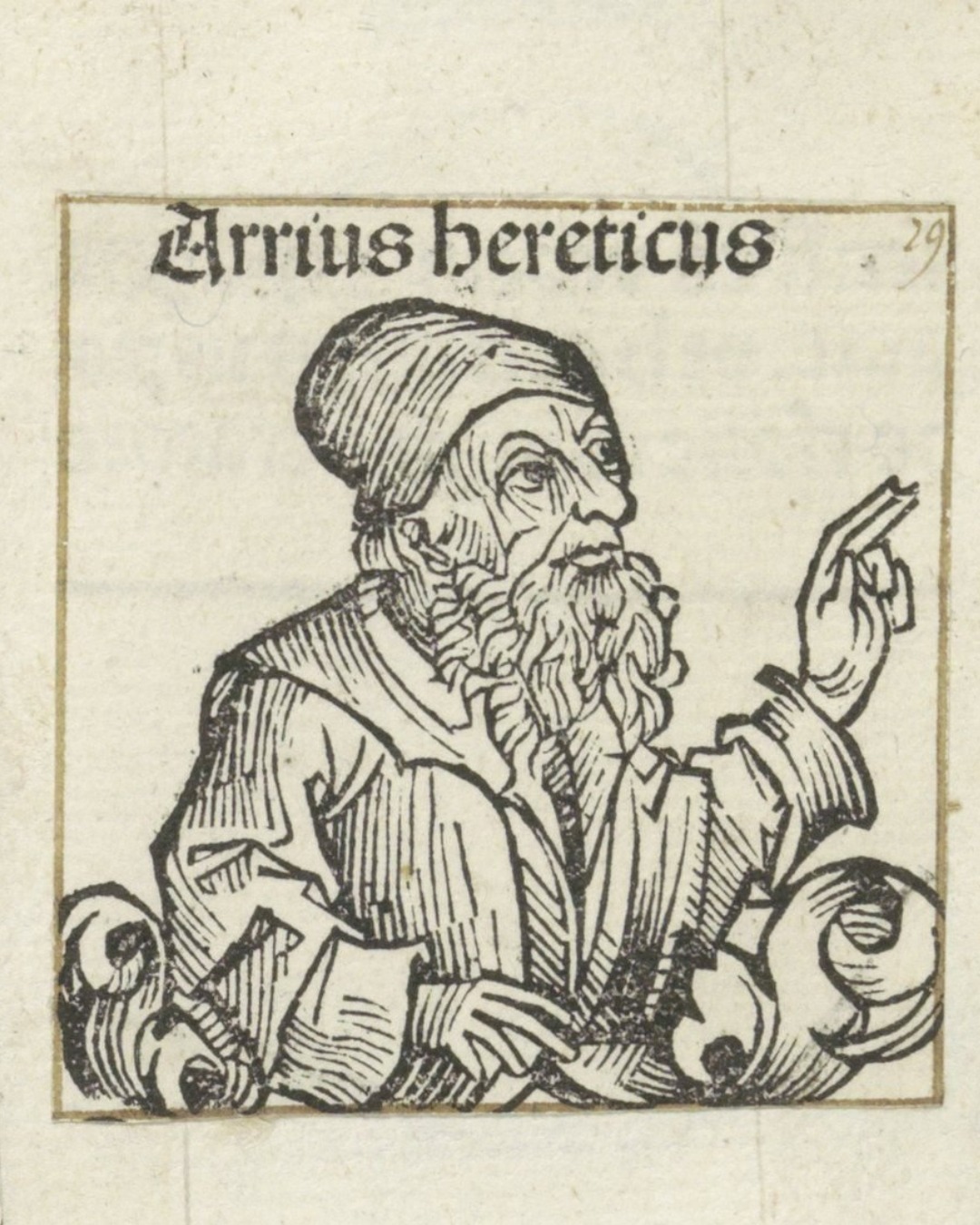
  5. Body image 4: Workshop of Michael Wolgemut, Arius, woodcut, from Hartmann Schedel, Liber Chronicarum (Nuremberg Chronicle), 1493, Rijksmuseum, Amsterdam.
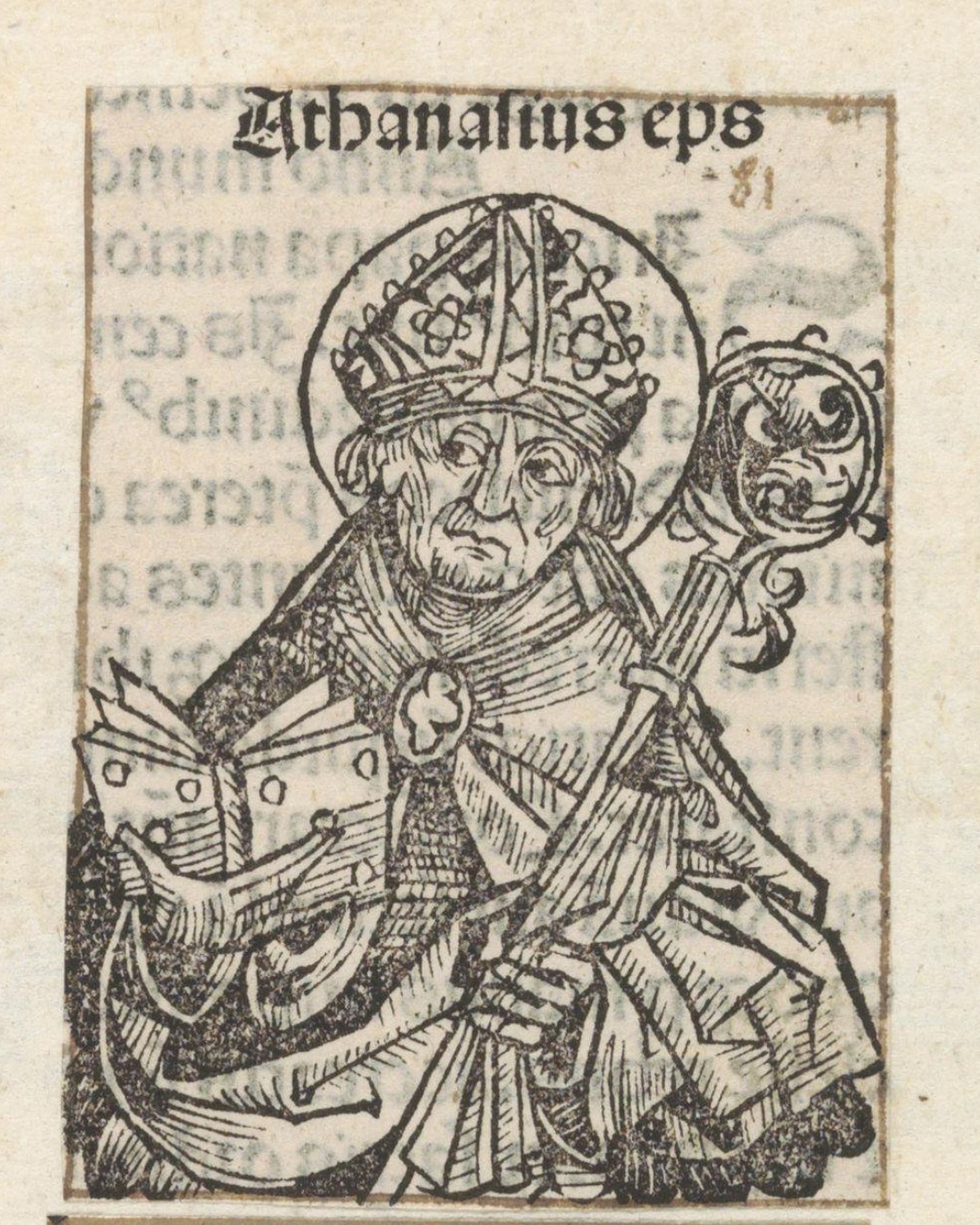
  6. Body image 5: Workshop of Michael Wolgemut, Athanasius of Alexandria, woodcut, from Hartmann Schedel, Liber Chronicarum (Nuremberg Chronicle), 1493, Rijksmuseum, Amsterdam.
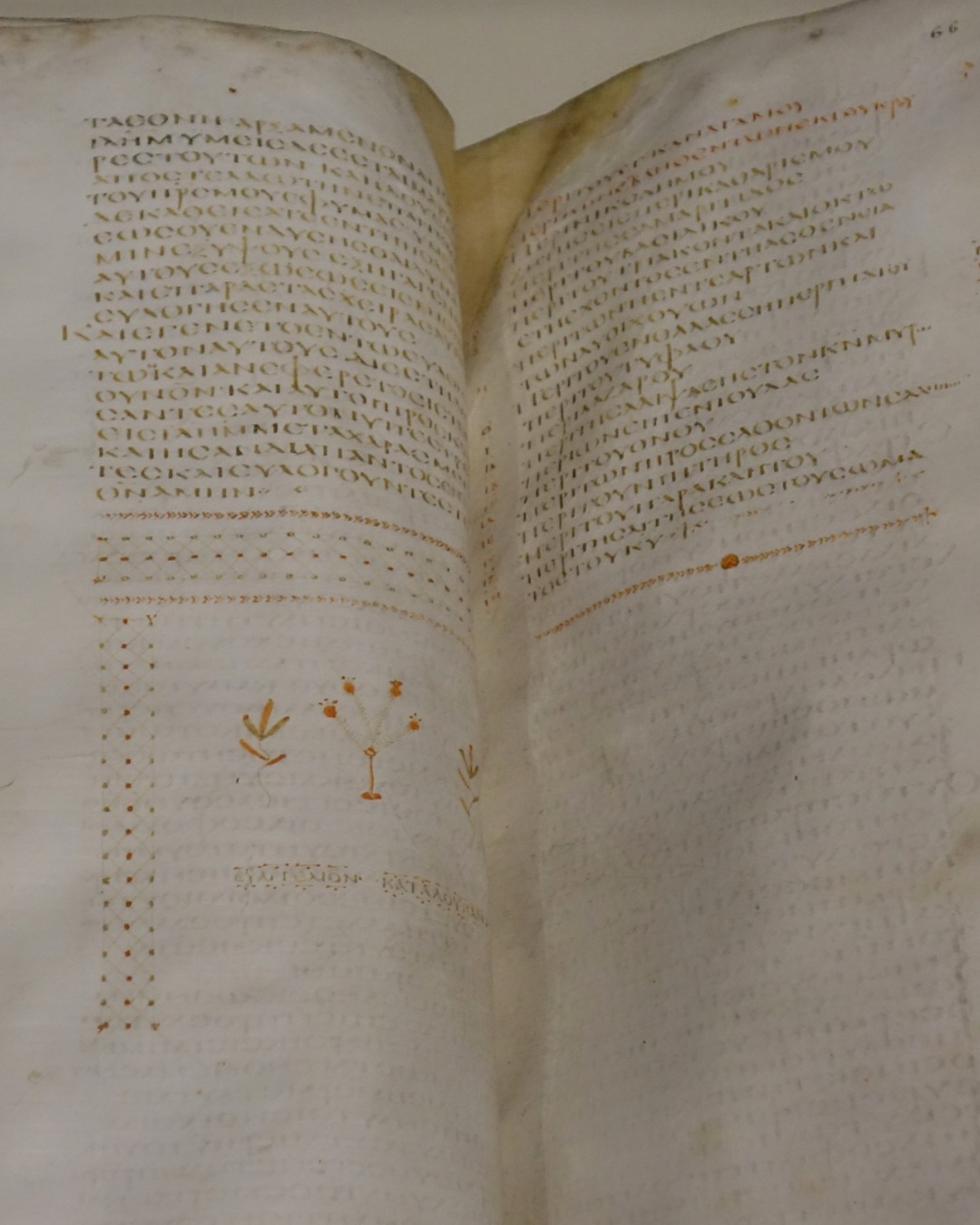
  7. Body image 6: Codex Alexandrinus, open at the end of Luke and the beginning of John, 5th century, parchment, British Library, London. Photograph by Daderot, CC0.

‍

Resources
Article
The Heresy of Arius
Close-up of a hand typing on a laptop keyboard in dim lighting.