Fill Out the Online Form
Begin your Journey of Knowledge and Faith
seal logo
Personal Information
1/2
Select Your Program of Interest
2/2
In 300 words or less, describe your Christian faith, including your conversion and current Christian walk, and ministry experience (if applicable)
300/words
In 300 words or less, describe reasons for your desire to study with the Alexandrian Institute and how this deepen your faith or equip you for Christian ministry
300/words
Upload your Letter of Intent
Uploading...
fileuploaded.jpg
Upload failed. Max size for files is 10 MB.
Upload your CV or Resume
Uploading...
fileuploaded.jpg
Upload failed. Max size for files is 10 MB.
Upload your list of references
Uploading...
fileuploaded.jpg
Upload failed. Max size for files is 10 MB.
Upload your list of references
Uploading...
fileuploaded.jpg
Upload failed. Max size for files is 10 MB.
Upload your list of references
Uploading...
fileuploaded.jpg
Upload failed. Max size for files is 10 MB.
Upload a sample of your academic writing
Uploading...
fileuploaded.jpg
Upload failed. Max size for files is 10 MB.
Upload your list of references
Uploading...
fileuploaded.jpg
Upload failed. Max size for files is 10 MB.
Upload your list of references
Uploading...
fileuploaded.jpg
Upload failed. Max size for files is 10 MB.
Thank You for Taking
the First Step
Your interest has been received. We’re excited to walk with you on this journey of learning and spiritual growth. Our team will be in touch soon with the next steps.
Oops! Something went wrong while submitting the form.
Road to Nicaea

Mary the Mother of True God from True God

Mary the Mother of True God from True God

About the Author

Dr. Ty Kieser is a Research Fellow of The Alexandrian Institute and Associate Professor of Theology at Criswell College in Dallas, Texas.

Mary the Mother of True God from True God

Athanasius secured the confession that the Son is of one being with the Father, but the implications of that confession were not yet fully drawn out. If Jesus Christ is truly God, homoousios with the Father, then what does it mean that this eternal Son was born of a woman, suffered, and died? A century after Nicaea, the Church gathered again at Ephesus to follow the logic of her own confession to its necessary theological conclusion. The theologian who forced that reckoning was Cyril of Alexandria, a formidable and controversial archbishop who understood that what we say about the person and work of Jesus has implications for how we talk about Mary.

Mary the Mother of True God from True God
Ere by the spheres time was created thou
Wast in His mind, who is thy Son, and Brother;
Whom thou conceivest, conceived; yea thou art now
Thy Maker’s maker, and thy Father’s mother;
Thou hast light in dark, and shutt’st in little room,
Immensity cloister’d in thy dear womb.

— John Donne, “Annunciation”

‍

A Lofty Title

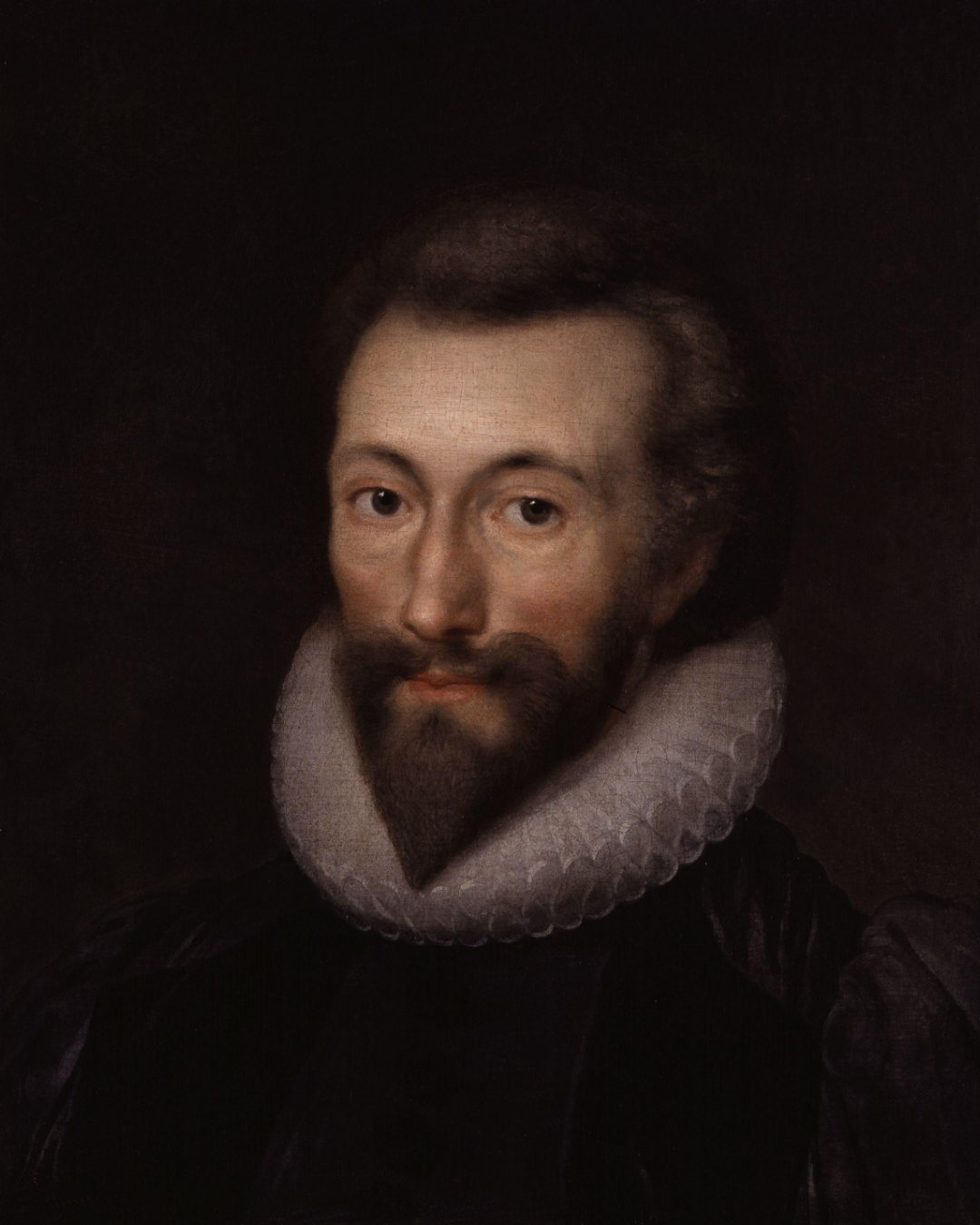
John Donne’s poem “The Annunciation” speaks directly to (and about) Mary, the mother of Jesus, demonstrating the majesty of the infinite God who is “cloistered” in her womb.1 Today we sometimes balk at such stark antinomies of divine attributions of Jesus and his humanity. For example, contemporary churches sing “Amazing love! How can it be, That you, my king, should die for me”—even though the original lyrics of Charles Wesley’s hymn are, “that thou, my God, shouldst die for me.” Further, Protestants sometimes hear the title, “Mary the mother of God” and recoil at perceived Roman Catholic associations.

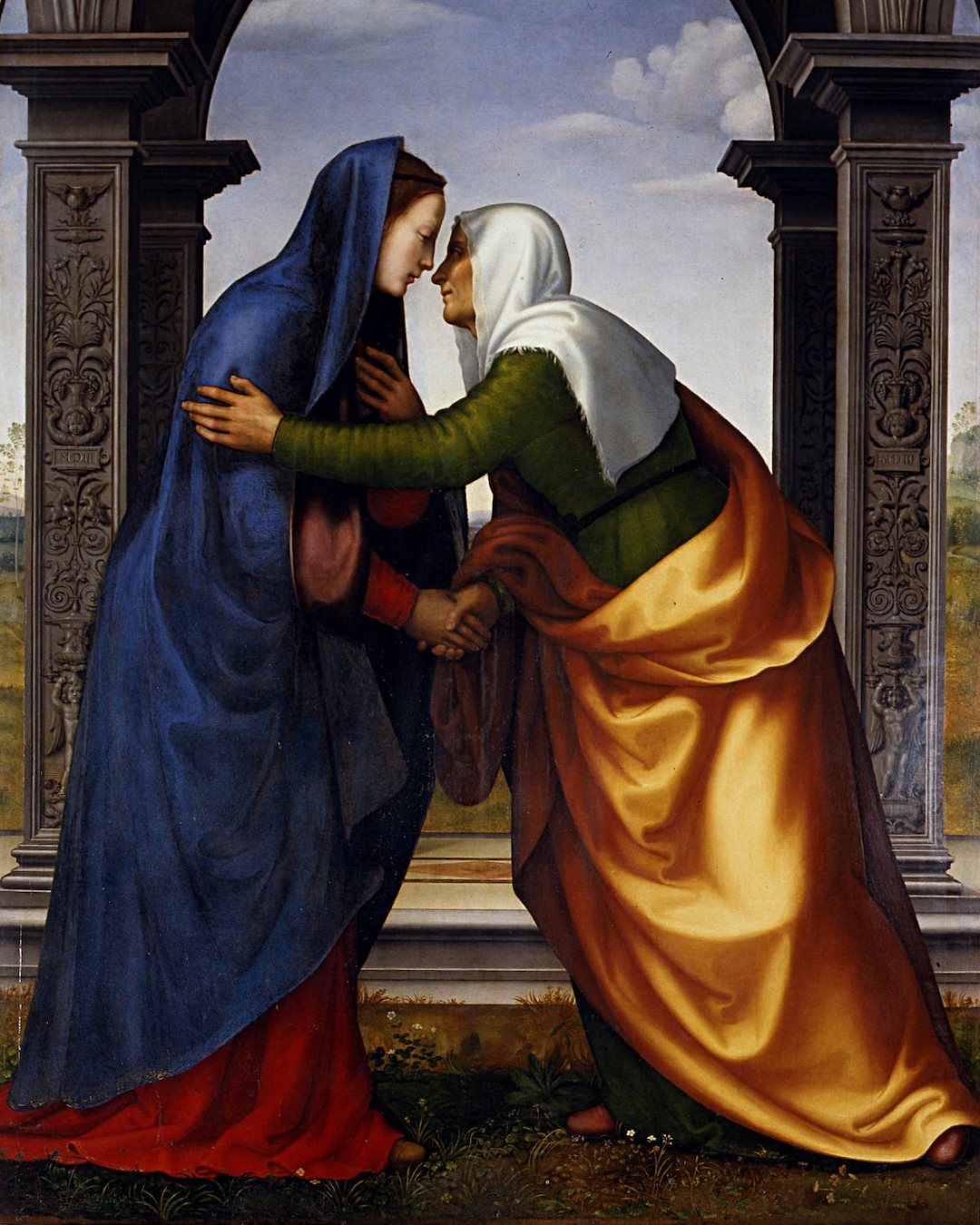
Yet, Donne and Wesley stand in a long line of thinkers who have affirmed these lofty titles for Mary, not fundamentally because of how great Mary is, but because of how great her son, Jesus, is. And we would do well to locate ourselves within this trajectory of Christians who (like Elizabeth) look upon Mary and “exclaim with a loud cry” the good news of the Son of God, who was born of “the mother of our Lord” (see Luke 1:42–43).

The church gave this trajectory specificity and focus in the early fifth century as she wrestled with the implications of the affirmation of the Council of Nicaea. In 325 the church affirmed that Jesus is the “true God from true God . . . [who] became man.”2 So what does it mean to say that the Son who is homoousios with the infinite Father became man, and what does it have to say about Mary?

‍

Cyril and Nestorius

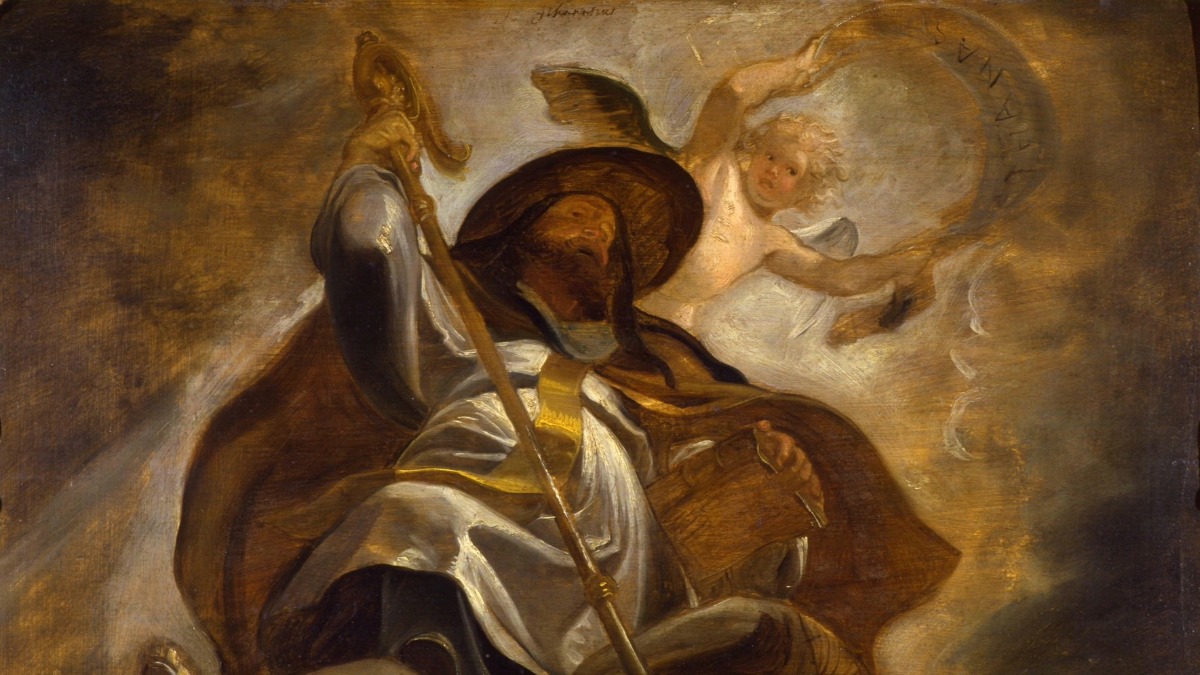
One historical figure who stands stalwart in this line is the theologian Cyril of Alexandria (ca. 374–444).3 While little is known about his early life, he served as a socially and politically active archbishop in Alexandria for over thirty years. Once called “the episcopal warrior” for his political zeal,4 Cyril has been viewed suspiciously for his use of power and influence. However, recent scholarship has reinterpreted his roles in many of these controversial events, such as the attacks on Jewish synagogues, oppression of the Novatians, and execution of Hypatia (a female Neoplatonic philosopher).5 Regardless, our interest in him here is much more in his theological benefit to the church.

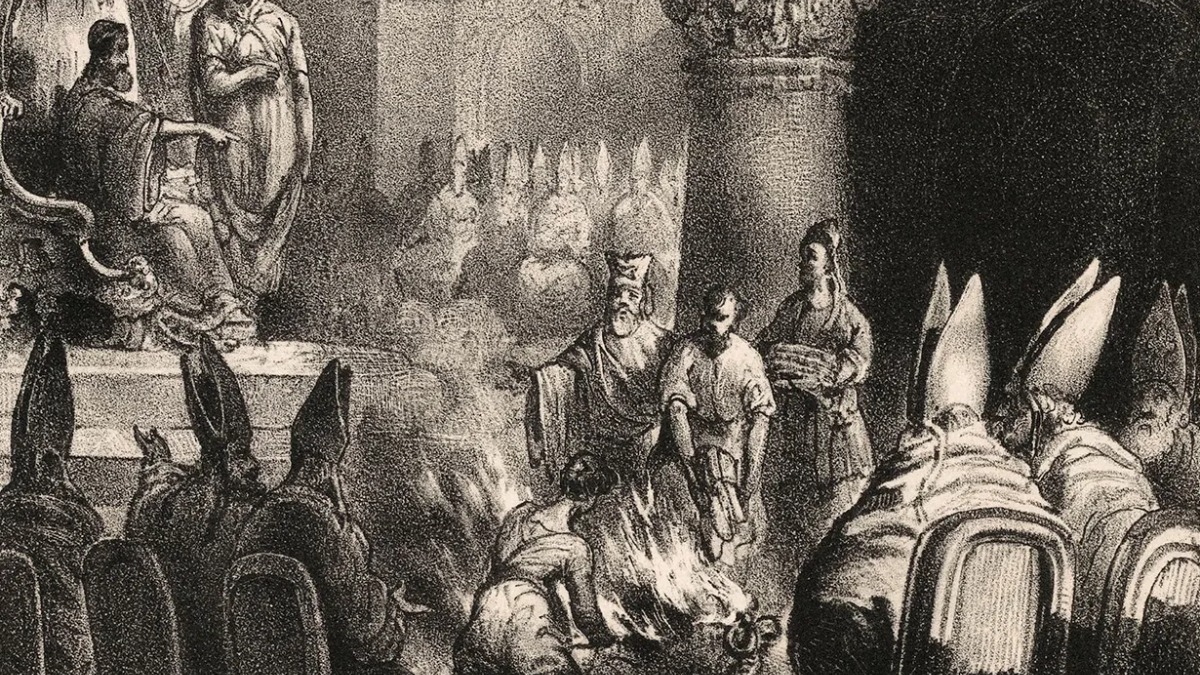
Cyril’s lasting impact may especially be found in his contributions to the Council of Ephesus in 431. The council, itself fraught with political complexity, theologically pitted Cyril (patriarch of Alexandria) against Nestorius (patriarch of Constantinople). Both Cyril and Nestorius appealed explicitly to the Council of Nicaea and believed that their views each preserved the doctrine of the Nicene Creed.6

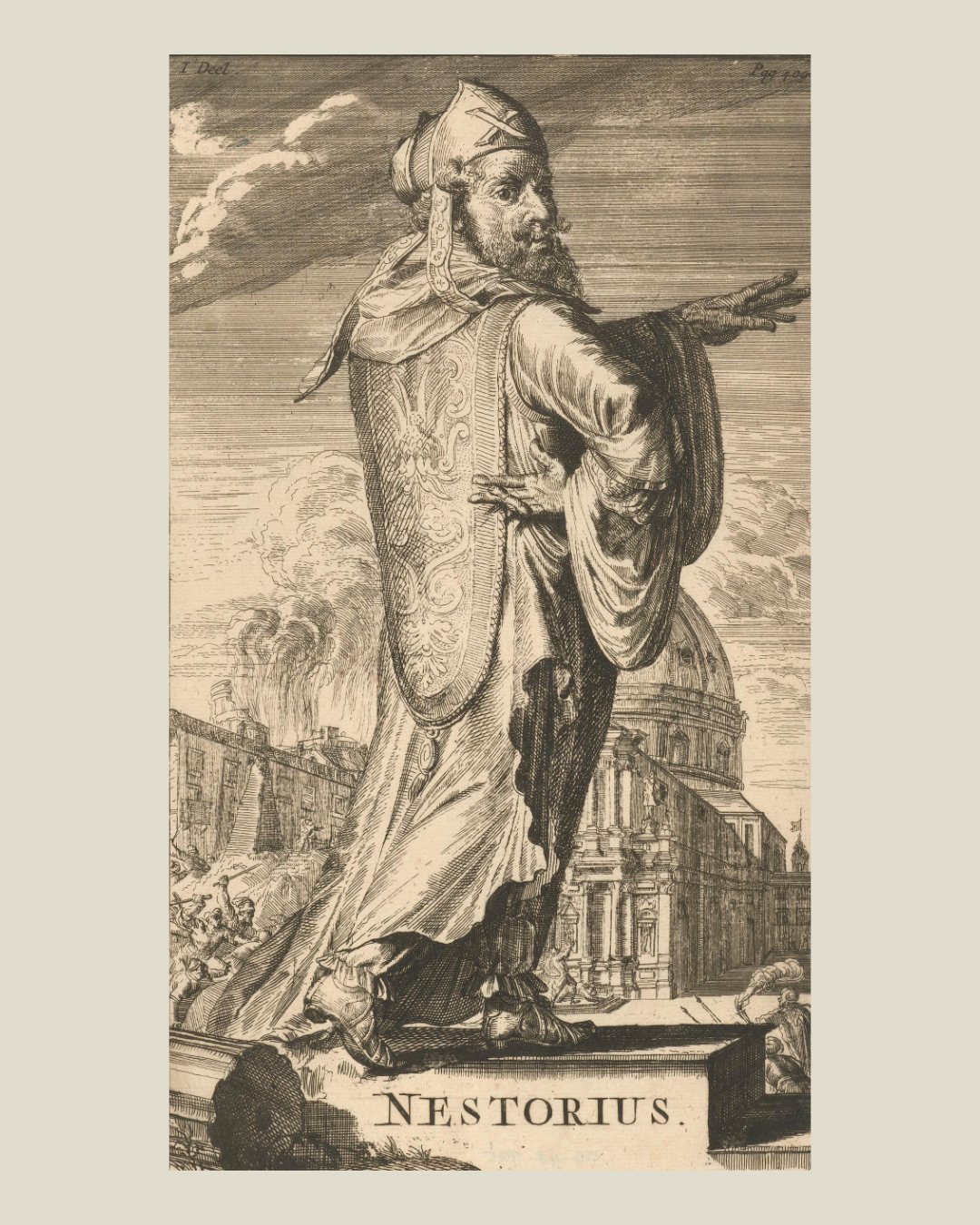
Nestorius was especially committed to preserving the impassibility of God—i.e., that the infinite God cannot be acted upon by another agent in such a way that he suffers or changes. He distinguished between the impassible Son of God and “Christ,” who suffers and dies. When Scripture mentions Jesus’ birth (Matt 1:16) and suffering death (Phil 2:5–8), it uses the title “Christ” to protect the divinity of the Son from being polluted by human suffering.7 So, since Jesus’ birth refers to his humanity rather than his divinity, Nestorius says that Mary is “more accurately termed mother of Christ than mother of God.”8

‍

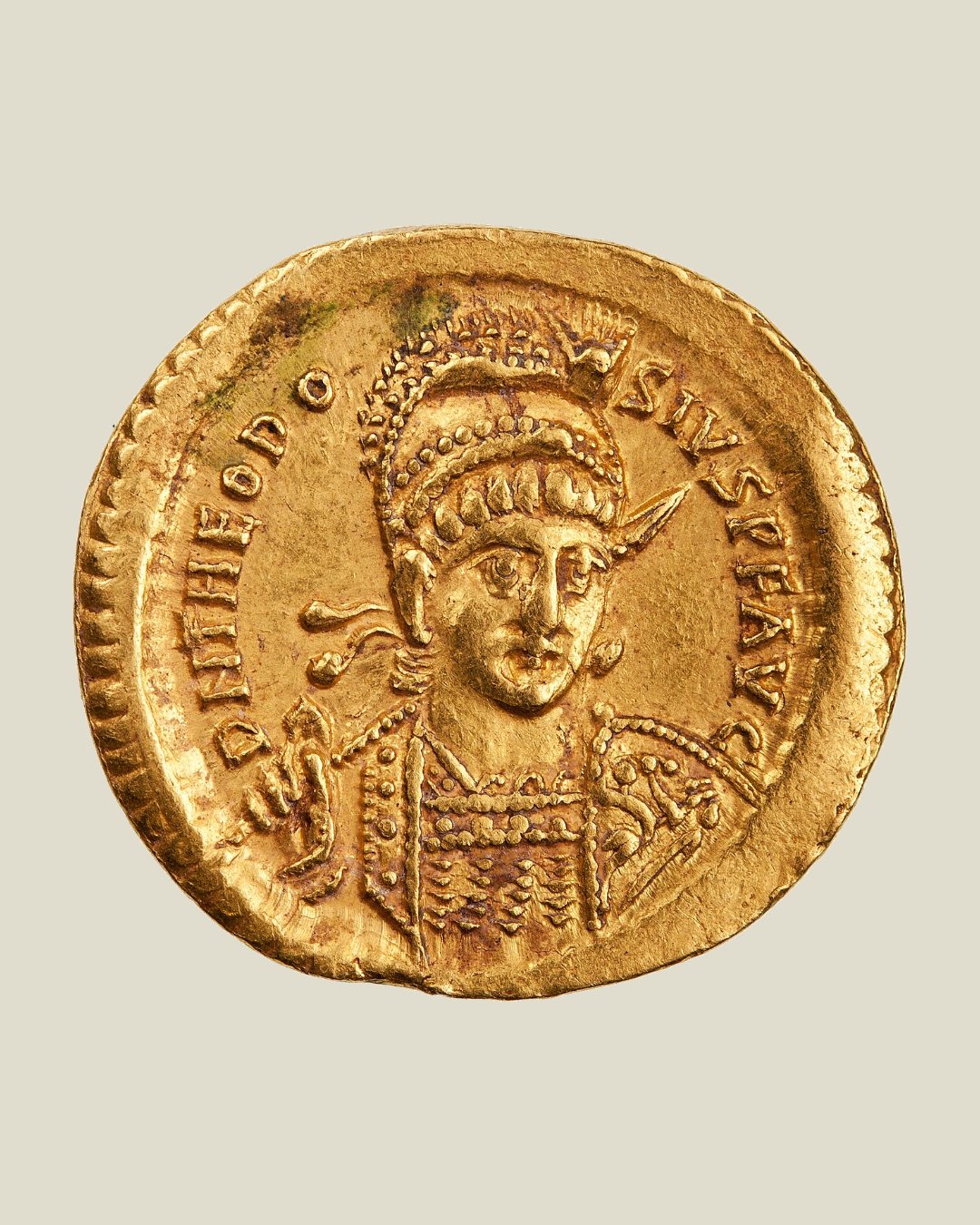
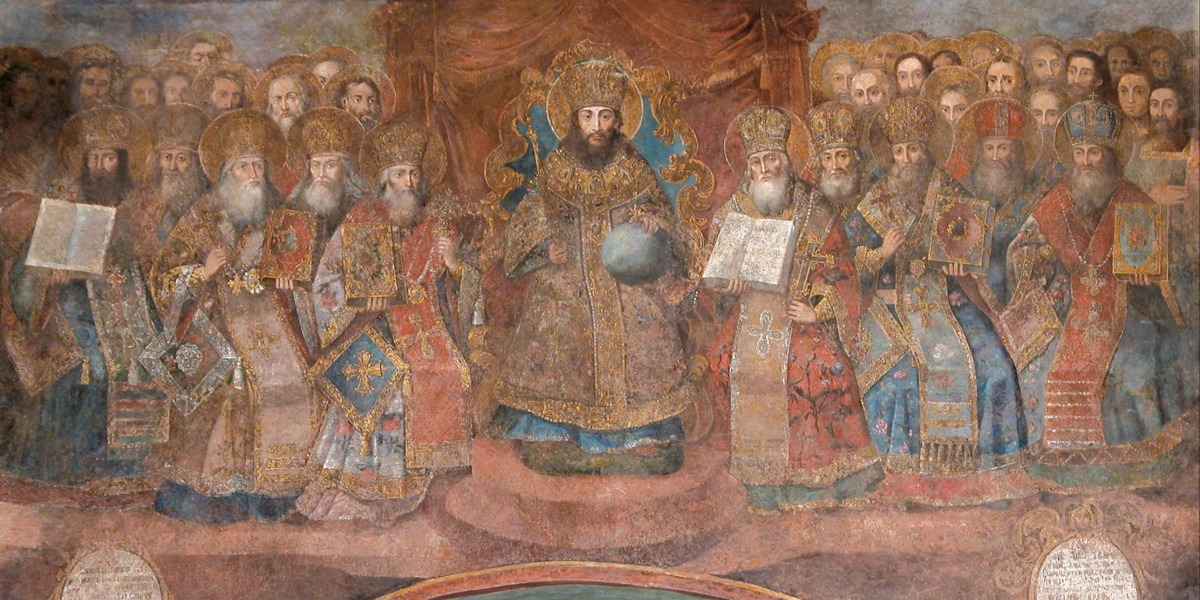
EPHESUS, 431 · Theodosius II, Cyril, Nestorius and the Church of Mary

One Person, Not Two

Yet, this claim divided the humanity and divinity of Christ into “two persons,”9 says the early church. And the consequences of this division are grievous for both our salvation and our worship. Nestorius’s view turns Jesus into two subjects of action: the Son who does divine actions (e.g., healing, forgiving, etc.) and Christ who performs human actions (e.g., being born, dying, etc.). If this is the case, then God himself has not saved us, because God the Son did not die for us—only a human subject associated with God died. For Cyril, it was “God, who truly was crucified for us and died in the flesh.”10 God saves us, God himself died for us. Further, we don’t worship a man named Jesus alongside (e.g., before or after) our worship of God the Son.11 But, as Cyril says, “we adore one and the same Lord” and worship him “who is revered along with his flesh by one act of adoration.”12

For Cyril there is one person, “the one incarnate hypostasis of the Word,” to whom all the claims about Jesus apply—i.e., those claims which demonstrate divinity and those which demonstrate humanity.13 So the same person who “led the people out of Egypt” (Jude 5) died for us (1 Pet 3:18). And since Mary is the mother of Jesus, and since Jesus is the same person as the Word of God, Mary is the mother of God.

The Council of Ephesus (AD 431) sided with Cyril. The Formula of Union (i.e., a statement following up on Ephesus in 433) stated that they were “adding nothing at all to the creed put forward by the holy fathers at Nicaea.”14 If the church is going to follow Nicaea in affirming the saving work of God himself and worship of God alone, she must affirm that the person of Jesus is the person of God the Son. The alternative, Nestorianism, was the theological successor of Arianism because (like Arianism) it could not look at the man Jesus Christ and call that person “God.”15 For Cyril and the Formula of Union, then, to follow Nicene teaching was to affirm “the holy virgin to be the mother of God because God the Word took flesh and became man.”16

‍

The Word Suffered Impassibly

Cyril clarifies that this did not mean Mary begot the divine nature,17 but that the one who is God took on a human nature (i.e., body and soul) to be born of Mary. With regard to suffering, Cyril says, “because the Word was united to flesh, when his flesh was suffering he appropriated the suffering to himself since his own body was suffering. . . . just as also a man’s soul is said to suffer because its body suffers, although by its own nature the soul does not have pain.”18 Since a soul is united to a body, the experiences of the soul can be attributed to that person. Likewise, since the person of the Word is united to a human nature, his experiences “in the flesh” must be attributed to the one and only Son. To deny such an attribution is to deny the validity of the union.

Because of the union of the “two natures” in the one person, the Word “remains what he is always” (i.e., infinite, eternal, and impassible) and yet, while “in the flesh” (to use Peter’s [and Cyril’s] language, 1 Pet 4:1), he is finite, temporal, and able to suffer.19 “Christ is one in both natures and from both natures.”20 This logic leads Cyril to one of his favorite expressions, “the Logos suffered impassibly.”21 The infinite Son who is “consubstantial with the Father” (according to Nicaea) and, therefore, impassible, takes on a human nature that can suffer. This one person is both impassible and passible; immortal and mortal; begotten of the Father and born of the virgin Mary.

‍

God Died for Us

From Mary’s cousin Elizabeth to John Donne, the church has defended Mary as the “mother of God.” And, as we have seen here, Cyril fought for this expression. This claim about Mary was important to Cyril, and is important to us, because it demonstrates that the divine person described in the Nicene Creed takes on a human nature, is born, suffers, dies, and will one day return. Because Jesus is “true God from true God,” we can rightly say Mary is the mother of God, and (perhaps more importantly) we can say: God saved us, God died for us, and we worship God alone.

‍


  1. 1. John Donne, The Poems of John Donne, ed. E. K. Chambers, vol. 1 (London: Lawrence & Bullen, 1896), 153.
  2. 2. See Norman P. Tanner, ed., Decrees of the Ecumenical Councils (Washington, DC: Georgetown University Press, 1990), 1:114.
  3. 3. See John Anthony McGuckin, Saint Cyril of Alexandria and the Christological Controversy (Crestwood, NY: St. Vladimir’s, 2011), 123.
  4. 4. Edward Gibbon, The History of the Decline and Fall of the Roman Empire, ed. J. B. Bury (New York: Macmillan, 1914), chap. 47 (5:116).
  5. 5. McGuckin, Saint Cyril, 21.
  6. 6. Tanner, Decrees, 41, 44–45.
  7. 7. Tanner, Decrees, 46.
  8. 8. Tanner, Decrees, 47.
  9. 9. Cyril of Alexandria, Letters 1–50, trans. John I. McEnerney, The Fathers of the Church 76 (Washington, DC: Catholic University of America Press, 1987), Letter 17.13.
  10. 10. Letters, 6/7.1.
  11. 11. See Nestorius as quoted in Letters, 17.11.
  12. 12. Letters, 4.6; 17.11; cf. McGuckin, Saint Cyril, 19.
  13. 13. Letters, 17.14.
  14. 14. Tanner, Decrees, 69.
  15. 15. Daniel J. Treier, Lord Jesus Christ, New Studies in Dogmatics (Grand Rapids: Zondervan Academic, 2023), 172.
  16. 16. Tanner, Decrees, 70.
  17. 17. Letters, 10.1.
  18. 18. Letters, 10.1–3; cf. 1.21; 17.9, 13; 45.7; 46.7.
  19. 19. Letters, 39.6.
  20. 20. Cyril of Alexandria, Letters 51–110, trans. John I. McEnerney, The Fathers of the Church 77 (Washington, DC: Catholic University of America Press, 1987), 53.2.
  21. 21. McGuckin, Saint Cyril, 185; John O’Keefe, “Impassible Suffering? Divine Passion and Fifth-Century Christology,” Theological Studies 58 (1997): 39–60; Christopher Beeley, The Unity of Christ: Continuity and Conflict in Patristic Tradition (New Haven: Yale University Press, 2012), 268–70. From the letters, see Letters, 17.11.

Artwork and photographs used in this essay:
  1. Hero banner: Fra Angelico, The Annunciation, c. 1440–45, fresco, north corridor, Convent of San Marco, Florence.
  2. Body image 1: Mariotto Albertinelli, The Visitation, 1503, oil on panel, Uffizi Galleries, Florence.
  3. Body image 2: After Isaac Oliver, John Donne, late 17th-century copy of a 1616 miniature, National Portrait Gallery, London.
  4. Body image 3: Solidus of Theodosius II, 425–429, gold, American Numismatic Society, New York.
  5. Body image 4: Saints Athanasius and Cyril of Alexandria, from the Menologion of Basil II, c. 985, tempera and gold on parchment, Vatican Library, Rome.
  6. Body image 5: Romeyn de Hooghe, Portrait of Nestorius, 1701, etching and engraving, from Gottfried Arnold, Historie der kerken en ketteren, Rijksmuseum, Amsterdam.
  7. Body image 6: Apse of the Church of Mary, Ephesus, where the council met in 431. Photograph by Dosseman, 2011, CC BY-SA 4.0.

‍

Resources
Article
Mary the Mother of True God from True God
Close-up of a hand typing on a laptop keyboard in dim lighting.