
Fill Out the Online Form
Begin your Journey of Knowledge and Faith
seal logo
Personal Information
1/2
Select Your Program of Interest
2/2
In 300 words or less, describe your Christian faith, including your conversion and current Christian walk, and ministry experience (if applicable)
300/words
In 300 words or less, describe reasons for your desire to study with the Alexandrian Institute and how this deepen your faith or equip you for Christian ministry
300/words
Upload your Letter of Intent
Uploading...
fileuploaded.jpg
Upload failed. Max size for files is 10 MB.
Upload your CV or Resume
Uploading...
fileuploaded.jpg
Upload failed. Max size for files is 10 MB.
Upload your list of references
Uploading...
fileuploaded.jpg
Upload failed. Max size for files is 10 MB.
Upload your list of references
Uploading...
fileuploaded.jpg
Upload failed. Max size for files is 10 MB.
Upload your list of references
Uploading...
fileuploaded.jpg
Upload failed. Max size for files is 10 MB.
Upload a sample of your academic writing
Uploading...
fileuploaded.jpg
Upload failed. Max size for files is 10 MB.
Upload your list of references
Uploading...
fileuploaded.jpg
Upload failed. Max size for files is 10 MB.
Upload your list of references
Uploading...
fileuploaded.jpg
Upload failed. Max size for files is 10 MB.
Thank You for Taking
the First Step
Your interest has been received. We’re excited to walk with you on this journey of learning and spiritual growth. Our team will be in touch soon with the next steps.
Oops! Something went wrong while submitting the form.
Road to Nicaea

Athanasius Against The World

Athanasius Against the World

About the Author

Dr. Alexander H. Pierce is a Research Fellow of The Alexandrian Institute and Assistant Professor of Historical Theology at the North American Lutheran Seminary.

Athanasius Against The World

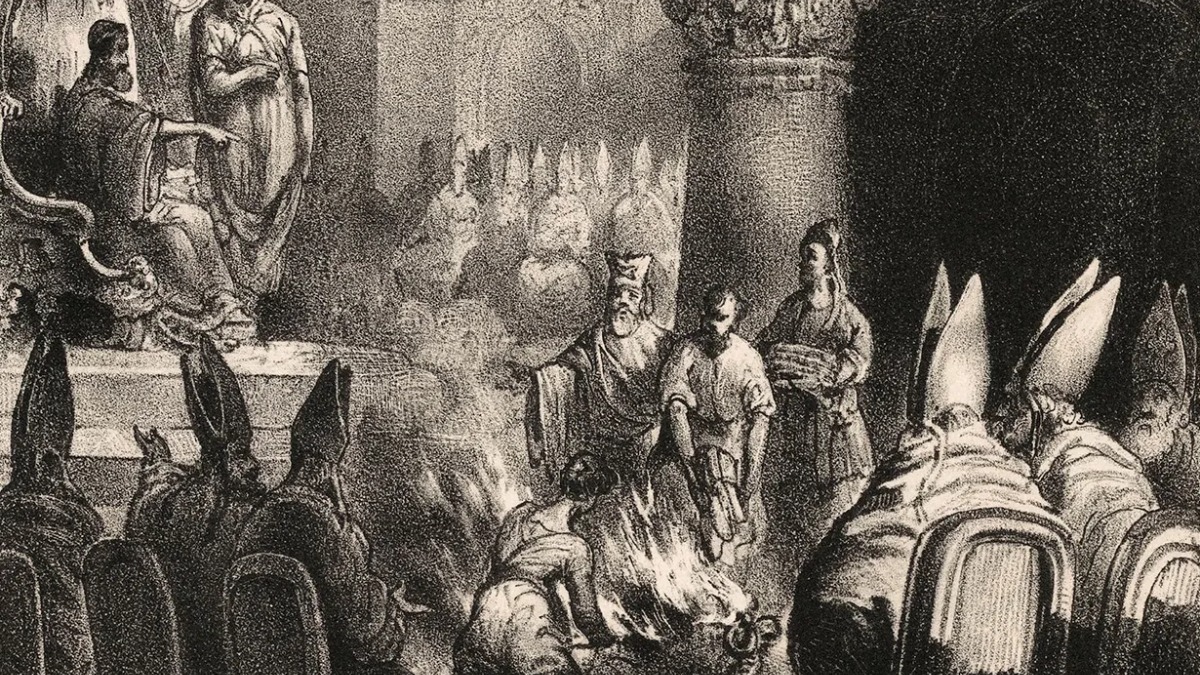
The deep rupture between Bishop Alexander and his presbyters, most notoriously Arius, divided the Church’s faith and life. The Council of Nicaea in 325 had condemned teachings associated with Arius and bestowed upon the Church the language of homoousios to encapsulate what Scripture teaches concerning the Son’s equality with the Father, but the controversy was far from over. The decades that followed would require theological precision and personal courage. No Christian embodied that courage more fully than Athanasius of Alexandria, the bishop who staked his office and his reputation on the truth confessed at Nicaea.

Athanasius Against The World

Biographical Sketch

From a young age, Athanasius of Alexandria (ca. 295–373) was close to his predecessor bishop, Alexander of Alexandria (312–328). While many details remain uncertain and disputed, he would have been familiar with the dispute between Alexander and the presbyter under his jurisdiction, Arius, whom Alexander condemned at the Council of Alexandria in ca. 321.1 Athanasius accompanied Alexander to the Council of Nicaea convened by Emperor Constantine during June and July of 325. His role and access would have been limited as he was only a deacon at the time.

The record of Athanasius goes quiet until a couple of months after Bishop Alexander died on April 27, 328, when Athanasius was elevated from deacon to Bishop of Alexandria. Although Alexander nominated Athanasius before his death, Athanasius was forced to contend for his office. This was the setting in which he penned his most magisterial, two-part theological treatise, Against the Nations-On the Incarnation (Contra Gentes/De Incarnatione).2

Athanasius would serve as bishop for forty-six years, though his tenure was extremely turbulent. He died on May 2, 373, less than a decade before the Council of Constantinople carried forward the Nicene faith in a manner that would honor Athanasius’s legacy as a champion of the Nicene Creed. Both Basil of Caesarea and Gregory of Nazianzus celebrate Athanasius. Not even ten years after his death, Gregory celebrated his conformity to Christ, praising him because he “embraced virtue in its entirety”3 and calling him the “pillar of the Church”.4

‍

Exiles

In the wake of the Council of Nicaea, which was called to overcome a controversy associated most notably with the Church in Alexandria, the influential episcopal see of Alexandria was contested, facing great scrutiny and many challenges. Despite his forceful influence and positive reception by the likes of the Cappadocian Fathers, while Bishop of Alexandria, Athanasius was exiled five times (amounting to about 17 years of disruption).5  

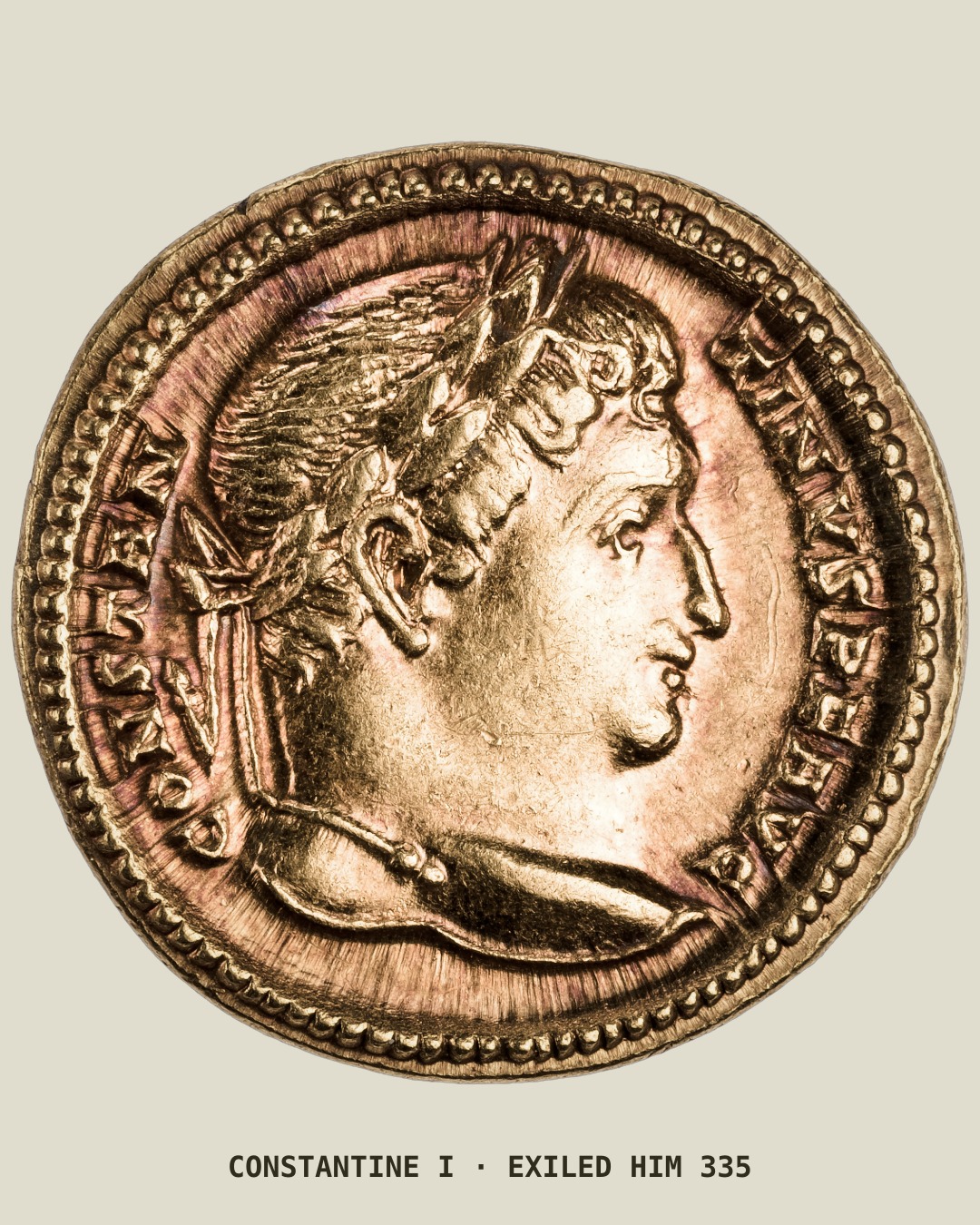
(1) The Emperor Constantine first exiled Athanasius to Trier in the fall of 335 due to several factors, one of which was Athanasius’s refusal to observe the restoration of Arius at the 335 synod of Jerusalem. Two years later, a few months after Constantine’s death, Athanasius would return. At this time, Athanasius bound himself to the legacy of the Council of Nicaea in opposition to what he had described as the resurgence of “Arianism.”6  

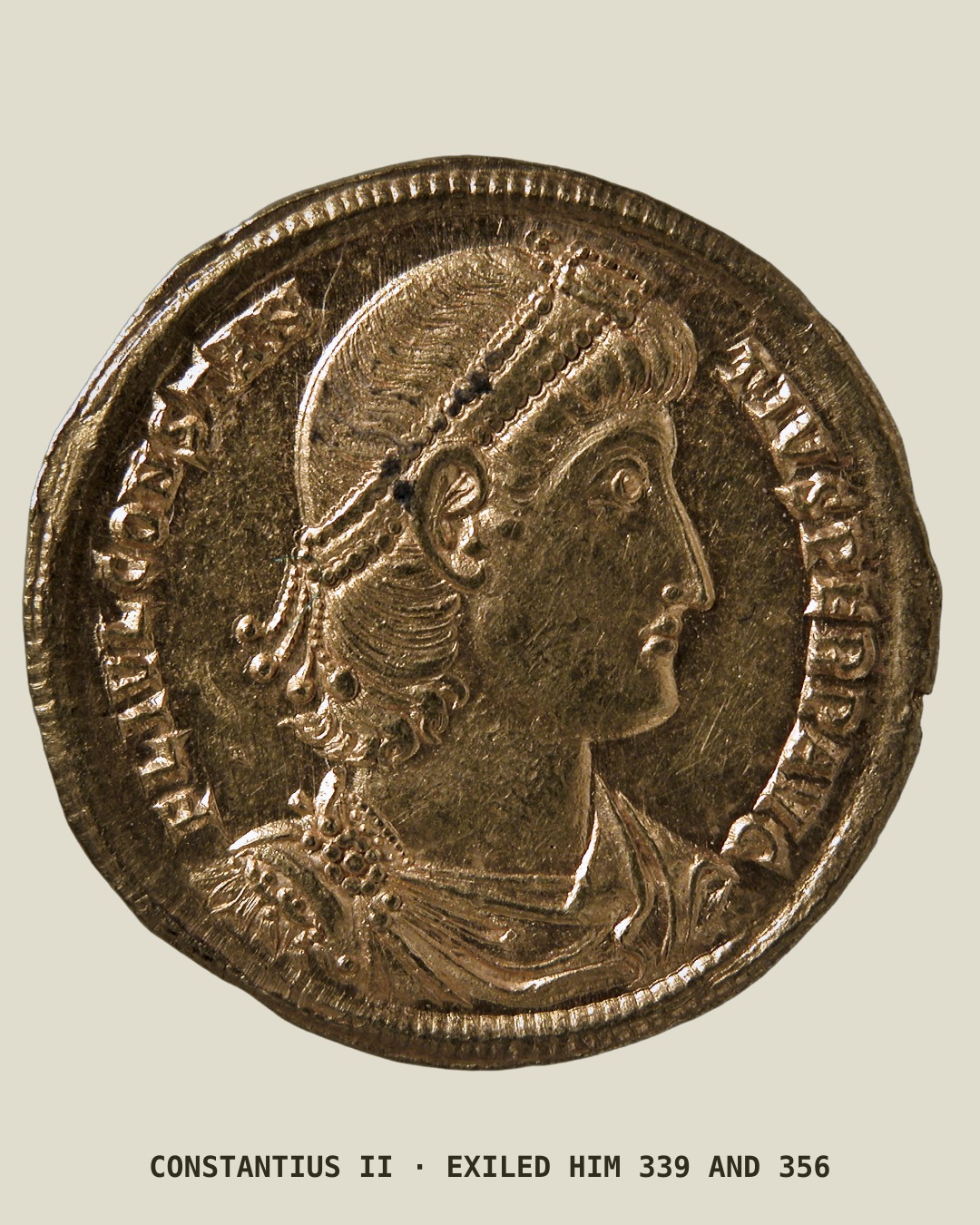
(2) When Athanasius opposed cooperation between Melitians and Arians, eastern bishops (including Eusebius of Nicomedia) deposed Athanasius twice in two separate councils at Antioch and, with the help of eastern Augustus, Constantius, sought Athanasius’s removal. In the spring of 339, they appointed Gregory of Cappadocia as the Bishop of Alexandria in his place.7 Meanwhile, Athanasius evaded arrest and departed for Rome where he would compose his Discourses against the Arians. While there, Athanasius gained favor with western Augustus, Constans, who would convince his brother in the East, Constantius, to allow Athanasius’s return in 346 after Gregory died. Constantius would consolidate power after the death of Constans in 350, condemning Athanasius in Arles (353) and then exiling various western bishops.  

(3) In 356, Athanasius relinquished his jurisdiction to George of Cappadocia as he was forced into exile for a third time. In response to the rise of the Heterousians, Aëtius of Antioch and Eunomius of Cyzicus, Athanasius would write several treatises in defense of the Nicene Creed. After the deaths of Constantius and George in 361, Athanasius returned to Alexandria in February 362. Athanasius promoted unity within the Alexandrian Church and beyond, sending an overture of Nicene unity to Christian leaders in Antioch.  

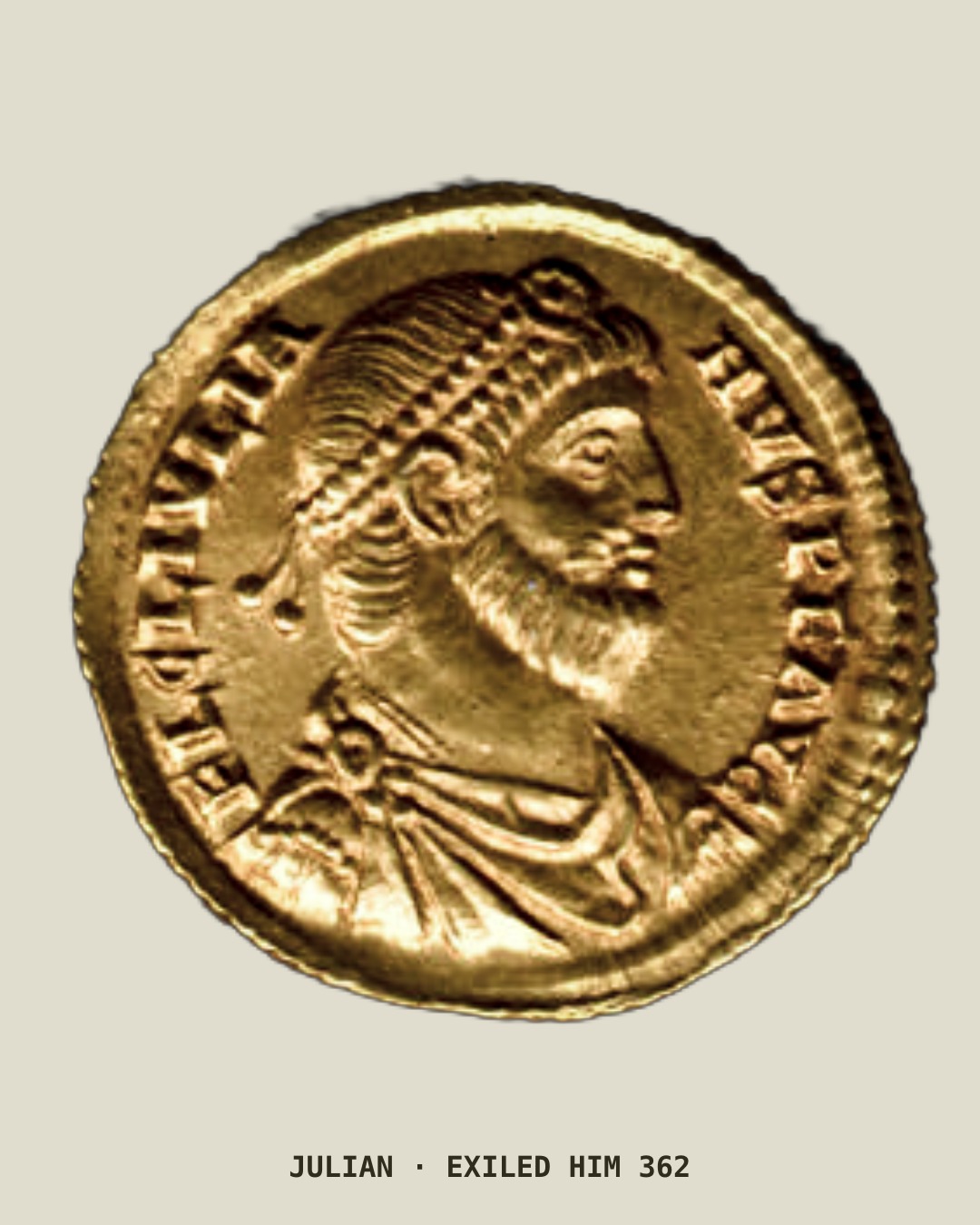
(4) However, the year 362 was not yet complete when Emperor Julian the Apostate exiled Athanasius a fourth time. Fortunately, Emperor Jovian, who took Julian’s place in June 363, permitted his return in the fall of the next year.

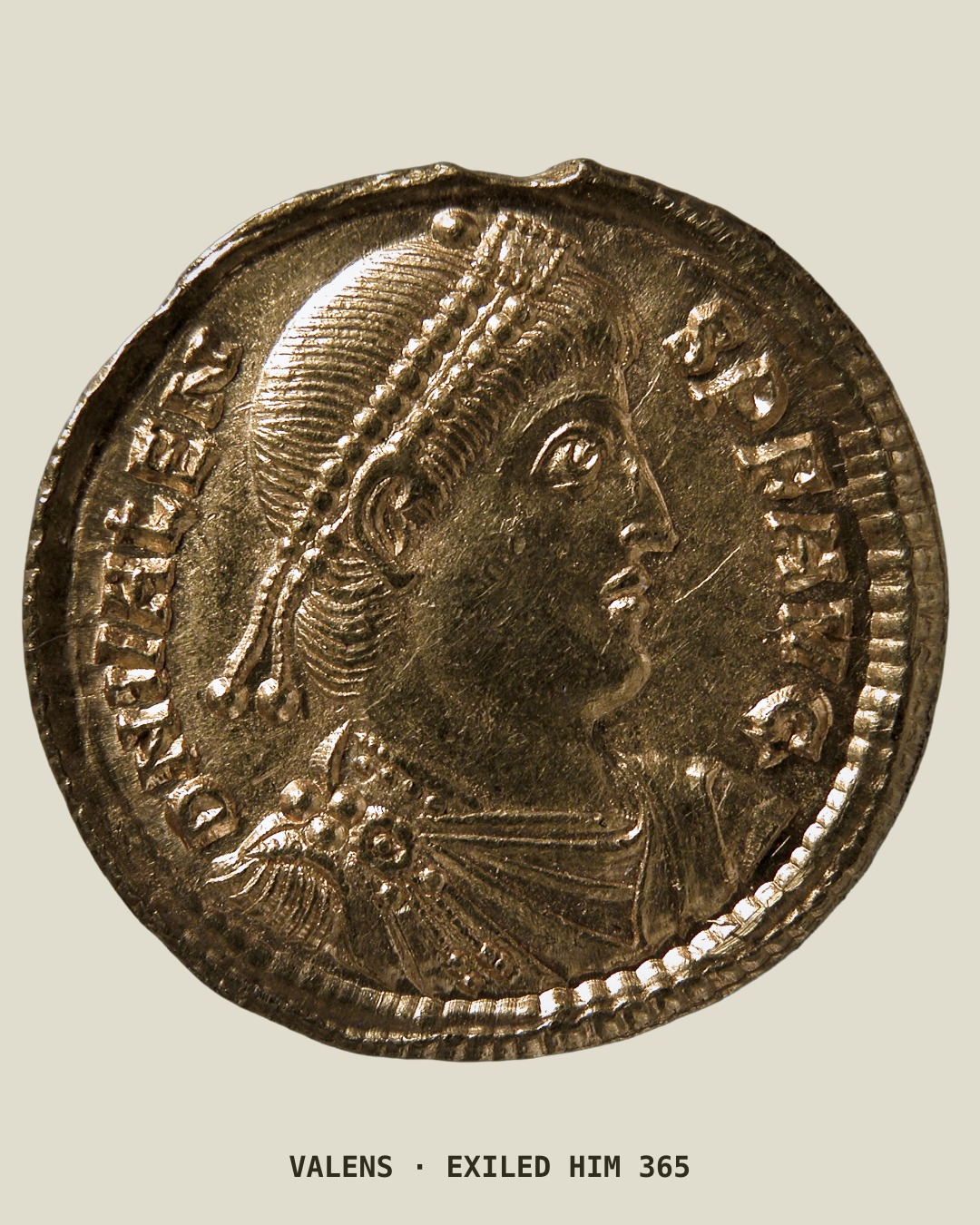
(5) Athanasius’s final exile came at the hands of anti-Nicene emperor Valens. Athanasius was forced to hide within his own city from May 365 to February 366.

What is clear from Athanasius’s exiles is not only that he was displaced and his office under siege but also that he often redeemed the time by forging politically (e.g., Julius of Rome and Marcellus of Ancyra) and spiritually (e.g., Antony of Egypt) important relationships. He remained steadfast in his commitment to advancing the unity of the Church around the Nicene faith. It is not without reason that modern commentators have been critical of Athanasius and some of his antics, but John Behr rightly concludes that in many and various ways, “Nicene Christianity exists by virtue of his constancy and vision.”8  

‍

FOUR EMPERORS, FIVE EXILES · Gold coins of Constantine, Constantius II, Julian and Valens
Athanasius Contra Mundum

Having struggled against Emperors Constantine, Constantius, Julian the Apostate, and Valens, perhaps it should be no surprise that the phrase “Athanasius against the World” (Athanasius contra mundum) has been used to describe his Christian witness.9 Although this moniker does not, properly speaking, originate within antiquity, it is reminiscent of the first part of his treatise, Contra Gentes-De Incarnatione or “Against the Nations-On the Incarnation” (ca. 328–335),10 and it fits quite well with Jerome’s famous remark, “The whole world groaned, and was astonished to find itself Arian.”11 It was against just such a world that Athanasius found himself contending for the truths confessed at Nicaea, especially the Lordship of Jesus Christ, the Son of God, as homoousios (“of the same being”) with the Father.12  

In the 350s and 360s, Athanasius’s theological agenda began receiving greater support and development but imperial leadership remained set against at least Nicene Christianity (e.g., Constantius II, Valens), and at worst Christianity itself (i.e., Julian). Further still, although most eastern bishops in the wake of Nicaea followed Constantine’s overarching goal of Church unity to commend the acceptability of Arius and those associated with him and his teachings, Athanasius, as Frances Young suggests, “was the only really influential figure who remained entrenched contra mundum.”13 As a result, Athanasius would face a fantastical inventory of charges during his life and ministry which included murder, performing magic, and stealing from the poor. Though he was often entrenched and did not live to see consensus form around the Nicene faith, his theological contribution to it was most significant.14

‍

Theological Contribution

While Athanasius’s Life of Antony may be his most widely influential writing, On the Incarnation and Orations against the Arians I-III (ca. 339–34515) are the theological writings through which he has had the most influence on the theology of the Church. As Athanasius himself describes his work in the De incarnatione, it is “an elementary sketch and paradigm of the faith in Christ and his divine manifestation to us.”16 

Athanasius campaigned in defense of the Nicene homoousios to describe the Son’s equality of being and dignity with the Father beginning in his De Decretis (early 350s). He is certainly much more than the “great defender of the Nicene homoousios,” but he recognized that “the ontological equality of the Son to the Father bears directly upon the whole nexus of Christian doctrine.”17 The fundamental significance of who Christ is for how God has chosen to save the world out of his “love for humanity” (φιλανθρωπία) was enough for Athanasius to warrant giving himself, amidst many a sacrifice, to the task of confessing the Nicene faith when it was unwelcome among many fellow Christians.  

Athanasius’s unrelenting commitment to, and elaboration of, the theology of the Nicene Creed led to extensive influence on the direction of the Church’s understanding of what it means to confess belief in Father, Son, and Holy Spirit. As Behr writes:  

‍

“In a comprehensive and compelling manner, Athanasius expounds the central mystery of Christian theology, the incarnation, but in a manner that embraces all aspects of God’s work, from creation to recreation.”18

‍

Without Athanasius, the Cappadocians would not have been in position to guide the theology of the Church toward the Council of Constantinople (381) as a fuller statement not only of the consubstantiality of the Son, but also of the Spirit, with the Father.  

In addition to the important material theological judgments for which he stood, another of Athanasius’s major theological contributions was to stipulate the critical importance of cultivating virtue for the sake of being able to receive and expound the mysteries of faith:  

‍

“ … in addition to the study and true knowledge of the scriptures, there is needed a good life and a pure soul and the virtue which is according to Christ, so that the mind, guided by it, may be able to attain and comprehend what it desires, as far as it is possible for human nature to learn about the God Word.”19

‍

Athanasius’s witness is by no means neatly packaged. He exhibited a stubborn faithfulness to the true confession of Christ’s Lordship and the saving power of Christ’s works for us. He was an embattled man of the Church who strove for revealed truth with imperfection, advanced the cause of Nicene faith, and left a monumental theological legacy that has helped Christians ever since to understand with great clarity and urgency the necessity of Christ’s humanity and divinity for the sake of human salvation. With Athanasius, we must stand in and for Christ, even when that means our taking a stand may position us against the world (contra mundum).

‍


  1. 1. David M. Gwynn, Athanasius of Alexandria: Bishop, Theologian, Ascetic, Father, Christian Theology in Context (Oxford: Oxford University Press, 2012), 4.
  2. 2. Gwynn, Athanasius of Alexandria, 6.
  3. 3. Gregory of Nazianzus, Oration 21.1 (NPNF 2.7, 269).
  4. 4. Gregory of Nazianzus, Oration 21.26 (NPNF 2.7, 276).
  5. 5. For a brief description of Athanasius’s exiles, to which I have referred here, see Xavier Morales, “Athanasius of Alexandria,” in Brill Encyclopedia of Early Christianity (Leiden: Brill, 2024), 633–634.
  6. 6. This category is hotly contested in modern scholarship as a feature of what Samuel Fernández, Nicaea 325: Reassessing the Contemporary Sources, Contexts of Ancient and Medieval Anthropology 14 (Leiden: Brill, 2025), esp. xv–xvi, calls Alexander’s “construction” and Athanasius’s “master narrative.”
  7. 7. Timothy D. Barnes, Athanasius and Constantius: Theology and Politics in the Constantinian Empire (Cambridge, MA: Harvard University Press, 1993), 35–46. On the background of this relationship and the limits of our knowledge, see Rowan Williams, “Arius and the Melitian Schism,” Journal of Theological Studies 37, no. 1 (1986): 35–52.
  8. 8. John Behr, “Introduction,” in Athanasius, On the Incarnation, Popular Patristics Series [henceforth, PPS] 44a (Yonkers, NY: St Vladimir’s Seminary Press, 2011), 21.
  9. 9. See Gwynn, Athanasius of Alexandria, 49.
  10. 10. For discussion, see Khaled Anatolios, Athanasius: The Coherence of His Thought (London: Routledge, 1998), 27–31. Cf. Barnes, Athanasius and Constantius, 13.
  11. 11. Jerome, Dialogue against the Luciferians 19 (NPNF 2.6, 329).
  12. 12. On the shifting and increasing significance of homoousios as a defining feature of Nicene theology, see Lewis Ayres, Nicaea and Its Legacy: An Approach to Fourth-Century Trinitarian Theology (Oxford: Oxford University Press, 2004), 339.
  13. 13. Frances Young with Andrew Teal, From Nicaea to Chalcedon: A Guide to the Literature and Its Background, 2nd ed. (Grand Rapids, MI: Baker Academic, 2010), 49.
  14. 14. For a helpful, unifying account of Athanasius’s theology, see Anatolios, Athanasius.
  15. 15. See the brief discussion and sources noted in Young, From Nicaea to Chalcedon, 64–65.
  16. 16. Athanasius, On the Incarnation 56 (Behr, PPS 44a, 171).
  17. 17. Anatolios, Athanasius, 1, 3.
  18. 18. Behr, “Introduction,” 21.
  19. 19. Athanasius, On the Incarnation 57 (Behr, PPS 44a, 173).

Public domain artwork used in this essay:
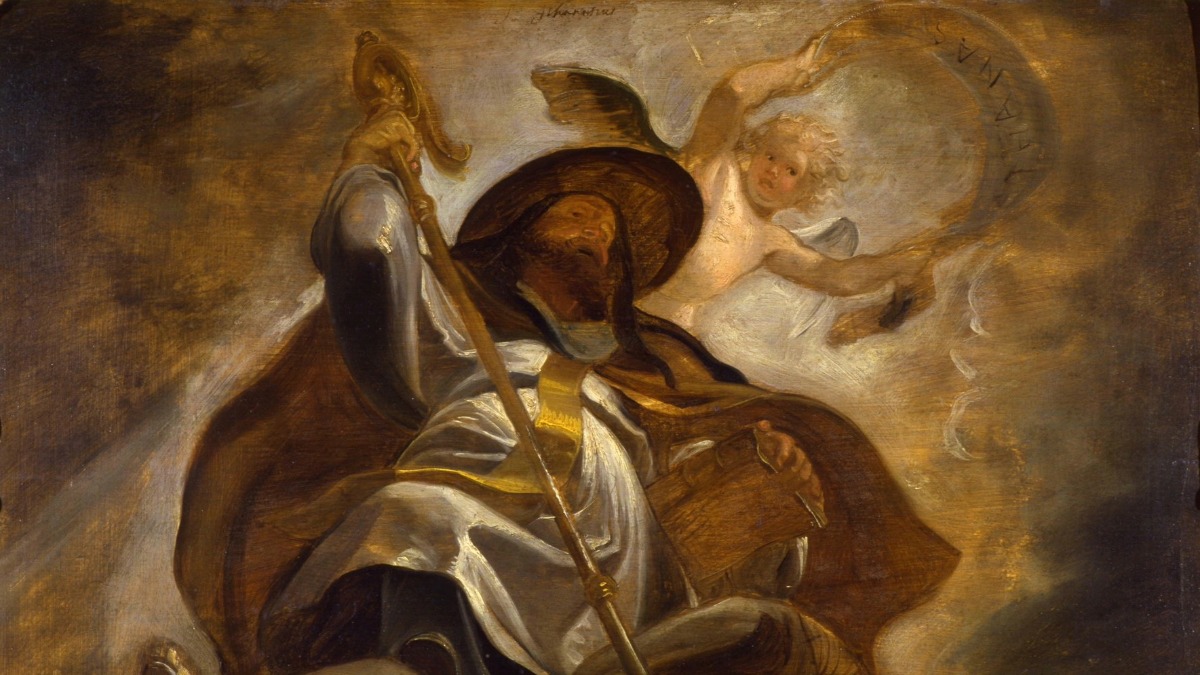
  1. Hero banner: Peter Paul Rubens, Saint Athanasius, c. 1620, oil sketch on panel for the ceiling of the Jesuit church in Antwerp, Stiftung Schloss Friedenstein, Gotha.
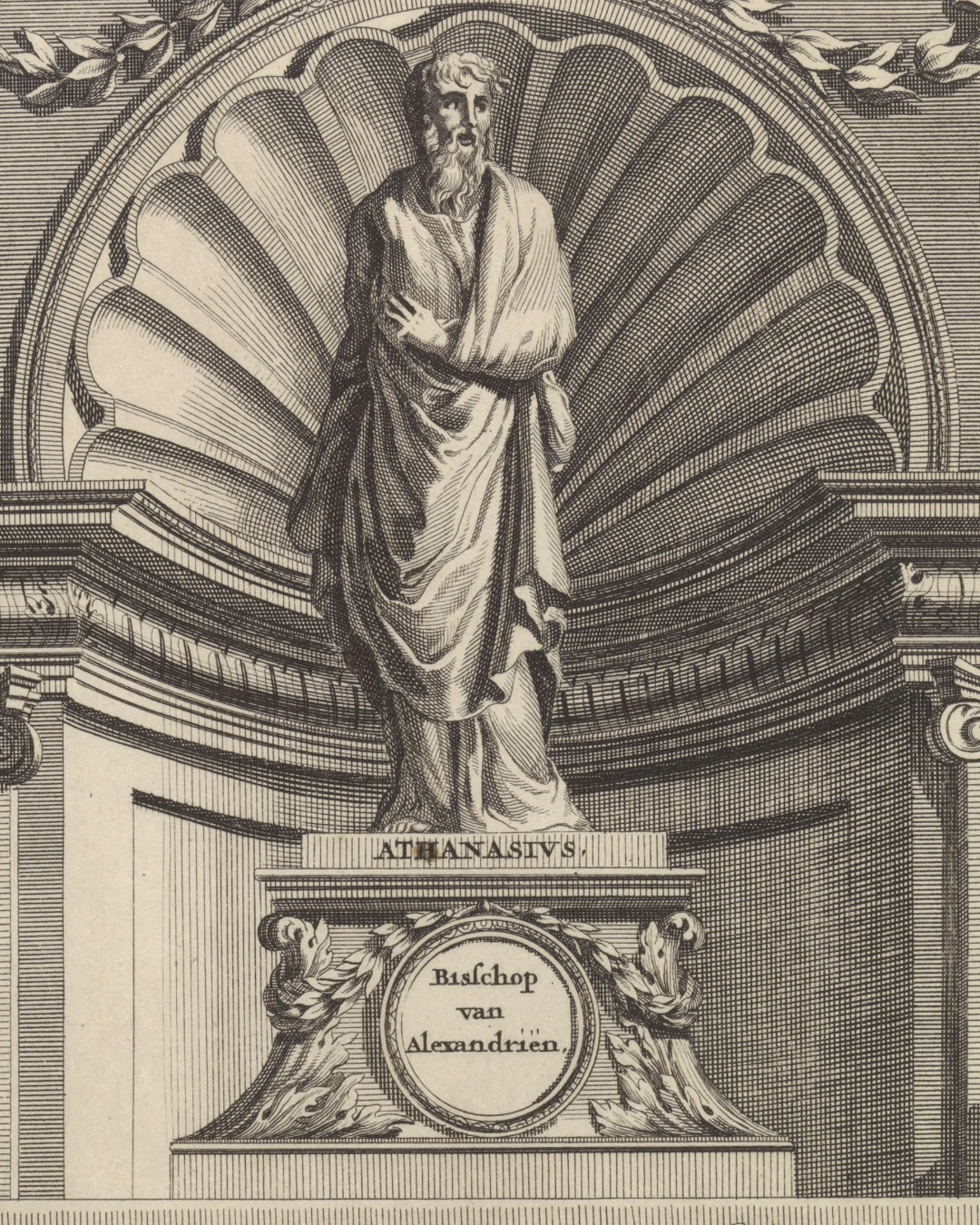
  2. Body image 1: After Jan Goeree, Saint Athanasius of Alexandria, Church Father, 1698, etching and engraving, from William Cave, Apostolische oudheden, Rijksmuseum, Amsterdam.
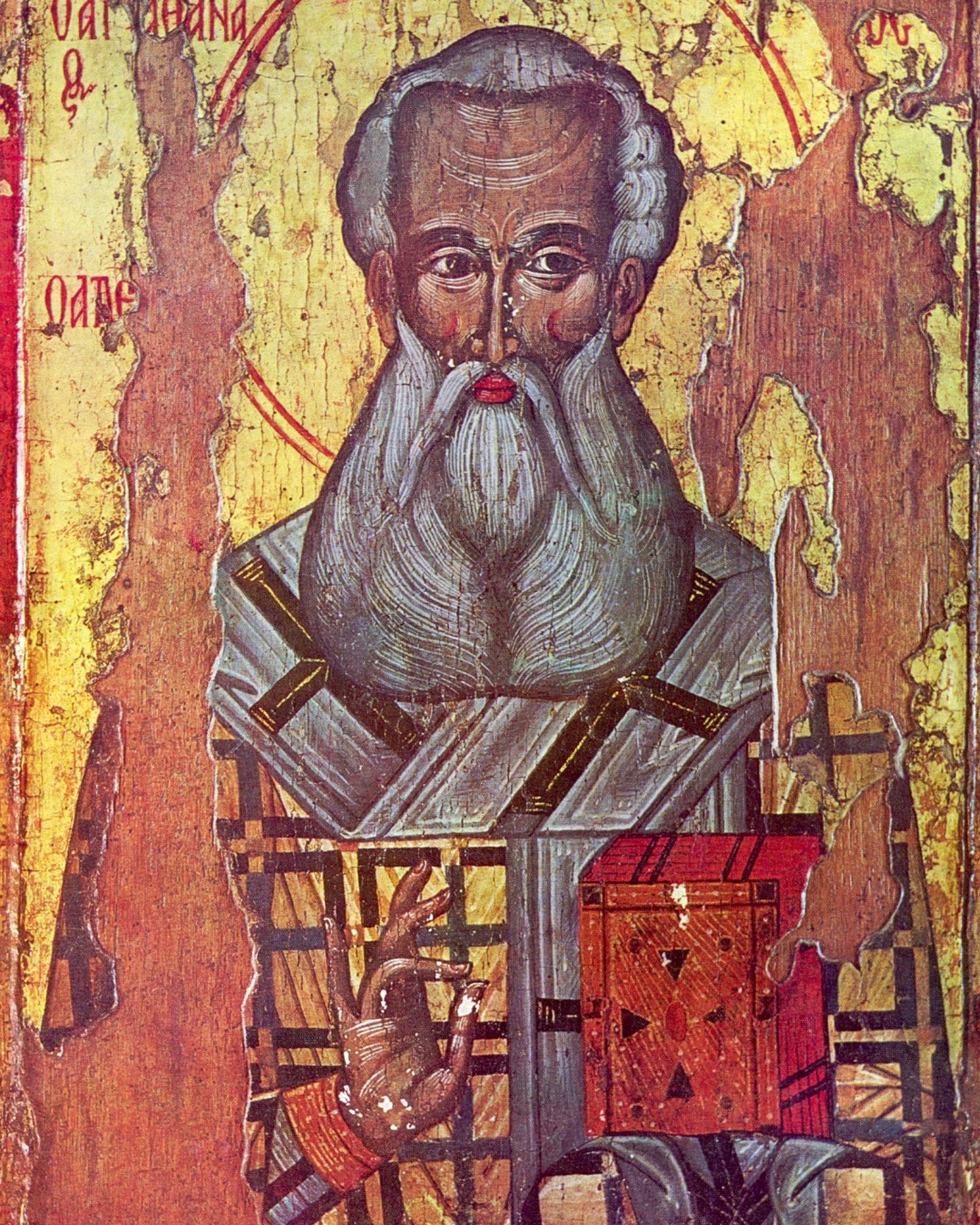
  3. Body image 2: Saint Athanasius of Alexandria, late 17th century, tempera on panel, from Sozopol, National Art Gallery, Sofia.
  4. Body image 3: Solidus of Constantine I, struck at Trier, 310–313, gold, American Numismatic Society, New York.
  5. Body image 4: Solidus of Constantius II, 337–347, gold, Metropolitan Museum of Art, New York.
  6. Body image 5: Solidus of Julian, 361–363, gold, Metropolitan Museum of Art, New York.
  7. Body image 6: Solidus of Valens, 364–378, gold, Metropolitan Museum of Art, New York.

‍

Resources
Article
Athanasius Against The World
Close-up of a hand typing on a laptop keyboard in dim lighting.