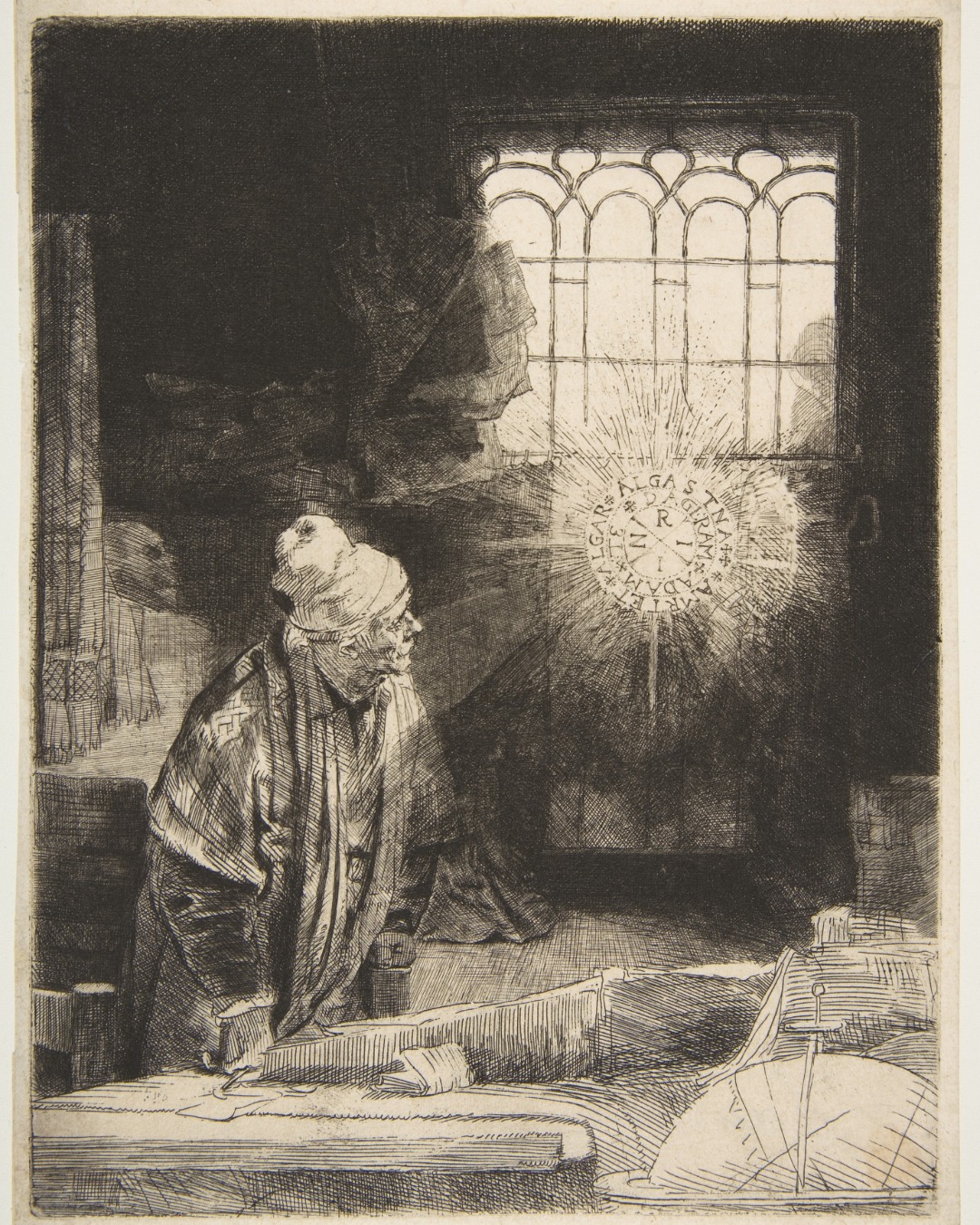
The headline of Herman Bavinck’s university diary reads: “Ex animo et corpore” (From soul and body)1 followed by “Alles Vergängliche ist nur ein Gleichnis” (Everything transitory/ is symbolic only).2 The latter, German phrase is one of the last lines from Goethe’s play Faust. Presumably, although we cannot enter the brain of Bavinck himself, he writes this at the top of his diary to remind him of the vulnerability that lay before him in his study. At the center of Goethe’s tale is a man of science (Wissenschaft) who, in exchange for all human possibility, sells his soul to the devil, Mephistopheles.3 These events transpire on Holy Saturday, the eve of the celebration of the resurrection.4 We should not be surprised that theological themes pervade the narrative. We may even permit ourselves to perceive Faust to be a theologian, albeit not an orthodox one, or rather a “confused, disordered” one.5
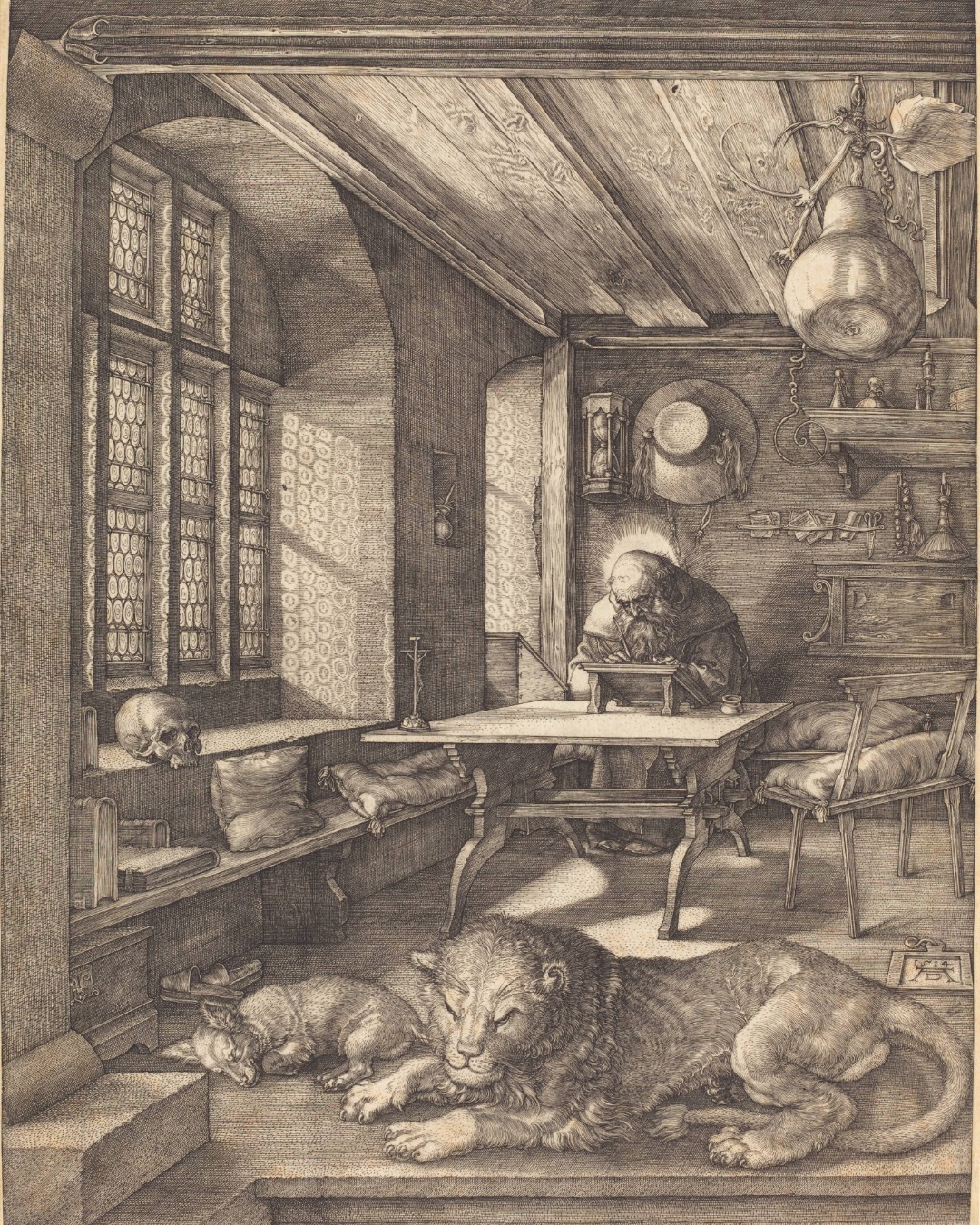
In the study or the leather arm chair, the earnest academic in their pursuit of knowledge is often required to turn to the task of reading. In attending to reading here, I do not mean to isolate it from participation in the Body of Christ, in the means of grace, and those activities that shape the Christian life in community (Mic. 6:8; James 1:27; Heb. 10:24-25; 1 Cor. 13). Reading, by virtue of Word and sacrament, is essential to the life of the church. All serious academic inquiry requires reading; theology is no different (Ps. 1:2; Josh. 1:8). In the space that follows, I seek to reflect on what ‘reading’ is for the theologian, how God may use it in the formation of the intellect and the heart, and how it must be pursued with humility, dependence, and spiritual attentiveness.
On Reading
Broadly, ‘reading’ is an attentive mode of inhabiting the world. It is in this sense that Augustine in his Confessions can write of “Heaven and earth and everything in them on all sides tells me to love you. Nor do they cease to tell everyone that ‘they are without excuse’ (Rom. 1:20).”6 Likewise, John Calvin, can write of the universe as compelling us to see God with “unmistakable marks of his glory” and even Karl Barth, says “God makes himself known to us in the world.”7 To consider the world as ‘readable’ is to acknowledge that God both reveals himself in the world, and has gifted humanity the capacity and faculties to know him in this world. This kind of reading is similar to seeing, but moves behind the eyes to the mental processes of the brain. It is to acknowledge that we have been given eyes so that we may turn from darkness to light (Prov. 20:12; Ps. 119:18; Acts 26:18; Eph. 1:17-18). As Bavinck put it, “The whole [of] nature is a book, written by God’s hand, and the great and small creatures are letters and syllables and words and sentences.”8 All of creation is accordingly a theatre which portrays to us the drama, or a book that puts before us the typeface of the knowledge of God.
Theology itself, has not always been a discipline that relies on physical texts, but is put forth before our eyes in art and liturgy, architecture and sacraments, music and people. Broadly, then the Christian ‘reads’ or ‘sees’ the whole as they intentionally inhabit the world aware that God reveals himself through his creation. Such broad reading trains the Christian not simply to gather information, but to perceive the world with reverence, gratitude, and attentiveness, learning to receive creation as a gift and summons.
Narrowly, ‘reading’ involves deciphering words, numbers, or musical notes.9 This definition is initially put forth by Wittgenstein in his Philosophical Investigations.10 There he spends about 20 paragraphs dissecting and scrutinizing what reading is, that it is not a distinctive inner experience, mental process, or felt causal connection between signs and sounds.11 Wittgenstein never proffers a positive definition of what it is, at least not concretely. However, it fits within his larger scheme of developing a “language game” that is, it is something we learn in community, through instruction, and forms of life, and that we readily see and know what ‘reading’ is according to its use in language. 12
Reading necessarily then participates in something that is larger than the individual reader. In other words, in reading we do not begin ex nihilio, but rather we enter into a broader intellectual community. This is true of reading in general, but also of course of reading theology. This was the contention of John Webster in his essay “Reading Theology”, that “we do not begin de novo, because in one real sense we do not begin. We appropriate and transform, we preserve and enrich by entering upon the use of ‘an existing spiritual world.’”13 Reading then is an act of receptivity and reading theology is a participation in the communion of saints, in which we are instructed and corrected by those who have gone before us. Reading binds us to the past so that we might attend to the present with wisdom.
Augustine and Reading
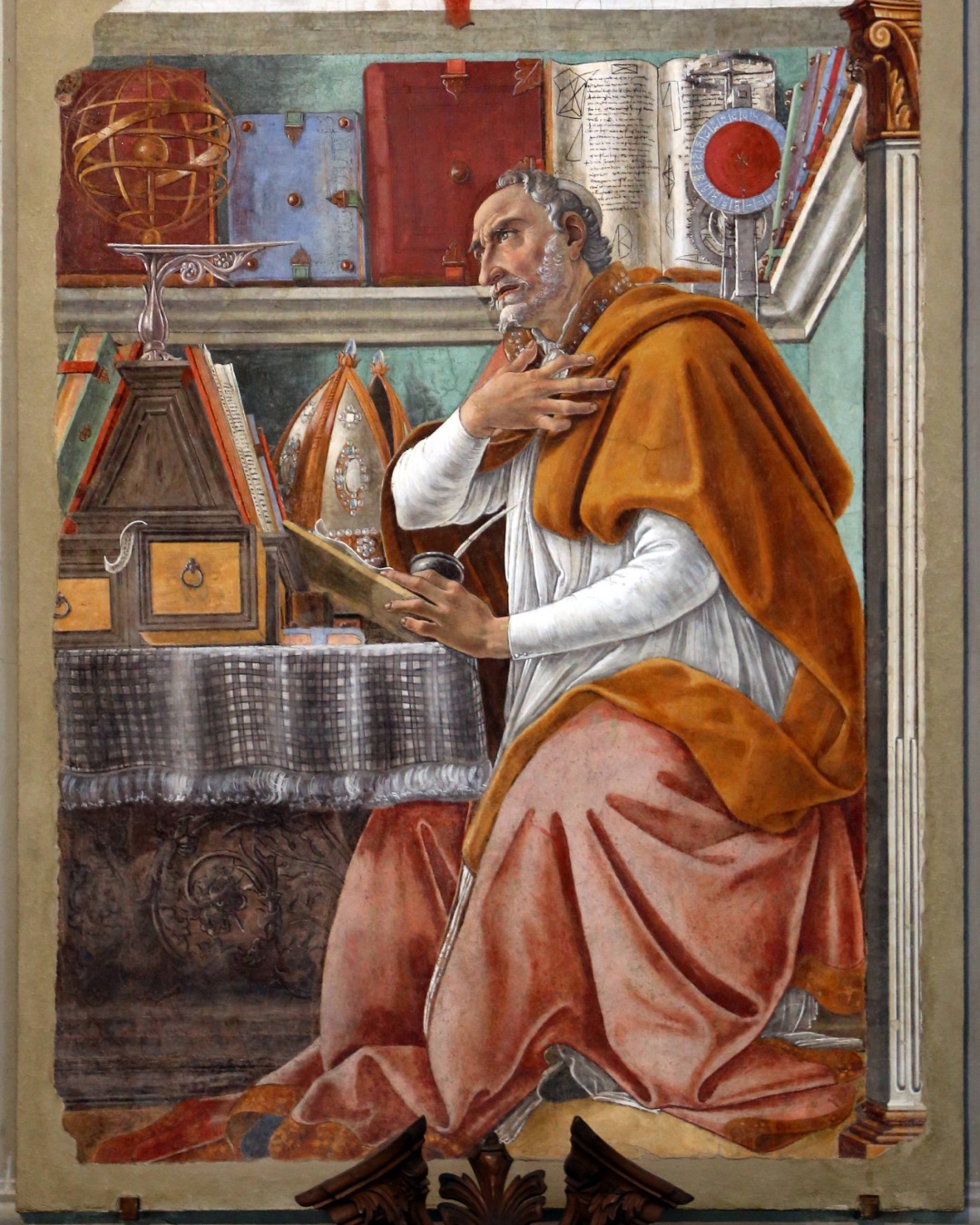
We must also consider how God may use reading; Augustine is a suitable guide for this. In his Confessions he informs readers about the books he has read and their respective impact on his soul. First, we encounter this in Book I, in which he was sent to school in particular “to learn to read and write.”14 He acknowledges at this time he hated reading and studying.15 In time, this acquired skillset became of great value to him, although these early books that he read did not lead him to God. He wept for Dido, but not for his misery and alienation from God.16
In Carthage, Augustine was assigned Cicero’s Hortensius. A transformation occurred in Augustine on account of his reading. As he put it: “The book changed my feelings. It altered my prayers, Lord, to be towards you yourself. It gave me different values and priorities. Suddenly… I longed for the immortality of wisdom with an incredible ardour in my heart.”17 While the book cultivated in Augustine a love for wisdom, it lacked the integral and centerpiece of wisdom, Christ. His reading was beginning to prepare him for a life in pursuit of wisdom.
In Book IV, around the age of 20, Augustine is introduced to Aristotle’s Ten Categories. He writes of the prideful experience of reading and understanding more than other students.18 Throughout the Confessions there are really two obstacles that keep Augustine from God: pride and error. His reading of Aristotle cultivated pride in his heart.
A decade on from his experience with Aristotle the error that Augustine had succumbed to was that of Manicheanism.19 It was his wide reading among the philosophers that led him to see through the errors of the Manicheans and it was the lack of reading by the Manichean expert (Faustus) that cast doubt into Augustine’s mind of his prowess.20 Throughout his reading nothing was able to convince Augustine that God did not exist.21 But he was not yet a Christian. His philosophical reading was helping him to overcome the errors in his thinking, but not the pride in his heart.
He then encounters Ambrose. In contrast with Faustus, Ambrose was not only available to his followers but he was also a reader: “When he was not with them, which was a very brief period of time, he restored either his body with necessary food or his mind by reading.”22 Scripture and the reading of Scripture begins to take on a new hue for Augustine after his engagement with Ambrose.23 As he states:
“In plain words and very humble modes of speech it offered itself to everyone, yet stretched the understanding of those who were not small-minded. It welcomed all comers to its hospitable embrace, yet through narrow openings attracted a few to you—a few, perhaps, but far more than it would have done had it not spoken with such noble authority and drawn the crowds to its embrace by its holy humility.”24
It is a book that is revered for its depth, but also is accessible to all. The humble and profound Scriptures set Augustine on a new trajectory. This is soon amplified by his reading of the platonists. In engaging with platonism he overcomes the plethora of errors of Manichaeism and moves philosophically toward Christianity, but the truth of the humble and incarnate logos has not yet become significant.25 Pride remained in the way. “I began to want to give myself airs as a wise person… Worse still, I was puffed with knowledge.”26 All of Augustine’s reading was festering in him a sense of self-exaltation.
Once again, Augustine engages with Scripture and is struck by its humility. The truths of platonism that he found so appealing he finds in Scripture, but those concepts he found lacking in platonism he also finds in Scripture, namely the beauty of grace and the humility of the work of God in Christ.27 This reading of Scripture prepares Augustine for his encounter with Christ under the tree in Book VIII.
Book VIII is full of books. Early in the chapter a friend Simplicianus tells the story of the conversion of Victorinus (one who also read widely!).28 This account was precipitated by Augustine’s admission to reading books translated into Latin by Victorinus. After this, Augustine and his friend Alypius are visited by Ponticianus who tells the story of a friend converted through reading an account of the life of St. Antony a desert monk.29 It is the story of St. Antony that sends Augustine both inward (to assess the conflict of his own soul) and out of the house looking for a tree that he might sit under in the garden. As he confesses, “The tumult in my breast had swept me away to this place, where no one would interfere with the blazing dispute I had engage in with myself…So I went out into the garden.”30
Once in the garden, Augustine battles with his own pride and spiritual dithering. He weeps not for Dido, but for his own sin.31 Amid his crying he hears a voice from a child playing nearby: “Pick up and read, pick up and read.”32 Taking it as a divine command, and recalling how St. Antony was instructed by the reading of Scripture, he picks up the epistle of Romans and reads 13:13-14, and he confesses, “No sooner had I reached the end of the verse than the light of certainty flooded my heart and all dark shades of doubt fled away.”33 The reading of Scripture, illuminated by the Holy Spirit, transformed his heart.
We might gather four things from Augustine to illuminate how God may use reading. First, reading may be transformative for the intellect and will. Each book that we are introduced to in Augustine’s narrative plods him along toward Christ. This, of course, is a possibility for those whom God is drawing to himself. Yet this transformation does not arise from the book as such, but from God’s gracious use of it; the act of reading becomes fruitful only as it is gathered up into His providential work upon the soul.
Throughout Augustine’s narrative the lifelong habit of reading brings him closer and closer to the truth. Reading then can be corrective to error, second. He reads widely (Prov. 11:14; 18:17; Dan. 1:17). The various books that he engages with allow the errors of various teachings to percolate to the surface and be sifted from his mind. The lack of reading of Faustus does not permit him to see his errors; he relies instead on his personality.
Third, in all of his reading, Augustine was always surrounded by other communities of readers. A vulnerability of highlighting reading is that of isolating the activity of the theologian over against the community. We must not forget as we read we participate in a broader culture and when reading theology, a communion of saints. And through our reading we must strive to participate in this same community, with our whole selves, in the present. This includes the corporate activity of hearing the reading of Scripture, participating in the Body of Christ, seeing and tasting the sacraments.
Fourth, there is one particular book that God uses to transform the head and heart of his people, Scripture. Scripture itself teaches us that the reading and ingesting the Word of God is particularly sweet (Ezek. 3:3). In approaching the theological task through Scripture and in dependence upon the Spirit we cleave to Him. What ultimately crushed Augustine’s pride was the humility of Scripture, which placed before his eyes the humility of Christ. The humble, yet exalted Christ becomes a balm for his soul. The path to God for Augustine is one of humility and this is cultivated through the reading of Scripture.
Benefits and Vulnerabilities inherent to Reading
There is, of course, a warning latent in this essay for readers that orbits Faust. All the reading in the world did not prepare Faust for his encounter with the devil. I do not assume that because a theologian merely completes his Goodreads goal each year he will be free from the vulnerability of temptation. If we dwell on Augustine’s Confessions once more the model Christian that he upholds next to Ambrose (a reader), is his mother, Monica, whom he never demonstrates as having an interest in books. In truth, the culminating event of the Confessions is Monica’s death.34 The practice of Monica’s that Augustine upholds is that of ardent concern for her son, patient faithfulness, and prayer— this too the student of theology must learn.35
We must be wary of the pride that can fester in our hearts through reading. In Augustine’s The Trinity, he considers why one might learn anything and this may be appropriately applied to the task of theology.36 Each of these is driven by what the student already loves and already knows.37 Four reasons are offered: (i) one knows and loves something broadly (let’s say what justice is), and therefore study arises because one wants to know and love more about justice; (ii) sometimes we love and know something first as it exists in God’s eternal reason (for example, divine justice) before we encounter it concretely in the world, i.e. encounter a just person; (iii) we love something known and therefore love drives a desire for fuller understanding of the beloved, for example, one’s spouse; and finally, (iv) one knows something and loves to be known as one who knows more than others. All four motivations may accompany reading and study, but Augustine is clear that the last of these represents a disordered love and must be resisted.
Faust of course, like Augustine, is a man of books. The desk in his study is covered in books.38 He is one who is determined to “devour thousands of books so as to learn.”39 Reading, therefore, is not itself sanctification, nor is it a substitute for prayer, repentance, fellowship, or obedience; it belongs to the Christian life as one practice among others, whose value is ordered to the love of God and neighbor. Reading can nourish, inform, unsettle, correct, and awaken desire; it can also inflate pride, distort judgment, or leave the heart untouched. As Webster asserts, “The teachableness which characterizes properly ordered reading involves a certain passivity: respect, receptivity, readiness to be confronted, and, above all, humility.”40 We must read with gratitude rather than covetousness, humility rather than ambition, dependence rather than self-assertion.
Yet reading is not an end in itself. It is a beginning, the opening of attention, the awakening of questions, the reception of words that must still be weighed, tested, prayed through, and carried into thought. All of this must be undertaken in the posture of faith seeking understanding. What follows reading is the slow work of thinking: the effort to discern, to judge, to order what we have read and placed in our memory toward the praise and truth of God. To that task, the next essay turns.