Good Bones: The Council of Nicaea
What creates durability, or enables something to retain its relevancy over time? For houses, it’s called “good bones,” or the use of high-quality materials built atop a solid foundation. For recipes, it’s timeless combinations of classic ingredients and flavors enjoyed across cultures. But for documents of the Christian heritage—from the biblical writings to theological statements made at critical points of historical significance—durability and relevancy in part stem from their construction around a central truth that transcends time and cultures.
A prominent example from the modern era is the Barmen Declaration of 1934. During an ecumenical gathering of German Evangelical Church leadership in Barmen, Germany, this doctrinal text was formed as a response to the increasing influence of Nazi ideology on the German church. Rather than explicitly addressing any pressing issue of the time, the Barmen framers utilized biblically based affirmations which simultaneously stated their allegiance to Christ and indirectly opposed fallacies present within their historical context. Each of its six articles consists of a carefully selected Scripture, followed by an affirmation of its respective proclamation, and finally a rejection of false doctrine denouncing misinterpretation and implications beyond and against the biblical intention. Their approach gave the Barmen Declaration its durability, making this statement applicable to other Christians across eras and contexts.
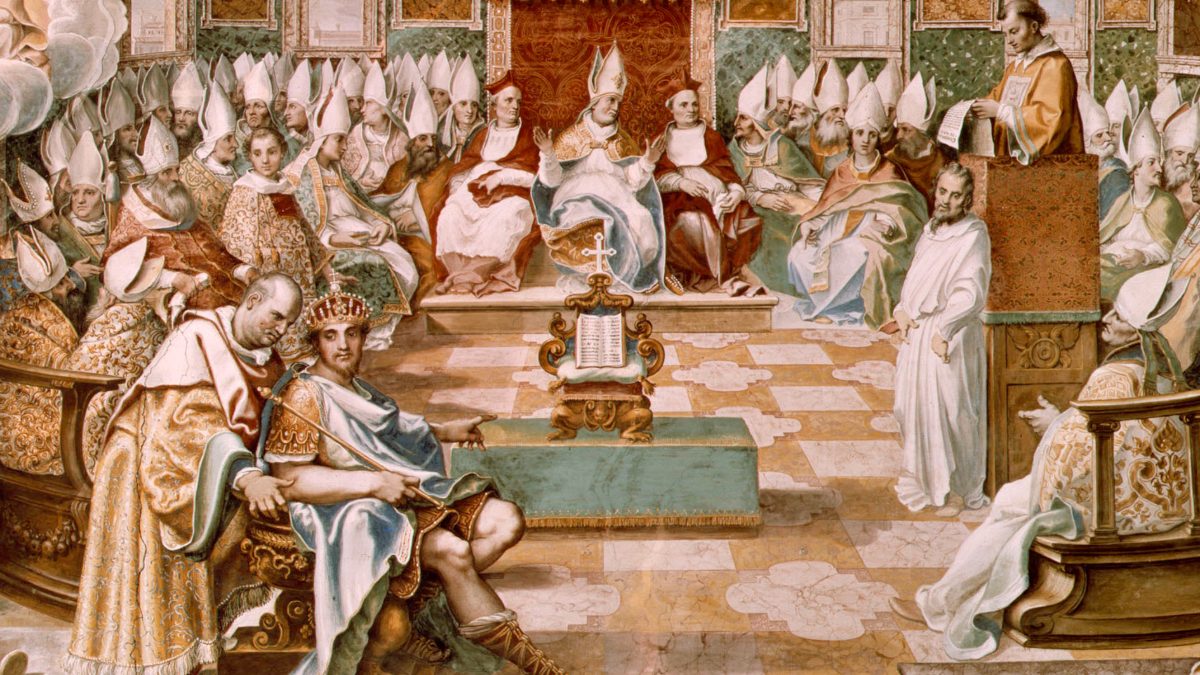
Further back, and of more central interest to The Alexandrian Institute, is the Council of Nicaea held in AD 325 and aspects of its outcome. Like the Barmen council, this gathering in the city of Nicaea in Asia Minor (modern-day İznik, in northwestern Turkey) hosted an ecumenical constituency involving some 250 to 300 bishops (tradition says 318), a first of its kind in terms of size and breadth of representation. Unlike the situation at Barmen which formed in opposition to governing German authorities and at great cost to signees of its declaration, the council at Nicaea was called by the Roman emperor Constantine himself who summoned and made provisions for its attendees. A convert to Christianity, Constantine convened this assembly primarily from his concern over a prevalent theological dispute causing disunity among Christian clergy across the empire.
The controversy in question centered on the teachings of prominent Alexandrian priest Arius regarding the divinity of Jesus and his relation to God the Father. These teachings, known as Arianism, held that the Father alone is God, being greater than Jesus the Son, who in turn is greater than the Holy Spirit. Arius concluded that Jesus, though the agent through whom God the Father created the universe, is even so a created being, having no eternal nature as the Father. In opposition to Arius, agreement was reached by the council that affirmed the absolute divine equality of the Son and the Father, preserved in the resultant Christian statement of faith known as the Nicene Creed.
NICAEA, 325 · The city, its Roman gate, Arius and the council’s verdict